Have you ever noticed that anxiety sometimes appears out of nowhere, seemingly disconnected from what's actually happening around you? What if that persistent worry wasn't your primary emotional response, but rather a protective layer covering something more vulnerable?
Anxiety frequently functions as a secondary emotion--a psychological response that emerges when our primary emotions feel too threatening or difficult to experience directly. This distinction matters because treating surface-level anxiety without addressing its underlying causes is like painting over rust without treating the corrosion beneath. Research suggests that emotional avoidance patterns significantly contribute to anxiety disorders (Harvard, 2024), making this understanding crucial for emotional wellbeing.
The Emotional Layers Beneath Anxiety
When we talk about experiencing anxiety as secondary, we're describing a common psychological phenomenon where worry becomes the visible tip of an emotional iceberg. The primary emotions--those initial, authentic reactions to situations--often get buried beneath layers of anxiety because they feel too raw, vulnerable, or socially unacceptable to express directly.
Consider these three scenarios where experiencing anxiety as secondary might occur:
Workplace criticism: After receiving constructive feedback, you might feel immediate hurt or shame--primary emotions. Yet within hours, you find yourself experiencing anxiety as secondary about your overall job performance, future projects, and professional reputation. The anxiety serves as a distraction from the initial sting of criticism.
Social situations: When friends make plans without you, the primary emotion might be loneliness or rejection. Instead of acknowledging these feelings, you might develop social anxiety about future gatherings, worrying excessively about what others think of you.
Parenting challenges: When your child struggles academically, your primary emotion might be fear for their future or disappointment in yourself as a parent. These difficult feelings often transform into generalized anxiety about every aspect of their development.
Clinical observations indicate that people who regularly experience anxiety as secondary often develop patterns of emotional avoidance that can exacerbate both anxiety and the underlying primary emotions (Mayo Clinic, 2023).
Recognizing Secondary Anxiety Patterns
The key to distinguishing primary from secondary emotions lies in timing and proportionality. Secondary anxiety typically appears after the initial emotional reaction has been suppressed or avoided. It often feels disproportionate to the actual situation--a small trigger creates overwhelming worry that seems to expand in all directions.
Notice these patterns when experiencing anxiety as secondary:
- The anxiety persists long after the triggering event has passed
- Your worry feels generalized rather than specific to the situation
- You find yourself avoiding emotional conversations or introspection
- The anxiety seems to protect you from feeling something more painful
Another telltale sign is what psychologists call "emotional substitution"--when you can intellectually identify what you "should" feel about a situation, but instead experience diffuse anxiety that lacks clear boundaries or resolution.
Practical Steps for Emotional Clarity
Developing emotional awareness requires both curiosity and courage. Begin by creating space for regular emotional check-ins. When you notice anxiety arising, pause and ask yourself: "What might I be feeling if anxiety weren't in the way?"
Try this three-step process:
- Name the anxiety specifically: Instead of "I'm anxious," try "I'm experiencing anxiety about tomorrow's meeting."
- Explore what's beneath: Ask yourself what primary emotion the anxiety might be protecting. Common candidates include hurt, disappointment, shame, grief, or fear.
- Validate both layers: Acknowledge that the anxiety served a protective purpose while gently making space for the primary emotion.
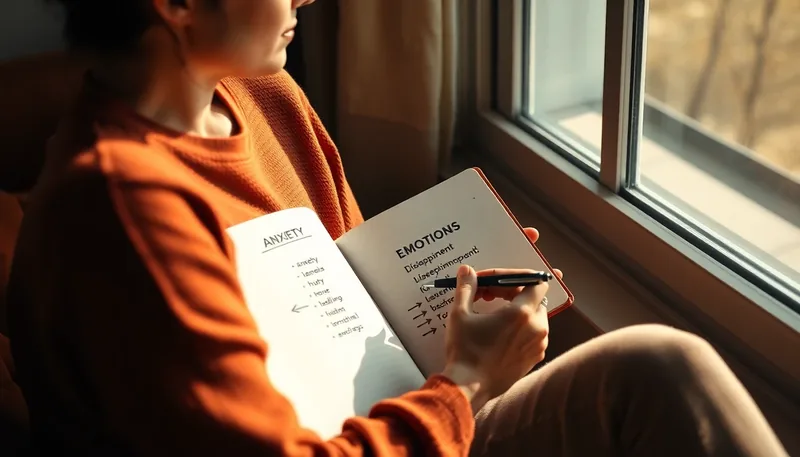
Journaling can be particularly effective for this process. Write about a recent anxiety episode, then explore what primary emotions might have been present before the anxiety took over. Look for emotional words that feel more vulnerable or authentic than "anxious."
Remember that experiencing anxiety as secondary isn't a character flaw--it's a common coping mechanism that many people develop unconsciously. The goal isn't to eliminate anxiety completely, but to develop a more nuanced emotional vocabulary that allows you to address what truly needs attention.
When to Seek Additional Support
While understanding secondary anxiety patterns can be transformative, some situations benefit from professional guidance. Consider seeking support if:
- Your anxiety significantly interferes with daily functioning
- You struggle to identify any emotions beyond anxiety
- The patterns feel entrenched despite your best efforts
- Physical symptoms accompany your anxiety regularly
Therapeutic approaches like emotion-focused therapy and mindfulness-based interventions have shown particular effectiveness in helping people untangle emotional layers and reduce patterns of experiencing anxiety as secondary (Harvard, 2024).
Ultimately, developing emotional intelligence around your anxiety patterns creates space for more authentic living. When you can distinguish between primary emotions and secondary anxiety responses, you gain agency over your emotional experience rather than being controlled by it. This understanding represents a profound shift from simply managing symptoms to addressing root causes--a journey toward emotional integrity that benefits every aspect of your life.