We communicate effortlessly thousands of times daily, yet the neural machinery making this possible remains one of science's most fascinating mysteries. At the heart of this system lies Wernicke's area--a brain region that transforms meaningless sounds into coherent understanding, and whose dysfunction reveals just how fragile our linguistic reality can be.
The Language Processing Center
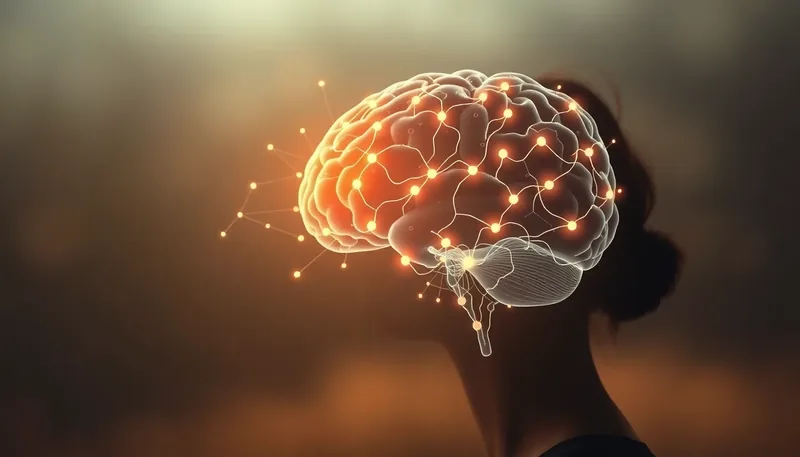
Understanding how Wernicke's area of the brain functions begins with recognizing its role as the brain's primary language comprehension center. Located typically in the left temporal lobe's posterior section, this region acts as a sophisticated decoder that transforms auditory and visual language inputs into meaningful concepts. When you hear someone speak or read written words, Wernicke's area works with other brain regions to extract meaning from these symbols.
Recent research suggests this area doesn't work in isolation but as part of a distributed network. For instance, when you hear a familiar voice saying "coffee," Wernicke's area helps retrieve not just the word's definition but associated memories--the aroma, warmth, and morning ritual. This integration explains why damage here affects both spoken and written language comprehension.
Consider this everyday example: When someone tells you "It's raining cats and dogs," your Wernicke's area helps distinguish this from literal interpretation while accessing the idiomatic meaning. This processing happens almost instantaneously, demonstrating the region's sophisticated pattern recognition capabilities.
Historical Discovery and Brain Localization
The story of how Wernicke's area was discovered reveals much about early neuroscience's quest to map mental functions. In the 1870s, neurologist Carl Wernicke identified patients who could produce fluent speech that made little sense--a stark contrast to Paul Broca's earlier discovery of patients who understood language but couldn't speak fluently.
Broca's Versus Wernicke's Areas
These complementary discoveries created neuroscience's classic language model: Broca's area in the frontal lobe handles speech production, while Wernicke's area processes comprehension. However, modern imaging reveals a more nuanced reality. Both regions participate in language networks, with Wernicke's area particularly involved in phonological processing--the mental representation of speech sounds.
An illustrative example comes from language learning: When children first encounter new words, Wernicke's area helps establish sound-meaning connections. Adults learning foreign languages reactivate similar pathways, explaining why accent comprehension often precedes fluent production.
Modern Understanding of Function
Contemporary neuroscience reveals that understanding how Wernicke's area of the brain contributes to language involves recognizing its role in multiple processes. Beyond simple comprehension, this region supports phonological retrieval--accessing the mental representations of speech sounds needed for reading aloud, word repetition, and spontaneous speech.
Research using functional MRI shows Wernicke's area activates during both listening and speaking tasks, challenging the strict production-comprehension dichotomy. For example, when you mentally rehearse a conversation before speaking, this area helps organize meaningful content before Broca's area coordinates articulation.
Another practical example: When you momentarily forget a word but remember its sound pattern ("It starts with 'ph'..."), you're experiencing Wernicke's area working to retrieve phonological information. This explains why some stroke patients can sing lyrics they cannot speak--different neural pathways access the same linguistic content.
When Comprehension Breaks Down
Damage to Wernicke's area creates one of neurology's most striking conditions: Wernicke's aphasia. Unlike speech production difficulties, this disorder allows fluent, grammatically correct speech that conveys little meaning. Patients might say, "I went to the circular yesterday for the green thinking," unaware their communication has broken down.
Recognizing Wernicke's Aphasia
Key characteristics include neologisms (made-up words), semantic paraphasias (substituting related words), and preserved speech rhythm. Crucially, patients often lack awareness of their deficit--a phenomenon called anosognosia--making rehabilitation particularly challenging. Stroke remains the most common cause, though tumors, trauma, and infections can produce similar effects.
Consider this clinical example: A retired teacher with Wernicke's aphasia might deliver what sounds like a coherent lecture, using appropriate intonation and gesture, while stringing together meaningless phrases. Her ability to produce social cues (smiling, nodding) while failing to comprehend questions illustrates the dissociation between linguistic and non-linguistic communication.
Beyond a Single Brain Region
The most important modern insight about how Wernicke's area of the brain operates is that language emerges from distributed networks rather than isolated centers. Neuroimaging studies reveal coordinated activity across temporal, parietal, and frontal regions during language tasks, with Wernicke's area serving as a crucial hub rather than sole processor.
This network perspective explains why recovery from aphasia often involves recruiting alternative pathways. Some patients regain function through right hemisphere homologs or strengthened connections between preserved regions. Rehabilitation strategies now emphasize stimulating entire language networks rather than targeting specific areas.
For instance, melodic intonation therapy uses singing to engage right hemisphere circuits, sometimes bypassing damaged left hemisphere pathways. Similarly, constraint-induced language therapy forces use of verbal communication, promoting neural reorganization across both hemispheres.
Practical Implications and Future Directions
Understanding how Wernicke's area of the brain functions has practical applications beyond clinical neurology. Educators use this knowledge to develop reading instruction methods, while linguists study how different languages engage these neural circuits. Even artificial intelligence researchers model similar hierarchical processing in language algorithms.
Future research directions include investigating genetic influences on Wernicke's area development, exploring how bilingualism shapes its organization, and developing targeted neuromodulation therapies. As non-invasive brain stimulation techniques advance, precise modulation of this region might enhance language recovery after injury.
The enduring mystery of how Wernicke's area transforms neural activity into subjective meaning continues to drive neuroscience forward. Each discovery about this region reveals not just how we process language, but how the brain constructs reality through symbolic communication--making every conversation we have a minor neurological miracle.