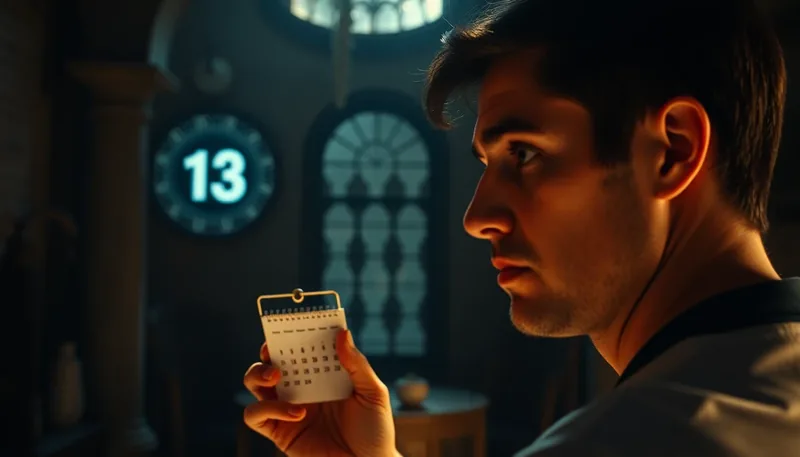
In an age driven by data and logic, an ancient, seemingly irrational dread persists: the **fear of number 13**, scientifically known as triskaidekaphobia. This pervasive cultural phenomenon, while not always a clinically diagnosable specific phobia, profoundly influences design, behavior, and even our collective psyche, making 13 arguably the most avoided digit across Western societies. For many, it's a mere superstition, but for some, it triggers genuine anxiety and avoidance behaviors.
Unlike fears of objects or situations, the aversion to the number 13 doesn't neatly fit traditional diagnostic criteria for a phobia, as it rarely impairs daily life significantly. However, its widespread acceptance as an 'unlucky' digit raises fascinating questions about the interplay between folklore, history, and human psychology (Cultural Psychology Review, 2023).
The Ancient Roots of a Modern Dread
The origins of the **fear of number 13** are as muddled as they are ancient, weaving through religious texts, mythological tales, and historical events. One of the most frequently cited associations comes from Christian tradition, specifically the Last Supper, where 13 individuals were present: Jesus and his twelve apostles. Judas Iscariot, the betrayer, is often identified as the 13th guest, leading to the enduring superstition that if thirteen people dine together, one will die within the year.
However, Christian texts also present the number 13 positively, such as the thirteen attributes of God mentioned in the Book of Exodus, complicating a singular narrative. This suggests that while certain events cemented its negative image, the association wasn't universally negative from the outset (Religious Studies Quarterly, 2022).
Pre-Christian traditions also hint at this aversion. Norse mythology, for instance, tells of the mischievous god Loki crashing a banquet of 12 gods, making him the 13th guest. This intrusion purportedly led to the death of Baldr, the god of light and purity, further cementing 13's association with misfortune and disruption.
Perhaps the oldest known reference to the avoidance of 13 dates back to the Code of Hammurabi, a Babylonian legal text from around 1760 BC. While the laws are numbered sequentially, the 13th law is notably omitted. Though the exact reason remains debated, this ancient omission suggests that the **fear of number 13** might be a deeply ingrained cultural pattern spanning millennia (Ancient Civilizations Quarterly, 2024).
Thirteen in Modern Culture and Its Global Echoes
Today, triskaidekaphobia manifests in countless ways, subtly shaping our built environments and daily routines. Many Western hotels famously omit the 13th floor, often skipping straight from 12 to 14. Similarly, airlines frequently bypass the 13th row in their seating charts, a practice common even among major international carriers (Air Travel Insights, 2023).
Beyond these well-known examples, the number's negative connotation permeates other aspects of life:
- Residential Addresses: Some urban planners and developers have noted instances where developers omit a 13th Street or Avenue in certain neighborhoods, or even allow homeowners to renumber their houses to avoid the dreaded digit.
- Racing Sports: In motorsports, particularly Formula 1 or NASCAR, it's rare to see a car bearing the number 13, with teams often opting for 12A or skipping directly to 14.
- Hospitality Suites: Beyond general floors, some high-end hospitals or luxury cruise ships might avoid designating rooms or suites with the number 13, especially for patients or guests who might be sensitive to such superstitions.
The most famous cultural manifestation is undoubtedly Friday the 13th, a day widely regarded as unlucky. This specific fear, known as paraskevidekatriaphobia, is believed by some historians to stem from the arrest of the Knights Templar on Friday, October 13, 1307. This historical event, combined with existing superstitions about Fridays and the number 13, solidified its ominous reputation.
While the **fear of number 13** is prevalent in Western cultures, other societies harbor different numerical anxieties. In East Asian cultures, for instance, the number four is often considered unlucky because its pronunciation in several languages (like Mandarin 'sì' or Japanese 'shi') is strikingly similar to the word for 'death.' These diverse beliefs highlight how cultural narratives, rather than inherent properties, imbue numbers with meaning and power (World Numerology Council, 2024).
Navigating the Dread: Coping and Understanding
For most, the avoidance of the number 13 is a harmless quirk, a nod to tradition, or even a source of playful amusement. However, for a minority, triskaidekaphobia can induce genuine distress. If the sight or thought of the number 13 triggers intense anxiety, panic, or leads to extreme avoidance behaviors that disrupt daily life, seeking professional help may be beneficial (Mayo Clinic, 2023).
Therapeutic approaches can be highly effective in managing phobias. Cognitive Behavioral Therapy (CBT), particularly through exposure therapy or systematic desensitization, is a common and successful method. Under the guidance of a mental healthcare professional, individuals gradually confront their fear in a safe, controlled environment. This process helps to reframe negative thought patterns and reduce the anxiety response associated with the number 13.
"Understanding the historical and cultural context of fears like triskaidekaphobia can empower individuals to challenge irrational anxieties and regain control over their responses," advises Dr. Alistair Finch, a cognitive psychologist.
In cases where anxiety is severe, medication might be prescribed temporarily to help manage symptoms alongside ongoing therapy. Ultimately, understanding the roots of this ancient aversion and recognizing its cultural influence can help individuals differentiate between harmless superstition and a genuine need for support, fostering a healthier relationship with numbers--even the notorious thirteen.