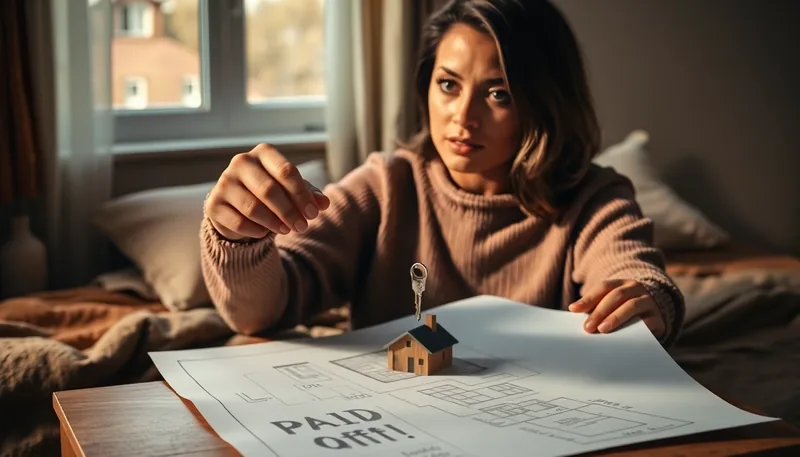
Did you know that nearly 34% of all home purchases in the U.S. were made with cash by the end of 2023? (National Association of Realtors, 2024) This surprising statistic underscores a significant shift in the real estate market, highlighting a growing trend among buyers to bypass traditional mortgages. The intricate psychology of paying all cash for a home is multifaceted, driven by a desire for financial security, strategic negotiation power, and an often-underestimated emotional peace of mind. For many, it's a journey from leveraging debt in youth to seeking stability in later life, fundamentally reshaping one's relationship with wealth and risk. This approach offers significant advantages, from securing better deals to eliminating mortgage-related stress, ultimately fostering a profound sense of independence and control over one's financial future.
The Evolving Financial Landscape of Homeownership
The decision to pay cash for a home is rarely static; it often reflects an individual's evolving financial philosophy and life stage. What seems like an optimal strategy in one decade might shift dramatically in the next, influenced by accumulated wealth, risk tolerance, and life goals. Understanding this progression is key to appreciating the motivations behind such a significant financial move.
From Leverage to Stability: A Generational Shift
In one's 20s and 30s, the drive to maximize returns often leads to embracing leverage. Mortgages are a powerful tool for wealth accumulation, allowing individuals to acquire appreciating assets with a relatively small upfront investment. The focus is on aggressive growth, taking calculated risks to supercharge net worth, often seen as a necessary step for younger generations building their financial foundation.
However, as individuals mature into their late 40s and beyond, priorities often pivot dramatically. The relentless pursuit of maximum returns gives way to a desire for stability, capital preservation, and a reduced need for intense financial "grinding." Satisfaction is increasingly found in maintaining a comfortable lifestyle with sufficient passive income, where a 5-10% annual net worth growth becomes perfectly adequate when basic needs and desires are met, and the desire for high-stakes risk-taking diminishes.
Ultimately, the choice to pay cash for a home is a deeply personal one. It intertwines rigorous financial analysis with an understanding of individual aspirations and one's current position on the financial journey. It's a reflection of what one truly values from their money at a given point in life, moving beyond purely theoretical returns to embrace tangible security.
Defining Cash Buyers: True vs. Hybrid
Not all cash buyers are created equal. There are distinct categories that influence the psychological impact and practical considerations of an all-cash purchase, each with its own set of motivations and financial realities.
- True Cash Buyers (Less than 10% of all buyers): These individuals possess readily available liquid assets--think substantial sums in money market funds, high-yield savings accounts, or short-term Treasury bills. They don't need to liquidate other long-term investments to fund their home purchase. Typically, the home's value represents a minority percentage of their overall net worth, often less than 30%. For instance, an ultra-high-net-worth individual with $100 million in liquid assets might comfortably allocate $10 million for a luxury property in a prime location, barely noticing the shift in their portfolio. Another example could be someone with a $5 million net worth, where $1.5 million is strategically held in rolling 3-month Treasury bonds, making an $800,000 cash purchase in a lower-cost market like Memphis a straightforward decision.
- Hybrid Cash Buyers (Over 90% of all buyers): The vast majority of all-cash purchasers fall into this category. These buyers need to sell off other assets, such as stocks, bonds, or other long-term investments, to accumulate the necessary funds. Their existing cash balance isn't sufficient on its own. This rebalancing act--exchanging one risk asset (investments) for another (real estate)--introduces a unique psychological dynamic. The decision involves carefully weighing potential future profits from sold assets against the immediate, tangible benefits of homeownership. This article primarily delves into the intricate psychology of paying for a home as a hybrid cash buyer, given the added layers of consideration, emotional processing, and opportunity cost calculations involved in such a significant portfolio shift.
Despite the high cost of real estate in many markets, all-cash transactions are surprisingly common and represent a significant portion of the market. By the end of 2023, approximately 34% of all home purchases in the U.S. were made without a mortgage (National Association of Realtors, 2024). This figure has fluctuated over the years, reaching as high as 37% in 2012 and dipping to 20% in 2020. For luxury properties--those priced in the top 10% of the market--the trend is even more pronounced. Nearly 47% of luxury homes were bought entirely with cash in the three months ending February 29, 2024, marking the highest share in at least a decade and an increase from 44.1% a year earlier (Redfin, 2024). This data highlights a robust segment of the market prioritizing cash purchases.
The Strategic Edge of All-Cash Offers
Beyond the personal financial implications, an all-cash offer provides a powerful strategic advantage in the competitive real estate market. It's akin to holding a trump card, allowing buyers to navigate transactions with greater speed, certainty, and leverage, ultimately leading to more favorable outcomes.
Unlocking Negotiation Power
Regardless of one's wealth, securing a good deal remains universally appealing. An all-cash offer is a potent tool for achieving this, often translating into a 1% to 10% reduction off the asking price. Sellers are highly motivated by certainty and speed in a transaction. An offer free of financing and inspection contingencies, coupled with a swift closing period, becomes incredibly attractive, especially in a fluctuating market. It minimizes the seller's risk of a deal falling through due to loan issues or unexpected inspection demands, and accelerates their timeline for accessing funds, making it difficult to refuse.
For instance, in a bustling urban market like Austin, Texas, where bidding wars are common and properties move quickly, a cash offer can bypass lengthy loan approvals and appraisal processes. This allows a buyer to secure a desirable property that might otherwise be snatched up by a financed offer with a longer closing period or more complex conditions. This strategic maneuver can be the difference between getting your dream home and missing out entirely, offering a decisive edge in competitive scenarios.
The ability to present a clean, fast offer gives the cash buyer a significant psychological advantage over competitors who are reliant on mortgage approvals. It transforms the buyer into a preferred partner for the seller, often leading to concessions on price or terms that wouldn't be available otherwise. This power dynamic is a core component of the intricate psychology of paying cash for a home.
Streamlining the Transaction Process
Time is a precious commodity, and an all-cash purchase significantly reduces the administrative burden and time commitment associated with home buying. The arduous process of finding a mortgage broker, negotiating rates, and enduring months of financial scrutiny for pre-approval becomes entirely unnecessary. This "financial lobotomy," as some describe the invasive documentation and credit checks required by lenders, is completely circumvented, saving immense amounts of personal time and mental energy.
The time saved can be substantial, allowing buyers to focus on other aspects of their move or life rather than endless paperwork, financial disclosures, and waiting periods. For someone relocating for a new job with a tight timeline, an all-cash offer can mean securing housing and settling into their new city weeks or even months faster than their counterparts relying on traditional financing. This dramatically reduces stress and enables a smoother, more efficient transition, allowing them to focus on their career and family rather than logistical headaches.
Avoiding Hidden Costs and Hassles
Mortgages come with a litany of fees that can quickly accumulate: origination fees, appraisal fees, underwriting fees, lender's title insurance, and various administrative charges. These can easily amount to thousands, if not tens of thousands, of dollars, adding a significant hidden cost to the home purchase. Paying cash eliminates these expenses entirely, offering a more transparent and cost-effective path to ownership.
While hybrid cash buyers may incur capital gains taxes from selling assets to raise funds, these can often be mitigated through strategic loss harvesting--selling underperforming assets to offset gains--or by utilizing existing capital losses carried forward from previous years. This allows for a more controlled approach to tax implications compared to the unavoidable fees associated with a mortgage.
The directness of an all-cash transaction means fewer intermediaries, fewer bureaucratic hurdles, and fewer opportunities for unexpected charges or delays. It simplifies the financial equation, offering a clear path to ownership without the labyrinth of associated costs and potential frustrations that can surprise even experienced buyers. Moreover, in some jurisdictions, a cash buyer may even have the option to forgo certain insurance requirements, such as home insurance, if there's no lender to satisfy, though this depends on local regulations and personal risk assessment.
The Profound Emotional and Psychological Benefits
Beyond the tangible financial and strategic advantages, the intricate psychology of paying for a home with cash offers a deep well of emotional satisfaction and peace of mind that often outweighs purely economic calculations. This sense of security and freedom is a powerful motivator for many buyers.
Freedom from Debt and Economic Worry
The opportunity cost of tying up capital in a home rather than investing it elsewhere is a common concern for financially savvy individuals. However, the immense utility and enjoyment derived from a mortgage-free home often eclipse these potential missed gains. The feeling of bringing a family into a fully owned, secure space is immeasurable, especially during times of economic uncertainty or personal upheaval. This sense of ownership means no landlord or bank can dictate terms, offering a profound feeling of autonomy.
Consider the global events of 2020, where a paid-off home became an invaluable sanctuary for many. With everyone spending more time at home, the security of knowing your housing was fully paid for provided priceless peace of mind. This intrinsic value often makes the trade-off of potential investment returns entirely acceptable, especially when those returns are historically around 10% annually for broad market indices (S&P 500 historical data, 2023). The peace of mind acts as a powerful shield against the anxieties of market volatility and economic downturns, fostering a sense of invulnerability (Journal of Behavioral Finance, 2023).
When the economy booms, a cash homeowner benefits not only from appreciating real estate but also from other risk assets they still hold. When a recession hits, the paid-off home provides an unparalleled buffer, allowing one to ride out market turbulence without the added pressure of monthly mortgage payments. This creates a "heads I win, tails I still win" scenario, where the homeowner is insulated from the worst financial shocks. This win-win situation is a core tenet of the cash-buying mindset, provided a sufficient cash buffer remains post-purchase to avoid feeling "cash poor" and stressed by a lack of immediate liquidity.
Reconciling Opportunity Costs
For hybrid cash buyers, the initial period after selling assets to fund a home purchase can be fraught with second-guessing, especially if the market for the sold investments subsequently performs well. There's a natural lament over "missed gains" or the "what if" scenario. This emotional processing is a significant part of the intricate psychology of paying cash for a home.
However, this feeling often reconciles over time as the tangible reality and benefits of homeownership set in. The initial regret can be tempered by a clearer understanding of the capital allocation. For instance, realizing that only a portion of the funds came from high-growth stocks, while a significant part came from less volatile assets like maturing Treasury bonds or cash, can reframe the perception of opportunity cost. The actual impact on overall net worth might be less severe than initially imagined.
Moreover, real estate markets often move in tandem with broader economic trends. If it's a bull market for stocks, it's often a bull market for real estate too. The home's appreciation can help offset perceived losses from other investments, and the security of a physical asset often provides a different kind of return that isn't purely financial. The long-term utility and stability provided by the home tend to outweigh short-term market fluctuations in the mind of the homeowner.
The Drive to Rebuild Wealth
Paradoxically, the significant liquidity hit from an all-cash purchase can be a powerful motivator. Having been accustomed to substantial cash reserves or liquid securities, the sudden reduction can feel like a "loss," even though the money has been converted into a valuable asset. This feeling of being "artificially poor" ignites a renewed sense of purpose and excitement to replenish one's financial reserves, almost like starting anew.
This motivation can manifest in various ways: seeking new investment opportunities, exploring entrepreneurial ventures, dedicating oneself to career advancement, or even developing new business partnerships. It's a challenge that can reinvigorate one's financial ambition, akin to the drive felt by a young graduate embarking on their career. This renewed focus on wealth creation is a key part of the intricate psychology of paying cash for a home, transforming a large expenditure into a catalyst for future growth and innovation.
The desire to regain the previous level of liquidity can lead to heightened financial discipline and creative income generation strategies. This period of "rebuilding" can be incredibly productive, fostering a sense of accomplishment as financial milestones are met again, but this time with the added security of a paid-off home.
Embracing Financial Independence and Optionality
A mortgage-free existence fosters a profound sense of security and independence that transcends mere financial calculations. The ongoing debate about whether to pay off a mortgage early becomes irrelevant, as the homeowner has already transcended this stage. Instead, one moves beyond debt management to focus on more lucrative wealth-building strategies, much like someone who consistently pays their credit card in full each month, eschewing interest rates and balance transfers to concentrate on higher-impact financial goals.
This newfound freedom empowers individuals to take calculated risks they might otherwise avoid. Changing careers, pursuing further education, starting a new business, or expanding one's family become less daunting without the burden of a looming mortgage payment. The psychological liberation allows for greater flexibility and bolder life choices, knowing that the most significant housing expense is securely behind them. For example, a couple might decide to have another child, confident that their housing costs are fixed and manageable, freeing up resources for family expansion.
Furthermore, an all-cash home purchase doesn't mean capital is permanently locked away. The option to perform a cash-out refinance or secure a Home Equity Line of Credit (HELOC) provides a comforting safety net. While not always recommended due to the reintroduction of debt, knowing these options exist offers a sense of control and flexibility, much like having a robust emergency fund. It ensures that liquidity can be accessed if truly needed, providing a strong sense of optionality and peace of mind (Harvard Business Review, 2022). This inherent optionality is a significant, often understated, psychological benefit.
Practical Considerations and Nuances
While the emotional and strategic benefits are compelling, practical aspects also play a crucial role in the decision-making process for an all-cash home purchase. These considerations ensure that the pursuit of financial freedom is grounded in sound planning.
The Liquidity Dilemma: Cash Buffer is Key
The euphoria of a mortgage-free home can quickly turn to stress if the purchase depletes all liquid assets. It is crucial to retain a sufficient cash buffer--ideally at least 5% of the home's value--after the transaction. Without this, buyers can feel "cash poor," leading to unnecessary anxiety until liquidity is rebuilt. This feeling can be particularly acute for hybrid cash buyers who have just liquidated significant portions of their investment portfolio. A prudent approach ensures that the psychological benefits are not undermined by immediate financial strain.
For example, a family purchasing a $1 million home with cash should ideally retain at least $50,000 in readily accessible funds for emergencies, unexpected home repairs, property taxes, or other life events. This buffer prevents the feeling of being financially trapped despite owning a valuable asset, allowing the homeowner to truly enjoy their debt-free status without constant worry about immediate expenses.
The absence of a mortgage payment means increased disposable income, but it doesn't eliminate all housing-related costs. Property taxes, insurance (even if not lender-mandated), and maintenance expenses remain. Factoring these into the ongoing cost of homeownership, alongside the missed risk-free income from the deployed cash, provides a realistic picture of financial outflow. However, the mental accounting often shifts; the monthly savings from not having a mortgage often fade from conscious thought, replaced by an adaptation to the new, lower fixed expense structure.
The "Money Parking" Phenomenon
For those with substantial wealth, a common challenge is deciding where to allocate capital effectively. As wealth grows, the "more money, more problems" adage can ring true, particularly in managing diverse investment portfolios. A primary residence often serves as a practical and tangible "parking spot" for a significant portion of one's wealth. Unlike abstract investments that exist as numbers on a screen, a home is an asset that can be physically enjoyed, maintained, and observed daily. This tangibility offers a unique sense of control and comfort that many find appealing.
It's generally recommended to allocate no more than 30% of one's net worth to a primary residence, even when paying cash. This ensures diversification and prevents an overconcentration of wealth in a single, relatively illiquid asset. For individuals who find market volatility unsettling--experiencing significant mood shifts with 20% swings in a multi-million dollar stock portfolio, for example--investing in a home provides a stable, visible asset that can appreciate over time without the daily, anxiety-inducing fluctuations of the stock market.
This phenomenon is also observed globally, with wealthy individuals and foreign investors frequently parking significant capital in U.S. and Canadian real estate. While some motivations might be complex, a fundamental drive is often the desire for a stable, tangible asset in a secure economy, even if they don't occupy the properties full-time. The home becomes a secure vault for wealth, offering both utility and a sense of permanence.
Understanding Cash-Out Refinance Options
Even after paying cash, the equity in a home is not permanently inaccessible. Homeowners always have the option of a cash-out refinance or a Home Equity Line of Credit (HELOC). These tools allow access to capital if future needs arise, such as funding a major life event, covering unexpected expenses, or if mortgage rates become exceptionally attractive, presenting an opportunity to leverage equity at a low cost.
However, exercising these options should be approached with caution. Reintroducing debt, especially after achieving the financial independence of a mortgage-free home, can undermine the very benefits sought through the initial cash purchase. It can shift one's financial position backward, reintroducing monthly payments and interest costs. While it's reassuring to know the option exists, the primary goal should be to maintain that debt-free status, leveraging the home's equity only in truly critical situations where no other viable financial alternatives exist.
The existence of these options provides a deep sense of comfort and flexibility. It means the cash isn't truly "locked away" forever, but rather is held in an accessible form of equity. This optionality is a powerful psychological benefit, offering a safety net without necessarily needing to be used. It's like having a highly skilled reserve player on your team - you hope you never need them, but you're glad they're there.
Beyond the Primary Residence: Debt-Free Real Estate Investment
The principles of investing in real estate without the burden of a mortgage extend beyond one's primary residence. For those seeking to diversify their portfolio, generate passive income, or simply participate in the real estate market without taking on traditional debt, there are compelling avenues to explore.
One such approach involves investing in private real estate funds or Real Estate Investment Trusts (REITs). These vehicles pool capital from multiple investors to acquire and manage a diversified portfolio of properties, often focusing on specific sectors like residential, industrial, or commercial real estate in growing regions. This allows individuals to gain exposure to real estate's potential appreciation and rental income without the complexities, illiquidity, and debt obligations of direct property ownership.
This strategy aligns with broader economic trends, such as the increasing prevalence of remote work driving demand in lower-cost areas, or shifts in industrial needs. As interest rates fluctuate, influencing both borrowing costs and property valuations, investing in diversified funds can offer a managed and less volatile approach to participating in these market dynamics. It provides a way to benefit from real estate's long-term growth potential and income streams without personal debt obligations, echoing the debt-free philosophy applied to a primary home.
For investors who prefer tangible assets but wish to avoid mortgages, direct ownership of income-generating properties is also an option, provided they have the capital. This could involve purchasing a rental property outright, or investing in smaller-scale developments. The key is to ensure that any such investment aligns with one's overall financial strategy and risk tolerance, maintaining the core principle of avoiding unnecessary debt.
Conclusion: The Ultimate Financial Freedom
The intricate psychology of paying all cash for a home is a profound journey marked by evolving financial priorities, strategic advantages, and deep emotional rewards. It represents a significant pivot from aggressive wealth accumulation to a focus on security, stability, and unparalleled peace of mind, especially as one progresses through different life stages.
While the decision involves careful financial analysis and a clear understanding of opportunity costs, the multifaceted benefits--from enhanced negotiation power and streamlined transactions to profound freedom from economic anxieties--are compelling. It's a choice that transcends mere financial optimization, offering a deeper sense of control and independence over one's life and future.
Ultimately, a mortgage-free home becomes a cornerstone of financial independence. Its value as a percentage of overall net worth tends to diminish over time as other assets grow, further solidifying the sense of freedom and reducing any lingering feelings of illiquidity. Whether passed on to future generations as a valuable, unencumbered asset or simply enjoyed as a personal sanctuary, the decision to pay cash for a home is a powerful step towards a peaceful, debt-free existence, fulfilling a core mission for many on their financial journey.