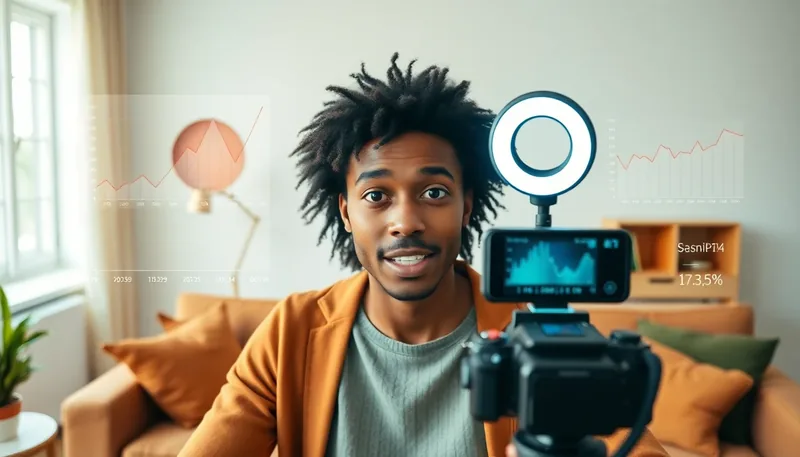
Back in 2019, a surprising survey from toy maker Lego revealed a significant shift in career aspirations among young adults. When asked what they wanted to be when they grew up, the top answer wasn't doctor or astronaut, but "YouTube creator" (Lego, 2019). Out of 3,000 children aged 8 to 12 across the U.S., U.K., and China, a remarkable 33% aspired to be YouTubers, dwarfing the 11% who dreamed of space exploration. This phenomenon demonstrates how individuals are increasingly helping others while making a significant impact and building lucrative careers in the digital age.
The New Career Landscape
The rise of the creator economy is undeniable. A 2021 YouGov poll further solidified this trend, identifying vlogging, YouTube content creation, or professional streaming as the top dream jobs for teenagers aged 13 to 17 (YouGov, 2021). Social media influencers and content creators have cultivated a level of trust and engagement with younger generations that often surpasses traditional figures, challenging the skepticism many older generations harbor toward these unconventional professions.
Platforms like YouTube and TikTok stand out as primary hubs for influencer content. YouTube tends to resonate more with millennials and men, while TikTok predominantly captures the attention of Gen Z and women. Across both platforms, evergreen content categories such as food and music consistently draw massive audiences, highlighting the diverse interests driving consumption and creation.
Initially, the notion of pursuing a full-time career as a YouTuber or blogger might have seemed frivolous to many, including myself. Traditional paths to success often involved rigorous academic pursuits, securing top-tier university admissions, and landing a high-paying, six-figure corporate role. This conventional blueprint, while effective for some, is now being re-evaluated by a generation seeking more autonomy and direct impact.
Bypassing Traditional Gatekeepers
The evolving landscape of education and career advancement has prompted many to seek alternative routes to success. Observing how highly accomplished students, despite excelling academically, faced rejections from prestigious universities, revealed a system with increasingly complex barriers. Discussions around affirmative action policies, for instance, have brought to light disparities in admission standards, particularly affecting certain demographic groups (Harvard and UNC Lawsuit, 2023).
This reality underscores the growing importance of self-directed career paths. For many, the traditional "gatekeepers" of higher education and corporate ladders are becoming less relevant. Instead, fostering creativity and an entrepreneurial spirit from a young age offers a powerful avenue for individuals to build their own opportunities. This shift encourages aspiring creators to cultivate unique skills and leverage digital platforms to forge a self-made future.
Embracing the creator economy, particularly as a YouTuber or TikToker, presents a potentially profitable path. It allows individuals to tap into their imagination, entertain, and engage with audiences directly. This blend of creativity and service can be incredibly rewarding, proving that helping others while making a living doesn't require a conventional degree or corporate sponsorship. Anyone with an internet connection and a device can begin uploading videos, with consistency and compelling content being the keys to breaking through the initial growth phase.
Insights from a Million-Dollar Creator
To better understand the mechanics of successful content creation, we recently spoke with Humphrey Yang, a personal finance expert who has amassed over 1.6 million YouTube subscribers and more than 3.3 million TikTok followers. Humphrey's ascent began in 2020, coinciding with the pandemic-driven surge in online content consumption, and he has maintained steady growth ever since.
In our conversation, Humphrey delved into his background, his journey into content creation, and the specific strategies that fueled his rapid expansion. We discussed everything from the production effort involved in a single video to his earnings per video and his estimated net worth. His story exemplifies the power of helping others while making a name for yourself in the digital space.
A core takeaway from his experience, and indeed from many successful creators, is the importance of simply starting. Like any skill, video creation improves with practice. Each new video refines one's craft, boosts confidence, and hones the ability to entertain and engage an audience. Consider other impactful creators like Dr. Mike, a physician who educates millions on health topics, or Joshua Weissman, who teaches advanced cooking techniques to home chefs--all demonstrating the diverse ways creators connect and uplift their communities.
Even established figures like MrBeast, renowned for his elaborate challenges and philanthropic endeavors, started with simple videos. His trajectory illustrates how a commitment to entertaining and often helping others while making a difference can transform a hobby into a global phenomenon. The common thread among these varied creators is a dedication to providing value to their audience.
Monetization Potential and Future Outlook
The earning potential for YouTube and TikTok creators can be substantial, with top earners reaching millions. Generally, YouTube creators can expect to earn between $5 to $50 per 1,000 views. This means a video with 100,000 views could generate $500 to $5,000, while 500,000 views could yield $2,500 to $25,000. The average often hovers around $10 per 1,000 views.
Beyond ad revenue, creators diversify their income through various channels. Sponsorships, where brands pay to feature products that align with the creator's values, are a significant revenue stream. Many also launch their own merchandise or digital products, further boosting overall earnings. This multi-faceted approach allows creators to build sustainable businesses around their content.
TikTok's Creator Fund offers a more modest payout, typically ranging from $0.20 to $4.00 per 1,000 views. However, TikTok's rapid viral potential can help creators build a massive audience quickly. A large following on TikTok can then be leveraged for affiliate marketing, brand deals, or directing traffic to other platforms where monetization is higher, such as a personal website or YouTube channel.
A NeoReach Creator Earnings and Insights Industry Report provides a breakdown of TikToker earnings (NeoReach, 2023):
- 48% earned less than $15,000.
- 9% earned between $15,000 and $25,000.
- 7% earned between $25,000 and $35,000.
- 5% earned between $35,000 and $50,000.
- 11% earned between $50,000 and $75,000.
- 5% earned between $75,000 and $100,000.
- 6% earned between $100,000 and $150,000.
- 7% earned $200,000 or more.
These figures indicate a median salary for TikTok influencers between $15,000 and $25,000. While this might be a fantastic side income for students or those with day jobs, the potential to surpass the median U.S. household income of $80,000 through video content creation, often with full creative autonomy, is a compelling proposition.
Video content on platforms like YouTube and TikTok is poised for continued growth. Their robust search algorithms and monetization tools offer creators unparalleled reach and engagement opportunities. While the transition from traditional writing to video production requires new skills and effort, the potential to build a lasting legacy and provide support for future generations of creators makes it an exciting prospect.
Your Voice in the Creator Economy
Have you or your children considered embarking on a journey as a YouTuber or TikToker, either for supplemental income or as a full-time career? We're curious about your experiences and perspectives.
How has the journey been for those who have started? For parents, how would you feel if your children achieved success as content creators? Do you believe the perception of these professions has evolved, gaining more acceptance and prestige compared to traditional fields like banking, medicine, or law? When do we lose that innate creativity we possess as children?
Share your thoughts and insights on this transformative shift in career paths and the powerful potential of helping others while making a significant impact.