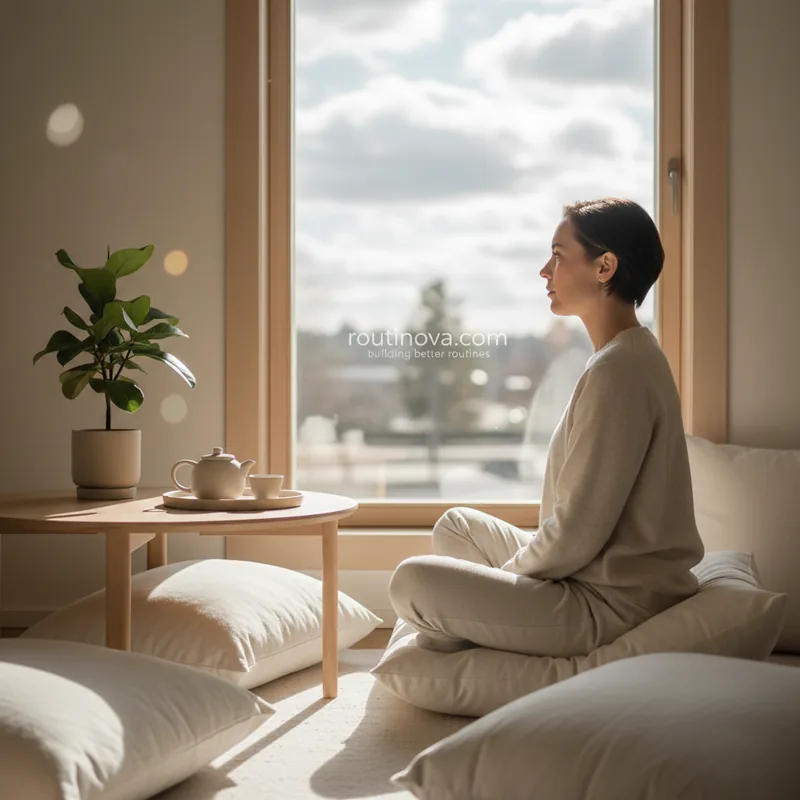
If your mind often races ahead, caught in a loop of worries about the future or regrets from the past, take a deep breath. You're not alone. In our busy world, it’s easy to get swept away by anxious thoughts, making it feel impossible to find a moment of peace. But what if a simple, accessible tool could help you anchor yourself in the present? Enter the 3-3-3 rule, a technique designed to interrupt anxious spirals and bring you back to solid ground.
So, what is the 3-3-3 rule? At its core, it’s a grounding exercise that uses your senses to pull you out of a mental storm. It’s a quick, effective way to regain control when anxiety threatens to take over. This method is incredibly practical because it requires nothing more than your awareness and your immediate surroundings.
What Is the 3-3-3 Rule?
The 3-3-3 rule is a straightforward mental exercise that helps you manage anxiety by grounding you in the present moment. When you feel overwhelmed, the goal is to engage your senses to break free from racing thoughts. It’s about shifting your focus from the internal chaos to the external world around you.
Here’s how it works: You consciously identify:
- Three things you can see. Look around and name three objects. Notice their colors, shapes, and textures. For instance, you might see a vibrant green plant on your desk, a worn-out coffee mug, and the pattern of light on the wall.
- Three things you can hear. Tune into your auditory environment. What sounds are present? Perhaps it's the hum of your computer, the distant sound of traffic, or the gentle ticking of a clock.
- Three things you can move. Bring your awareness to your body. Wiggle your toes, roll your shoulders, or gently turn your head from side to side. Focus on the physical sensation of these movements.
This practice is powerful because it’s always available. You can use the 3-3-3 rule anywhere—at your desk, in a crowded room, or even while walking down the street. It’s a tool for immediate relief, helping to diffuse the intensity of anxious feelings by redirecting your cognitive resources.
Pro Tip: To make this technique even more accessible, consider preparing a small “calm kit.” This could include a smooth stone to hold, a small portable speaker for calming music, or a few photos that evoke happy memories. Having these readily available can be a lifesaver when anxiety strikes suddenly.
How the 3-3-3 Rule Helps Calm Anxiety
The effectiveness of what is the 3-3-3 rule lies in its ability to tap into fundamental psychological and physiological responses to stress. By engaging your senses, you’re essentially performing a rapid-fire grounding exercise, which has a direct impact on your nervous system.
Here’s a deeper dive into why it works:
- Sensory Engagement Redirects Focus: Anxiety often thrives on rumination—getting stuck in negative thought patterns. The 3-3-3 rule forces a deliberate shift away from these internal narratives. By actively searching for things to see, hear, and move, you’re giving your brain a new, immediate task, starving the anxious thoughts of the attention they crave.
- Promotes Mindfulness: This technique is a practical form of mindfulness. It encourages you to be fully present in the current moment, observing your surroundings and your physical self without judgment. This present-moment awareness is the antithesis of anxiety, which often pulls you into future worries or past regrets.
- Activates the Parasympathetic Nervous System: When you’re anxious, your body’s “fight or flight” response (sympathetic nervous system) is often activated, leading to symptoms like a racing heart and shallow breathing. Grounding techniques, including the 3-3-3 rule, can help activate the parasympathetic nervous system—your body's “rest and digest” mode. This counteracts the stress response, promoting relaxation and reducing physical tension.
- Interrupts Triggers: By focusing on neutral, external stimuli, the rule helps disable the power of internal anxiety triggers. Instead of dwelling on what’s causing distress, you’re observing a lamppost, listening to birdsong, or feeling your feet on the ground. This creates a buffer, reducing the immediate impact of distressing thoughts.
- Releases Physical Tension: The ‘move’ component of the rule is crucial. Anxiety often manifests as physical tension—clenched jaw, tight shoulders, restless legs. Consciously moving parts of your body, even slightly, can help release this stored tension and re-establish a sense of physical control, which is often lost during anxious episodes.
Think of it like this: your attention is a spotlight. When you're anxious, that spotlight is stuck on a terrifying imaginary monster. The 3-3-3 rule helps you quickly swing that spotlight to mundane, real things like a blue pen, the sound of a distant lawnmower, or the feeling of your fingers tapping your leg. The monster gets less light, and your anxiety naturally dials down.
Beyond the 3-3-3: More Ways to Find Calm
While the 3-3-3 rule is an excellent tool for immediate relief, it’s just one piece of the puzzle when it comes to managing anxiety. Developing a broader toolkit of coping strategies can provide more robust support for your mental well-being. What works best often depends on the individual and the specific situation.
Here are some other effective strategies:
- Deep Breathing Exercises: Simple yet profound, focusing on slow, deep breaths can signal to your body that it's safe to relax. Inhaling deeply through your nose, filling your belly, and exhaling slowly through your mouth can significantly calm your nervous system. This is especially helpful when anxiety feels overwhelming.
- Mindful Movement: Activities like yoga, tai chi, or even a gentle walk can help release physical tension and clear your mind. The combination of physical activity and focused attention on your body’s sensations is incredibly grounding.
- Journaling for Clarity: Writing down your thoughts and feelings can be a powerful way to process them. Sometimes, simply articulating what you're experiencing can lessen its power. A gratitude journal, focusing on positive aspects of your day, can also shift your perspective.
- Engaging in Hobbies: Immersing yourself in an activity you love—whether it's painting, gardening, playing music, or reading—provides a healthy distraction and a sense of accomplishment. It’s a way to deliberately cultivate joy and focus.
- Connecting with Others: Talking about your feelings with a trusted friend, family member, or support group can provide comfort and perspective. Sometimes, just knowing you’re not alone can make a significant difference.
- Progressive Muscle Relaxation (PMR): This technique involves systematically tensing and then releasing different muscle groups in your body. It helps you become more aware of physical tension and learn to release it, promoting deep relaxation.
- Seeking Professional Support: If anxiety significantly impacts your daily life, don't hesitate to reach out to a mental health professional. Therapists can offer personalized strategies, help you understand the root causes of your anxiety, and provide ongoing support.
Remember, managing anxiety is a journey, and finding the right combination of strategies is key. Experiment with different techniques, be patient with yourself, and celebrate the small victories along the way.