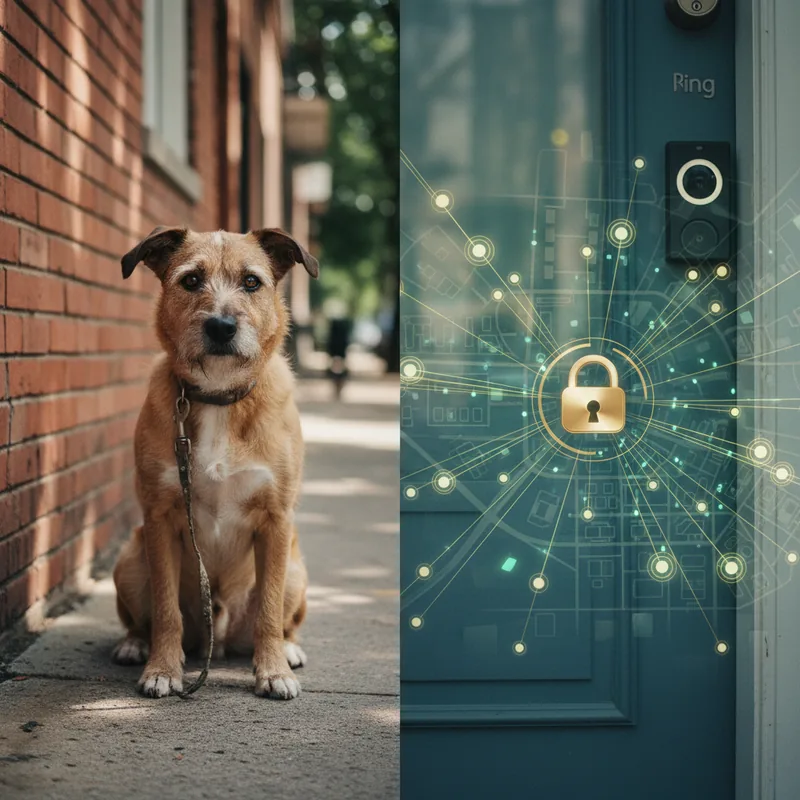
Imagine a crisp autumn morning. Sarah, a lifelong dog owner, steps outside to call her beloved golden retriever, Buster. Only Buster isn't there. Her heart drops, a cold knot forming in her stomach. She races through the neighborhood, calling his name, a frantic desperation rising with every unanswered cry. Then, a neighbor mentions Ring's new "Search Party" feature--a digital dragnet designed to find lost pets. Sarah feels a surge of hope, a desperate reprieve. But as she considers activating it, a quiet unease settles in. What exactly does this feature see? And who else might be watching?
The Promise and Peril of a Digital Search Party
If you caught the Super Bowl LX ads, you likely saw Ring's big play: a heartwarming appeal to dog owners, showcasing how its new "Search Party" feature could reunite lost pets with their families. The company probably envisioned widespread acclaim, with current users embracing the innovation and new customers flocking to buy a doorbell. But that's not quite what happened.
Instead of evoking warmth, the ad sparked a wave of discomfort and even anger. Here's the thing: the ring's 'search party' feature leverages AI to identify pets caught in its cameras' field of vision. But it's not just your single camera. The feature pools data from all Ring cameras with Search Party enabled, transforming individual devices into a collective network. Think of it as a neighborhood-wide digital search party, or, as some critics quickly pointed out, a nascent surveillance state, all in pursuit of a noble goal. But at what cost to our personal boundaries?
This immediately begs a crucial question: Can law enforcement access this data? The short answer is yes, under certain circumstances, raising significant red flags for privacy advocates (Digital Rights Watch, 2023). Ring's official stance explains that users can opt-out at any time, and only cameras in the immediate vicinity of a lost pet's reported location will participate. They also state the feature works with saved videos, meaning devices without a subscription and video history won't contribute. Yet, the fact that it relies on saved videos doesn't exactly soothe all concerns.
Beyond Lost Pets: The Slippery Slope of Surveillance
I am absolutely pro-reuniting lost pets, but I'm also fiercely pro-privacy. The ring's 'search party' feature undeniably feels like a slippery slope. Today, we're all banding together to find Mrs. Henderson's missing poodle. Tomorrow, could that same network be tasked with tracking a "suspicious person"? Innocent until proven guilty takes on a chilling new meaning when your every movement could be logged by a neighbor's doorbell camera.
This brings us to something unexpected: Ring's partnerships with companies like Flock Safety and Axon, active since October 2025. Axon supplies equipment to law enforcement, like tasers and body cameras, while Flock Safety specializes in services like license plate recognition and widespread video surveillance. These alliances enable law enforcement to post requests for Ring footage directly through the Ring app. Users in the requested area can then choose to share footage or ignore the petition, with Flock Safety claiming user privacy is maintained.
But law enforcement doesn't always rely on volunteers. According to Ring's guidelines, the company complies with "valid and binding search warrants." This isn't surprising, of course. What's more nuanced is what they share: "non-content" data (your name, address, email, billing info, account creation date, purchase history, and service usage) for both subpoenas and warrants. However, "content"--meaning your actual stored videos and recordings--is supposedly only shared in response to warrants.
Think about it this way: Imagine a scenario where local police are looking for a stolen bicycle. While they might initially ask for volunteers, a warrant could compel Ring to hand over footage from cameras that captured a "suspicious" individual, even if that person was simply walking their own dog (Privacy Rights Clearinghouse, 2024). What if police are investigating a missing package, and a warrant is issued for footage around a delivery route? Even if your ring's 'search party' feature is off, any saved video of the street could be fair game. The real danger lies in whether law enforcement gains access to footage with AI identification data. If they could see not just a video, but Ring's AI identifying a specific breed of dog or, worse, a person via facial recognition, that would be the true slippery slope into particularly dangerous territory. The full implications of the ring's 'search party' feature are still unfolding, and many questions remain about the extent of data sharing.
Reclaiming Your Privacy: Disabling Search Party and Beyond
If the thought of your doorbell participating in a neighborhood-wide digital dragnet makes you uneasy, Ring does make it relatively simple to opt-out of the ring's 'search party' feature. To start, open the Ring app, tap the hamburger menu (usually three horizontal lines), then choose "Control Center." From there, select "Search Party," and then tap the "blue Pet icon" next to each of your cameras under "Search for Lost Pets" to toggle the feature off.
For those genuinely concerned about privacy, I'd go a step further: delete your saved videos. Think of it like shredding sensitive documents instead of just putting them in the recycling bin. If the data isn't there, it can't be compromised, whether by a data breach or a law enforcement request (Cybersecurity Institute, 2023). To wipe these clips from your Ring account, navigate to the hamburger menu in the app, tap "History," choose the "pencil icon," then tap "Delete All" to clear your entire history.
Ultimately, smart home devices offer incredible convenience, but they also demand our vigilance. Regularly review your privacy settings, understand what data you're sharing, and consider whether the benefits outweigh the potential risks for your comfort level. Your digital boundaries are yours to define and defend.