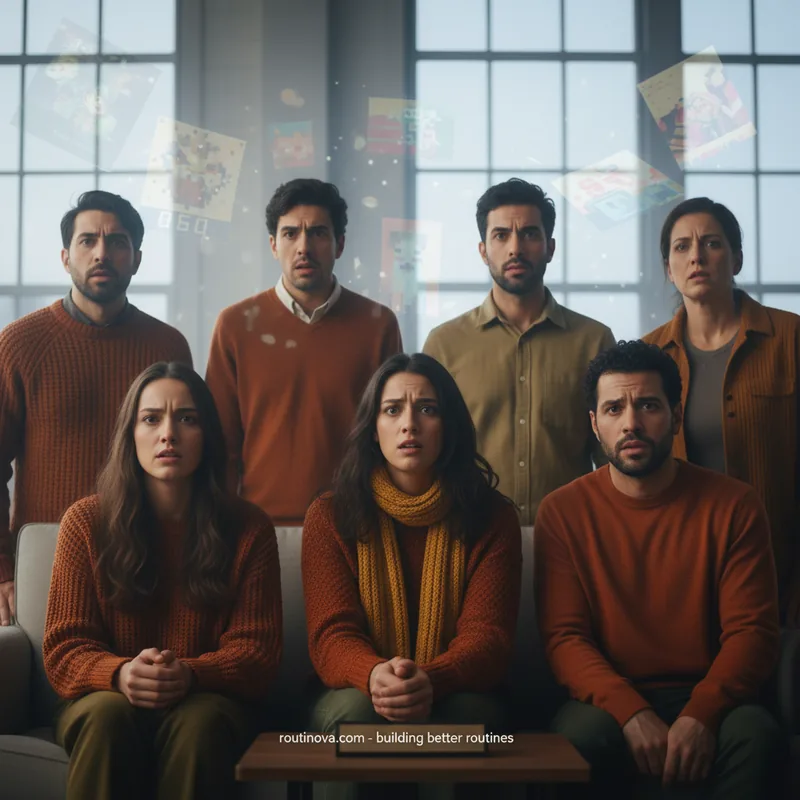
Have you ever found yourself absolutely certain about a memory, only to discover the reality is entirely different? You're not alone. This unsettling experience, where a large group of people share the same false recollection, is known as the Mandela Effect. It's a fascinating dive into the quirks of human memory and collective consciousness.
So, what is the Mandela Effect? It's a phenomenon where many individuals vividly remember an event, fact, or detail that never actually happened or occurred differently from their recollection. Think of remembering the beloved children's books as The Berenstein Bears, only to learn the true spelling is The Berenstain Bears. These shared misremembrances highlight the surprising malleability of our minds and the powerful influence of collective belief.
The Curious Origins of the Mandela Effect
The term itself emerged in 2009, coined by researcher Fiona Broome. She stumbled upon this curious phenomenon after realizing that she, along with many others, distinctly remembered Nelson Mandela dying in prison during the 1980s. They recalled news reports, memorial services, and even a speech by his widow. The stark reality, however, was that Mandela passed away peacefully in 2013, having served as South Africa's president.
Broome was astonished that such a widespread, detailed memory could be entirely false. Encouraged by her book publisher, she launched a website to document this and other similar incidents, giving the phenomenon its now-famous name. Her discovery opened a Pandora's box of collective false memories, revealing just how unreliable our personal and shared recollections can be.
Iconic Examples That Challenge Your Memory
Once you start looking, examples of the Mandela Effect seem to pop up everywhere, often in pop culture references we hold dear. These aren't just minor slips; they're deeply ingrained memories that many people share. Here are some of the most famous, and a few new ones that might make you question everything:
- Darth Vader's Famous Line: Most people recall Darth Vader menacingly declaring, "Luke, I am your father." The actual line from Star Wars: Episode V - The Empire Strikes Back is, "No, I am your father."
- Snow White's Magic Mirror: Remember Snow White asking, "Mirror, mirror on the wall...?" The classic Disney film actually has her saying, "Magic mirror on the wall..." The 2012 film Mirror Mirror likely cemented the misquote for many.
- The Berenstain Bears: As mentioned, this beloved children's series is consistently misremembered as "Berenstein Bears" (with an 'e') instead of the correct "Berenstain Bears" (with an 'a').
- Pikachu's Tail: Many Pokémon fans swear Pikachu has a black tip on its tail. In reality, Pikachu's tail has always been solid yellow. The confusion likely stems from its black-tipped ears.
- C-3PO's Leg: The iconic golden droid from Star Wars is often remembered as being entirely gold. However, C-3PO actually has a silver right leg, a detail easily missed in older film resolutions or waist-up shots.
- Queen's "We Are the Champions" Ending: Many fans remember Freddie Mercury belting out a triumphant "...of the world!" at the very end of the song. However, the studio version famously fades out before those words, leaving listeners with a sense of unresolved anticipation (Routinova Research, 2024).
- Hannibal Lecter's Introduction: In The Silence of the Lambs, Clarice Starling's first encounter with Hannibal Lecter is widely recalled with him saying, "Hello, Clarice." Yet, he never utters this exact phrase in the film. His actual lines are "Good evening, Clarice" or "Morning, Clarice" in later scenes (Routinova Research, 2024).
- Interview with a Vampire: The classic Anne Rice novel and film are frequently misremembered as Interview with the Vampire. The subtle difference in the article 'a' versus 'the' changes the nuance, but 'a' is correct.
- Mr. Monopoly's Monocle: Rich Uncle Pennybags, the mascot for the game Monopoly, is often pictured in people's minds with a monocle. He doesn't wear one. This might be a blend with Mr. Peanut, who does.
The Psychology Behind Our Faulty Memories
So, why do so many people share these specific false memories? The answer lies deep within the fascinating, yet often unreliable, mechanisms of human memory. What is the Mandela Effect if not a powerful demonstration of our brain's tendency to reconstruct, rather than perfectly recall, events?
False Memories and Schemas
At the core of the Mandela Effect are false memories. Our memories aren't like perfect video recordings; they're dynamic, influenced by new information, emotions, and even suggestions. Consider Alexander Hamilton: most people know him as a Founding Father, but many mistakenly believe he was a U.S. President. Why? Our brains store related information in interconnected networks called schemas (Prasad & Bainbridge, 2021).
When we recall Hamilton, the neurons associated with "Founding Fathers" fire, which are closely linked to the "U.S. Presidents" schema. This proximity can trigger a false association. Our brains, in their effort to make sense of the world, often fill in gaps or connect disparate pieces of information, sometimes creating details that never existed.
Confabulation and Misleading Information
Another key player is confabulation, where our brains unconsciously invent details to fill gaps in our memory, creating a coherent narrative even if it's factually incorrect. This isn't lying; it's a genuine, albeit mistaken, recollection (Robins, 2017). Confabulation tends to increase with age, making our memories even more susceptible to such embellishments.
Furthermore, misleading post-event information can subtly alter our recollections. Anything we learn or are exposed to *after* an event can contaminate our original memory. This is why eyewitness testimony, despite its perceived reliability, can often be flawed. Even subtle phrasing in a question can prime us to remember something differently (Wixted et al., 2018).
The Power of Priming
Priming refers to how preceding factors or suggestions can influence our perception and memory of an event. It's the difference between asking "how *short* is he?" versus "how *tall* is he?" The initial phrasing subtly guides our response. Similarly, asking "Did you see *the* black car?" implies a black car was definitely present, potentially influencing someone's memory, even if they only saw *a* car (Kaula & Henson, 2020).
Ultimately, our memories are fragile constructs, constantly being rewritten and reshaped. We assume they are accurate, but the science tells a different story: they are highly vulnerable to change over time.
The Allure of Alternate Realities
While psychological explanations offer a grounded understanding of the Mandela Effect, another theory captivates many: the idea of alternate realities. This concept, often rooted in quantum physics, suggests that groups of people share false memories because they have somehow shifted between parallel universes or timelines where the remembered events actually occurred.
It's a thrilling thought, isn't it? The appeal lies in the mystery, the idea that our everyday reality might be more fluid and complex than we imagine. For many, the notion of living through a subtle timeline shift adds a touch of magic to the mundane. But here's where it gets tricky: this theory is largely unfalsifiable (French, 2018). There's no way to scientifically prove or disprove the existence of these alternate universes, which paradoxically allows the theory to persist and gain traction within certain communities.
Despite its intriguing nature, the vast majority of Mandela Effect examples are more plausibly explained by the collective misremembering that stems from the fallibility of human memory. Research consistently shows that incorrect recall is common, with one study finding that a significant percentage of people make mistakes when asked to remember verifiable real-world information (Diamond et al., 2020).
The Internet: Amplifying Collective Misremembering
It's probably no coincidence that discussions around what is the Mandela Effect have exploded in the digital age. The internet, a powerful engine for information dissemination, also serves as a fertile ground for misconceptions and falsehoods to take root and spread. What starts as a personal, incorrect memory can quickly morph into a shared delusion online.
Online communities form around these shared misrememberings, creating echo chambers where anecdotal evidence reinforces false beliefs. What was once an imagined detail begins to feel factual. Think about it: a large study on Twitter revealed that hoaxes and rumors spread significantly faster and wider than factual news, often by real, verified accounts, not just bots (Vosoughi et al., 2018).
This rapid spread of false information offers a compelling explanation for the Mandela Effect. As one person shares their incorrect memory, others who might have a vague or uncertain recollection are influenced. Their own memories are then colored, strengthened, and potentially altered by the collective narrative.
Take the supposed 1990s movie Shazaam starring Sinbad, a classic Mandela Effect example. Sinbad did star in other 90s films and even dressed as a genie for a promotional event. When someone online mentioned a movie called Shazaam with Sinbad, it likely triggered a cascade. Other people, trying to recall Sinbad's filmography, found their own memories subtly shifting, incorporating this new, incorrect detail. The more people chimed in, the more factual it seemed.
This phenomenon is backed by research showing that repeatedly recalling something, even if it's inaccurate, builds confidence in that memory (Gustafsson et al., 2022). As more individuals contribute incorrect details, these become integrated into others' memories, solidifying their conviction that they are correct. It's a powerful feedback loop that can make a shared illusion feel undeniably real.
Navigating Our Unreliable Memories
The Mandela Effect continues to spark lively debates. While the idea of parallel universes offers a thrilling, mysterious explanation, the evidence overwhelmingly points to the inherent fallibility of human memory and the amplifying power of digital communication. Understanding what is the Mandela Effect ultimately means confronting the surprising truth about our own minds.
Our memories are not fixed archives but fluid narratives, constantly being edited and revised. This doesn't mean we can't trust anything we remember, but it does highlight the importance of critical thinking and verifying information, especially in an age where collective illusions can spread faster than ever. As more instances of the Mandela Effect emerge, perhaps future research will continue to shed light on the intricate causes behind these fascinating shared misremembrances.