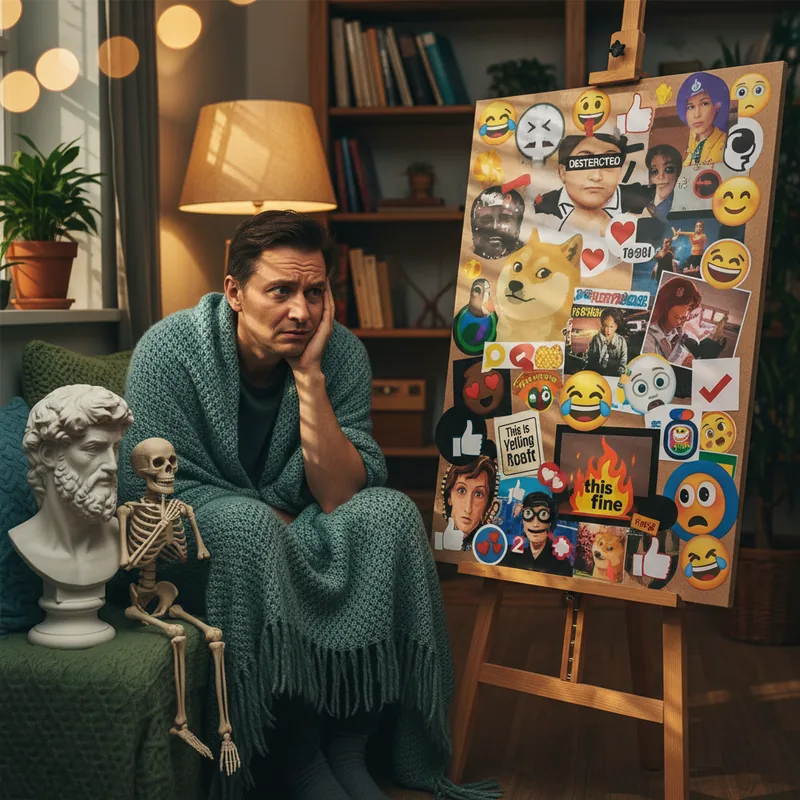
According to a recent survey by Pew Research Center (2023), over 60% of adults admit they feel 'out of sync' with current youth trends, often struggling to understand the slang, music, and digital worlds their kids inhabit. If you've ever found yourself nodding along blankly to a TikTok reference or wondering what a 'boy aquarium' even is, you're not alone. This is the out-of-touch adults' guide to navigating the often-baffling landscape of youth culture.
This brings us to one of the most unsettling recent examples that truly tests the patience of any out-of-touch adults' guide to understanding what kids are talking about: the Epstein files. My always-connected son put it plainly: "Dad, the Epstein files. That's all anyone is talking about."
The Unsettling Echoes of Epstein in Youth Culture
It's impossible to keep things light when a topic this massive dominates the cultural conversation, regardless of age. Younger people, just like you, are grappling with how to fit this immense tragedy into their worldview. For smaller kids, this often manifests in dark humor--visiting or creating Roblox Epstein Islands and joking about it in school, then later asking their parents what it truly means. It seems "Epstein's Island" is becoming shorthand for a forbidden, haunted place, much like other infamous events have been distilled into cultural references.
Older young people are processing this deluge of information in their own ways: crafting Epstein Phonk videos for TikTok, creating memes from Epstein's infamous sweater, and even using AI to insert themselves into pictures from the files. Like everyone else, they're poring over millions of documents, convinced they've unearthed details that the older generation might have overlooked.
The "Epstein on Fortnite" Rumor: Fact or Fiction?
So, is Jeffrey Epstein playing Fortnite? The short answer is no. Among the many bizarre conspiracy theories swirling around the Epstein files, one claimed Epstein was actively playing Fortnite just last week. This theory, which stretches credulity by requiring Epstein to be alive, stemmed from a YouTube receipt addressed to "littlestjeff1" found in the files, coupled with a Fortnite player using that handle. That's it. Despite a sane reaction being, "Okay, so what?", the rumor generated enough buzz that Fortnite's parent company had to address it.
They clarified that the player in question changed their handle after the name was publicly linked to Epstein. Like most internet theories, you can dig deeper, but you'll only find unverifiable screenshot "evidence" that anyone could fabricate, elaborate theories connecting unrelated data points to baseless conclusions, and a company doing desperate damage control. It's a morass, offering a bleak glimpse into the future of information dissemination.
Jeffrey Epstein's Actual Gaming Connection
While the Fortnite rumor was clearly unfounded, Epstein did have a genuine, albeit unsettling, connection to gaming. He maintained an Xbox Live account. Documents within the files include an email from Microsoft, dated December 19, 2013, confirming the permanent suspension of the account linked to Epstein's email address. The message was a boilerplate ban, citing "harassment, threats, and/or abuse of other players" deemed "severe, repeated, and/or excessive."
A subsequent email revealed the true reason for the ban: Epstein was a registered sex offender. Microsoft's action was part of a partnership with the New York Attorney General's office and other online gaming companies, aimed at removing registered sex offenders from online gaming services to minimize risks to others, particularly children (Microsoft Corporate Communications, 2013). This stark reality underscores the darker undercurrents that can exist even in seemingly innocuous online spaces.
Decoding "Phonk": A Sound Evolution
Let's shift gears to something a little less grim. For any out-of-touch adults' guide to modern music, "phonk" is a term you'll encounter, but its meaning has shifted dramatically. The word "phonk" itself has a complex history, coined in the 2010s by rapper SpaceGhostPurrp. He used it to describe his unique take on 1990s Southern hip hop, characterized by slow, "chopped and screwed" production and the distinctive use of vintage Memphis rap vocals. What's fascinating is how these elements spread primarily through SoundCloud and other online platforms, allowing the subgenre to grow without a traditional geographic "base."
SpaceGhostPurrp, for context, is an underground rapper widely recognized as one of the most influential figures in the 2010s "internet rap" era. His pioneering sound laid the groundwork for much of what followed.
However, when kids talk about "phonk" today, they're usually referring to something different entirely. In the late 2010s, a new genre emerged from Russia, dubbed "drift phonk." This style began as the soundtrack for videos of cars drifting, featuring fast tempos and heavy distortion. Unlike SpaceGhost's original "phonk," which many critics consider a rich, innovative sound, drift phonk often leans into a more aggressive, repetitive style that some find grating (Musicology Today, 2022). Gradually, "drift phonk" simply became "phonk" and evolved from car videos to become the ubiquitous soundtrack for "brainrot" content--short, often nonsensical, highly repetitive videos designed to capture fleeting attention spans.
Navigating the Digital Lexicon: Boy Aquariums & AI Caricatures
More slang! "Boy aquarium" is a TikTok term describing hockey games. This phrase gained traction thanks to the popularity of HBO's hockey-player romance series, Heated Rivalry. Posting videos about the "boy aquarium" has become a popular trend on TikTok, with many creators sharing genuinely funny takes on the phenomenon.
This kind of niche, rapidly evolving slang is a constant in youth culture. Another recent example is "Girl Math," where users humorously justify extravagant purchases or questionable financial decisions with convoluted, often illogical, mathematical reasoning. It's less about actual math and more about a shared comedic understanding of consumer culture (Digital Trends Analysis, 2024). Navigating these digital currents is a core part of any out-of-touch adults' guide to contemporary youth trends.
If your social media feed is suddenly overflowing with weird, cartoonish versions of people you follow, here's the deal: the latest trend involves asking ChatGPT or another AI to generate a caricature of you based solely on your interactions with it. It's popular because it's easy, and often quite amusing--or so I thought before I tried it myself.
Credit: Stephen Johnson/Gemini. Jesus--I want to punch myself in the face. The AI captured a certain exasperated, slightly unhinged energy I didn't realize I was projecting.
Finding Moments of Whimsy in the Online World
Amidst the heavy topics and bewildering trends, there are still moments of pure, unadulterated joy online. This week's viral video, for instance, features a duck with a clover on its head. Sometimes, the internet just delivers simple, heartwarming content that cuts through the noise.
If you need a palate cleanser, TikTok's #babyducks hashtag is a treasure trove of cuteness. There are countless ducklings who never did anything bad to anyone. Look at this little guy just cheepin' away! This duckling is trying on hats because he thinks he's people! Here are some lil' babies taking a bird bath. This one fell asleep in a mug! These small, delightful moments remind us that not everything in youth culture is complex or concerning.
Ultimately, this out-of-touch adults' guide to youth culture isn't just about understanding the latest memes or music; it's about bridging a generational gap. It's about recognizing that while some trends are fleeting or even troubling, the core human desire for connection, expression, and a bit of whimsy remains constant. Staying curious, even when confused, is the first step to truly connecting with the younger generations in your life.