Ever feel like you're speaking a different language than your partner, friend, or colleague? The Enneagram, a powerful system of personality typing, offers a fascinating lens through which to understand these dynamics. It suggests that understanding our core motivations and fears--and those of others--can radically transform how we connect, communicate, and navigate conflict.
The core idea is simple yet profound: by recognizing the nine distinct Enneagram types, we can decode the emotional landscapes that shape our behaviors. This self-awareness isn't just about labeling people; it's about building empathy, fostering deeper connections, and creating more harmonious relationships, both personally and professionally.
Understanding the Enneagram Framework
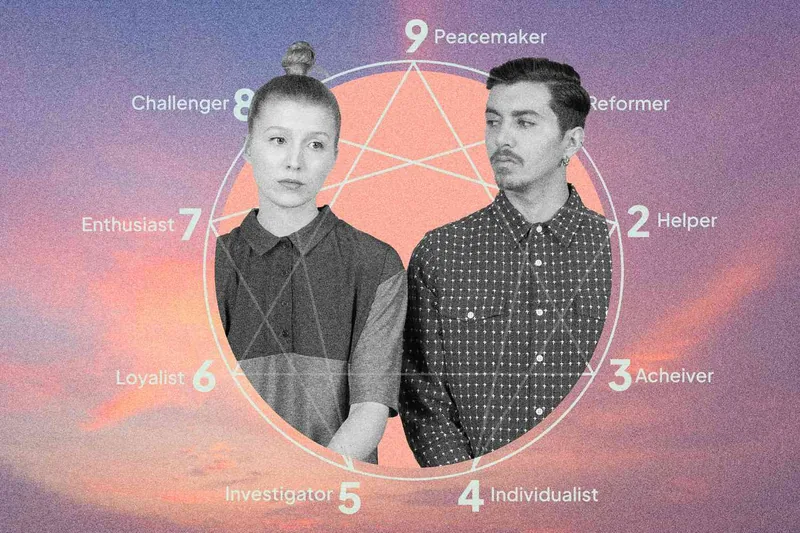
At its heart, the Enneagram system is a map of the human psyche. It proposes that there are nine fundamental personality types, each characterized by a unique basic fear, a core desire, and predictable patterns of behavior, especially under stress or when feeling secure.
While research into its validity is ongoing, many find the Enneagram incredibly useful for personal growth and understanding interpersonal dynamics. It provides a framework to explore why we react the way we do, what truly drives us, and how these internal motivators play out in our interactions with others.
Think of it as a toolkit for self-discovery. By understanding your own type and the types of those around you, you gain invaluable insights into your own strengths and blind spots, as well as the potential challenges and opportunities in your relationships.
The Nine Enneagram Types at a Glance
Each of the nine types offers a unique perspective on the world, driven by distinct underlying motivations:
- Type 1: The Reformer - Driven by the desire to be good and right, often embodying principles and order.
- Type 2: The Helper - Motivated by the need to be loved and appreciated, focusing on the needs of others.
- Type 3: The Achiever - Aspires to be valuable and admired, characterized by ambition and a drive for success.
- Type 4: The Individualist - Seeks to find their identity and significance, often artistic and introspective.
- Type 5: The Investigator - Driven by the need to be competent and knowledgeable, valuing privacy and insight.
- Type 6: The Loyalist - Seeks security and support, demonstrating commitment and a cautious approach.
- Type 7: The Enthusiast - Desires to be satisfied and happy, embracing variety and optimism.
- Type 8: The Challenger - Driven by the need to be self-reliant and strong, often assertive and protective.
- Type 9: The Peacemaker - Seeks inner stability and peace, valuing harmony and avoiding conflict.
How Enneagram Shapes Relationships
The Enneagram system offers more than just personal insight; it provides a powerful framework for understanding relationship dynamics. Research suggests that understanding these personality types can foster greater tolerance, improve communication, and lead to more positive interactions in all areas of life.
When you grasp the core fears and desires of different types, you can begin to see why certain behaviors occur. This understanding cultivates empathy, making it easier to appreciate that differing perspectives are not a sign of wrongness, but simply a different way of experiencing the world.
This perspective shift is crucial. It allows us to move beyond frustration and judgment towards curiosity and compassion. Recognizing these patterns helps us appreciate the unique contributions each person brings to a relationship and identify potential friction points before they escalate.
Exploring Enneagram Pairings and Potential
While every individual is unique, understanding Enneagram compatibility can offer valuable insights into how different types might interact. Here's a look at how some types tend to pair:
Type 1: The Reformer
Reliable and principled, Type 1s bring integrity to relationships. Their challenge often lies in self-criticism and a tendency to judge others. They often thrive with partners who appreciate their commitment to doing what's right, finding synergy with supportive types like a Type 2 (Helper) or a grounding Type 6 (Loyalist).
Type 2: The Helper
Warm and attentive, Type 2s excel at making others feel loved. Burnout can occur when their efforts to nurture go unappreciated or when they overextend themselves. They often find a beautiful balance with a Type 9 (Peacemaker), whose calm presence complements their giving nature, or a Type 8 (Challenger), where their nurturing can soften the 8's intensity.
Type 3: The Achiever
Ambitious and energetic, Type 3s bring drive to relationships. Their challenge can be a tendency to perform rather than be authentic, sometimes struggling with vulnerability. They can connect well with the competence-focused Type 1 (Reformer), or find growth with a Type 2 (Helper), who encourages emotional depth.
Type 4: The Individualist
Introspective and artistic, Type 4s offer depth and uniqueness. Moodiness and a struggle with emotional openness can present challenges. They often resonate with fellow artistic types, finding connection with a Type 1 (Reformer)'s idealism or a Type 9 (Peacemaker)'s steady artistic appreciation.
Type 5: The Investigator
Intellectual and independent, Type 5s bring keen insights. Emotional detachment can be a barrier in intimacy. They often pair well with a Type 1 (Reformer), who values their analytical skills, or a Type 2 (Helper), who can gently encourage them toward greater emotional expression.
Type 6: The Loyalist
Committed and reliable, Type 6s are anchors in relationships. Anxiety and a need for security can sometimes create friction. Interestingly, a dynamic pairing can be with a Type 8 (Challenger). While the 8 might initially find the 6's need for reassurance taxing, the 8 can learn to offer steady support, while the 6 can build self-trust.
Type 7: The Enthusiast
Upbeat and spontaneous, Type 7s bring fun and adventure. Commitment can be a challenge due to a fear of missing out. They often enjoy dynamic relationships with other goal-oriented types, such as a Type 3 (Achiever), sharing a zest for life and accomplishment.
Type 8: The Challenger
Protective and passionate, Type 8s offer strength and loyalty. Their directness can sometimes be perceived as authoritarian, and vulnerability can be difficult. They often find a complementary dynamic with a Type 2 (Helper), whose gentleness can soften their edges, or a Type 9 (Peacemaker), who brings balance to their intensity.
Type 9: The Peacemaker
Calming and steady, Type 9s create a peaceful atmosphere. Avoiding conflict can lead to suppressed feelings. They often connect well with the warmth of a Type 2 (Helper), appreciating their genuine care, and can also find comfort in the stability they offer to more intense types.
Common Relationship Friction Points
Understanding which Enneagram types are most likely to clash can be as illuminating as understanding compatibility. For example, the structured, orderly nature of a Type 1 (Reformer) can often find itself at odds with the free-spirited, variety-seeking nature of a Type 7 (Enthusiast).
The Type 1 might see the Type 7 as disorganized or unreliable, while the Type 7 might feel stifled by the Type 1's need for rigid plans. This isn't an insurmountable barrier, but it highlights a core difference in how they approach life and relationships.
Another common dynamic arises when one partner feels overlooked or not given enough emotional attention. This can happen across many pairings but is particularly challenging when fundamental communication styles differ significantly. Learning to actively listen, express needs clearly, and establish healthy boundaries are vital for navigating these inevitable conflicts.
Consider a scenario where a highly analytical Type 5 (Investigator) is in a relationship with an emotionally expressive Type 4 (Individualist). The 5 might struggle to articulate feelings, while the 4 might feel unheard if their emotional needs aren't met with verbal validation. The key for this pairing is for the 5 to practice expressing emotions in their own way, perhaps through actions or shared activities, and for the 4 to recognize the 5's unique way of showing care.
Building Stronger Bonds with Enneagram Insights
The real power of the Enneagram lies not just in identifying compatibility, but in using that knowledge to actively build healthier, more resilient relationships. When you understand the underlying motivations of your partner, friends, or family members, you can approach their actions with greater compassion.
Reframing their behavior through the lens of their Enneagram type can turn potential irritations into opportunities for understanding. Instead of thinking, "Why are they always so critical?" you might consider, "Ah, this is their Type 1 striving for perfection." This simple shift can de-escalate tension dramatically.
Sharing Enneagram insights can also be a collaborative effort. When both individuals understand each other's types, they can frame their differences not as flaws, but as complementary strengths. This mutual awareness makes compromise easier and fosters a sense of teamwork in the relationship.
Furthermore, recognizing your own patterns and triggers--and those of your partner--allows for proactive management of conflict. It empowers you to take responsibility for your role in disagreements and work towards personal growth, making the relationship stronger in the process.
The Enneagram as a Tool, Not an Endpoint
Understanding which Enneagram types are most compatible is a fantastic starting point for deeper self-awareness and improved relationships. It offers a valuable framework for empathy, communication, and navigating differences with grace.
However, it's crucial to remember that the Enneagram is a guide, not a definitive rulebook. Personality is complex, and individual experiences shape us in countless ways. While the Enneagram can illuminate core motivations, it doesn't negate the need for open communication, active listening, and genuine effort in any relationship.
For persistent challenges or deeply ingrained patterns, seeking guidance from a professional therapist or relationship coach trained in the Enneagram can provide personalized strategies and support. The Enneagram is a powerful ally in the journey of connection, helping us to understand ourselves and each other better, fostering growth and stronger bonds along the way.