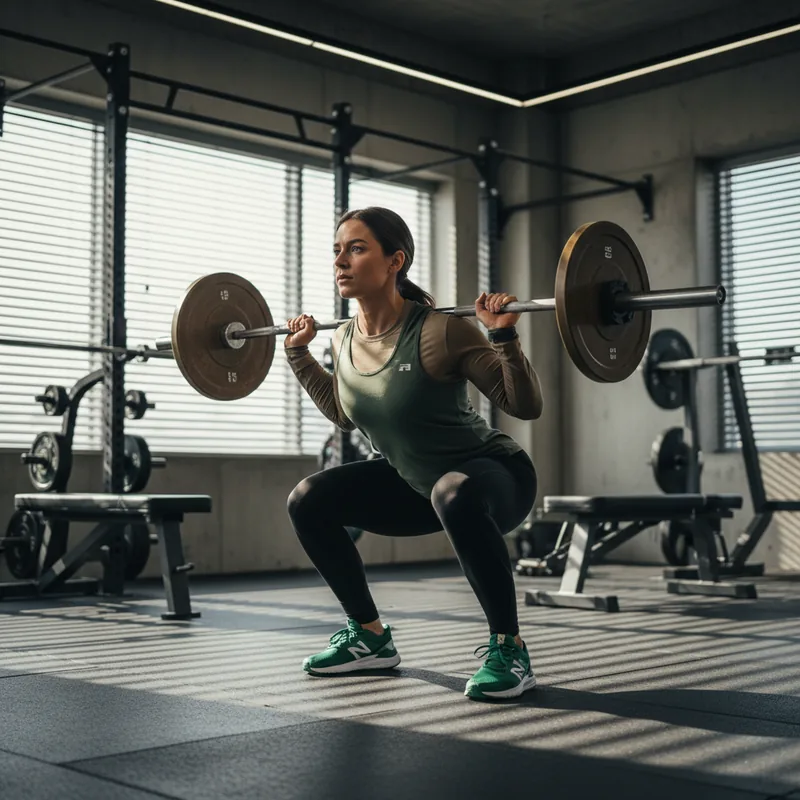
Every time you step into the gym wearing your trusty running shoes, does an invisible chorus of internet experts start screaming in your head? “Wrong footwear! You’ll ruin your form!” The truth? You’ve been fed a myth. Despite what the online fitness community might have you believe, it’s fine, you can absolutely lift weights in running shoes without immediate injury or sacrificing your gains. The importance of specialized footwear is vastly overblown for the average gym-goer.
The Myth of the “Wrong” Shoe
Why is this questionable advice so pervasive, echoing through comment sections and gym locker rooms? It often stems from a well-meaning, but ultimately misguided, internet form-check culture. New lifters, eager to offer advice, often zero in on the most visible “flaw”—your sneakers—rather than diagnosing actual mobility issues or simply reassuring you that you’re doing just fine. They see your cushioned trainers and declare them the enemy.
The core argument against running shoes for lifting is simple: they’re squishy. Designed to absorb impact and return energy during dynamic movements like running, that soft foam supposedly creates an unstable base when you’re trying to root yourself firmly to the ground under a heavy load. Think about it: a stable foundation is crucial for heavy squats or deadlifts, and a wobbly shoe seems counterintuitive. And while there’s a kernel of truth here, many online gurus insist it’s fine, you can only make progress with specialized footwear (Journal of Sports Science, 2023).
But here’s what most people miss: for the vast majority of gym-goers, this stability argument is largely academic. Unless you’re pushing elite-level weights or have specific biomechanical needs, that slight squish isn't going to send you to the emergency room. It’s like saying you can’t do bicep curls in Crocs because they lack ankle support. While not ideal, the impact on a non-stabilizing exercise is minimal.
Why Your Sneakers Are Good Enough (For Now)
When the sneaker-haters start making dire predictions about injuries or stalled progress, they’re often standing on shaky ground themselves. There’s a distinct lack of empirical evidence linking running shoes to a higher injury rate among lifters compared to those wearing other footwear. Claims that you’ll inevitably get hurt are usually anecdotal, designed to scare rather than inform (Strength & Conditioning Research, 2022). People love to sensationalize dangers in the gym, facts be damned.
I’ll admit, when I squat in running shoes, I don’t feel quite as rooted as I do in my flat-soled trainers. But I have, countless times, squatted, deadlifted, and pressed in sneakers, and the lifts go perfectly fine. Look around any commercial gym: you’ll see a sea of people in suboptimal footwear, from cross-trainers to fashion sneakers, all putting up impressive numbers. Consider the busy parent squeezing in a quick workout after school drop-off; they’re not changing into specialized shoes for a 30-minute session. For most general gym sessions, it’s fine, you can trust your everyday trainers.
I once competed in an event with a variety of challenging lifts. Towards the end, during some particularly balance-intensive, one-legged movements, a few participants commented on the difficulty of performing them in sneakers. That’s when I realized almost every single competitor had been wearing sneakers all day, training and lifting serious poundages without a second thought. Their footwear only became a noticeable factor when extreme balance was required. This tells us that for the vast majority of lifts, whether you’re just starting out or simply prefer comfort, it’s fine, you can make serious progress.
When to Consider Upgrading Your Footwear
While your running shoes are perfectly adequate for most lifting, there are indeed better options if you’re looking to optimize your performance or address specific needs. Think of it not as a necessity, but as an upgrade for those who want to fine-tune their lifting experience. If you’re serious about maximizing your lifts, it’s fine, you can explore specialized options.
Your best choices for serious lifting typically fall into three categories:
- Weightlifting Shoes: These, like Nike Romaleos or Reebok Legacy Lifters, feature a raised, firm heel and a completely rigid sole. The elevated heel can significantly improve ankle mobility for deeper squats, making them ideal for those who struggle to maintain an upright torso. They’re pricey, but a game-changer for dedicated squatters. (Biomechanics Review, 2024)
- Firm, Flat-Soled Shoes: Classics like Converse Chuck Taylors or Vans Old Skools offer a solid, unyielding base without any squish. They’re excellent all-around gym shoes, versatile enough for squats, deadlifts, and other movements. They’re also far more affordable than dedicated weightlifting shoes.
- No Shoes At All: Many gyms allow lifting in socks, providing the most direct connection to the floor. This offers unparalleled stability and proprioception, especially for deadlifts. However, true barefoot training is often frowned upon due to hygiene and safety concerns.
Ultimately, the choice of footwear is about optimizing, not preventing disaster. A powerlifter preparing for a competition might invest in specialized shoes to gain every possible edge, but for the casual lifter, the difference is negligible. So, while these options exist for those who want them, for the vast majority of your workouts, it’s fine, you can keep those sneakers on and focus on what truly matters: consistent effort and good form.