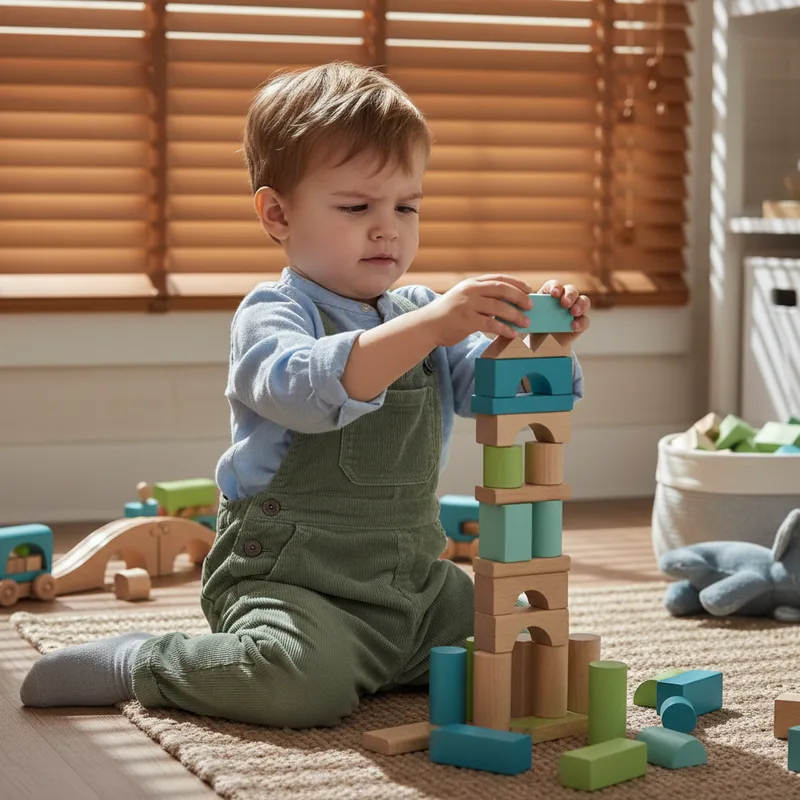
Remember that moment when a tiny hand insisted, 'Me do it!' as you tried to tie their shoe? Or the fierce concentration as they built a towering fort, only for it to tumble down, followed by a quick glance at your face? This isn't just a phase of toddler stubbornness; it's the heart of the initiative vs. guilt stage, a pivotal period in Erik Erikson's theory of psychosocial development. Occurring roughly between ages 3 and 5, this stage is where children begin to assert their power and control, directing their own play and social interactions, laying the foundation for a lifelong sense of purpose.
The central question echoing in a child's mind during this time is profound: 'Am I good or bad?' How caregivers respond to their child's burgeoning independence and adventurous spirit profoundly shapes their answer to this question. It's about empowering them to explore, try new challenges, and make choices within a supportive environment, ultimately fostering a robust sense of initiative rather than a stifling feeling of guilt.
The Crucial Crossroads of Preschool
The initiative vs. guilt stage, Erikson's third psychosocial conflict, defines the preschool years, typically from ages 3 to 5. This is a time of immense growth, where a child's world expands beyond their immediate caregivers to include peers, imaginative play, and a growing understanding of their own capabilities. The basic virtue developed here is purpose, born from the important events of exploration and play (Erikson, 1963).
Think of initiative as a child's enthusiastic drive to attempt new tasks, join in activities with others, and use their burgeoning skills in play. It's the spark that ignites their desire to lead a game, plan a pretend adventure, or even try to dress themselves for the first time. This innate curiosity and drive give kids a profound sense of purpose and the confidence to try new things without the paralyzing fear of failure or embarrassment (Child Development Institute, 2023).
For instance, consider a four-year-old determined to put on their own shirt. They might struggle, get it on backward, or upside down. But the act of trying, of initiating the task themselves, is crucial. If their effort is met with encouragement - 'Wow, you tried so hard! Let's see if we can get it the right way together!' - they learn that their attempts are valued, fostering initiative. This is the essence of building a truly free sense of enterprise, where a child learns they can exert power over themselves and their world (Routinova Research, 2024).
On the flip side, guilt emerges when a child's efforts are consistently met with criticism, punishment, or ridicule. It's the shame over failing to complete a task successfully, or the embarrassment over attempting something new and making a mistake. Children who experience guilt interpret these mistakes as personal failures, internalizing the belief that they are somehow 'bad.' A child who feels more guilt than initiative at this stage learns to resist trying new things, fearing the negative repercussions or the sting of failure.
Nurturing Purpose: The Power of Exploration
Children who successfully navigate the initiative vs. guilt stage develop a powerful internal compass. They become eager to try new activities and experiences without an excessive fear of failure. They learn to understand what they can and cannot control, and crucially, they don't feel guilty when they inevitably make mistakes. Instead, they grasp the simple yet profound lesson that they just need to try again.
This foundational understanding cultivates ambition and direction, essential traits for later productivity and a fulfilling life. How do kids develop this invaluable sense of initiative? It largely hinges on the freedom and encouragement they receive to engage in play and imagination. When children are given the space to direct their own play, to invent scenarios, and to experiment with roles, they feel excited about exercising control over their actions.
Having opportunities to make choices in a supportive environment is absolutely essential. This doesn't mean letting kids do whatever they want without boundaries; rather, it means allowing them to be curious, to tackle new challenges, and to solve problems. Caregivers provide safety and guidance when needed, but they strategically avoid criticism that might undermine a child's burgeoning confidence. For example, watching a child organize a complex game of 'store' with their friends - assigning roles, setting prices for imaginary goods, and managing the 'customers' - is a clear demonstration of initiative in action (Child Development Institute, 2023).
This active, self-directed engagement helps children understand their own capabilities and limitations, fostering a robust sense of self-efficacy. It's about empowering them to be the architects of their own experiences, even if those experiences sometimes lead to a tower of blocks crashing down.
Guiding Growth: Limiting the Shadow of Guilt
Success in the initiative vs. guilt stage relies on striking a healthy balance. Initiative naturally leads to a sense of purpose and can even help develop early leadership skills. But when efforts are stifled or met with constant disapproval, the result is guilt. Children who don't develop initiative during these crucial years may become fearful of trying new things, feeling that their self-initiated efforts are somehow wrong or embarrassing.
This stage can sometimes feel frustrating for parents and caregivers. Children begin to exercise more control over their friendships, the activities they engage in, and how they approach different tasks. You might want to guide them toward certain choices, only for them to resist and insist on making their own. While this can lead to conflicts, it's vital to give kids the chance to make their own choices, always within safe and reasonable boundaries. Modeling good choices and offering positive reinforcement are powerful tools here (Parenting for Brain, 2024).
To help prevent feelings of guilt, caregivers can make a conscious effort to:
- Encourage learning from mistakes: Instead of scolding a child for spilling juice while trying to pour it themselves, a caregiver might say, 'Oops! That happens sometimes. Let's clean it up together, and next time we can try holding the cup with two hands.' This frames the error as a learning opportunity, not a personal failure.
- Avoid excessive criticism and ridicule: Harsh words or dismissiveness can deeply wound a child's developing sense of self-worth.
- Promote persistence: Encourage them to keep trying through practice and gentle encouragement, emphasizing effort over immediate success.
- Nurture natural curiosity: Respond to their questions and explorations without judgment or impatience.
Children who are over-directed by adults, constantly told what to do or how to do it, often struggle to develop a strong sense of initiative and confidence in their own abilities. The goal is to provide a supportive scaffold, not a rigid cage, allowing them the freedom to explore and grow into their own unique selves.
Erikson's Lifespan Journey: Context for the Initiative vs. Guilt Stage
The initiative vs. guilt stage is just one piece of Erik Erikson's comprehensive theory of psychosocial development. Erikson, a psychoanalytic theorist, proposed that development isn't just confined to early childhood, as some theories suggested. Instead, he believed that individuals face specific psychosocial challenges throughout their entire lifespan, from birth to old age (American Psychological Association, 2023).
Each of Erikson's eight stages presents a unique conflict that, when resolved successfully, contributes to a healthy personality and the acquisition of a specific virtue. The way we navigate these challenges at different ages profoundly impacts our later development. Understanding where the initiative vs. guilt stage fits within this broader framework helps us appreciate its long-term significance:
- Trust vs. Mistrust (Birth to 18 months): Developing a sense of security.
- Autonomy vs. Shame and Doubt (18 months to 3 years): Learning independence and self-control.
- Initiative vs. Guilt (3 to 5 years): Asserting control and developing purpose.
- Industry vs. Inferiority (6 to 11 years): Gaining competence and confidence in school and social settings.
- Identity vs. Confusion (12 to 18 years): Forming a sense of self and personal identity.
- Intimacy vs. Isolation (18 to 40 years): Building close, loving relationships.
- Generativity vs. Stagnation (40 to 65 years): Contributing to society and guiding the next generation.
- Integrity vs. Despair (65 years to death): Reflecting on life with a sense of fulfillment or regret.
The lessons learned in the preschool years, particularly regarding initiative and purpose, become the bedrock for tackling the challenges of industry in middle childhood and forging a strong identity in adolescence. By nurturing initiative and gently guiding children through the inevitable moments of guilt, we empower them to become resilient, self-directed individuals ready to embrace the complexities of life.