According to a recent survey by Pew Research (2023), over 60% of daily internet users engage with online puzzles or brain games, highlighting the widespread appeal of mental challenges like Strands. If you're among the millions seeking to sharpen your mind and conquer today's NYT Strands hints and puzzle, you've come to the right place. For Tuesday, February 3, 2026, the puzzle's theme is "On key," and this guide provides essential hints, strategic tips, and the complete solution to help you navigate the letter grid.
Unraveling Today's NYT Strands Puzzle
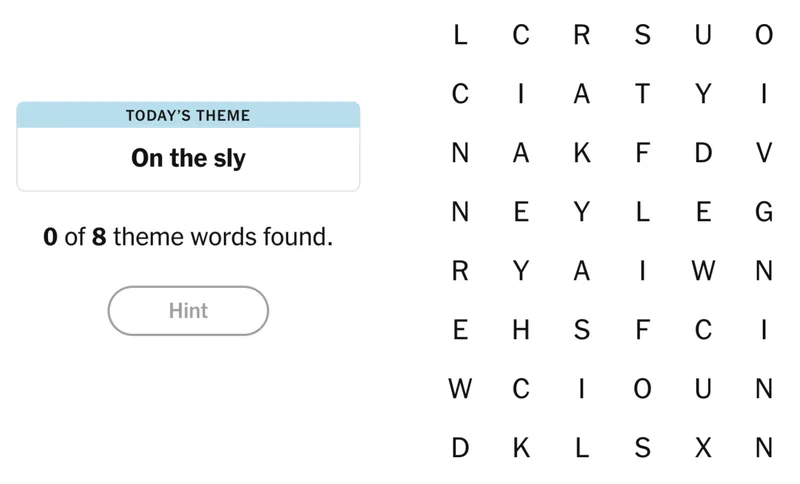
The daily Strands puzzle from the New York Times offers a refreshing twist on traditional word games, blending elements of a word search with a thematic challenge. Each day presents a unique theme, which for February 3, 2026, is "On key." To successfully complete the board, players must uncover a central "spangram" and several theme words that all relate to this core concept.
If you're searching for today's NYT Strands hints, you'll find them here, designed to guide you without immediately spoiling the fun. We recommend taking only the clues you need to keep the brain-teasing satisfaction alive. Whether you're a seasoned Strands solver or a newcomer, our breakdown will provide the clarity you need to achieve victory.
Strategic Hints for the "On Key" Theme
Before diving into the full solution, let's explore some carefully crafted clues to nudge you in the right direction for today's puzzle. The theme "On key" might initially suggest musical notes or literal physical keys, but in the world of Strands, themes often have clever, less obvious interpretations. Consider how this phrase could apply to language, communication, or even technology.
Remember to scroll slowly, revealing only the hints you require to maintain the challenge. Your goal is to identify words that fit the overarching "On key" concept, leading you closer to the elusive spangram and the remaining theme words.
Spangram Clue
Think of something that represents or stands for something else, often used to convey meaning without words. It's a fundamental element in communication and digital interfaces alike.
Theme Word Clues
The theme words are all related to specific characters or indicators you might encounter on a keyboard or in written text. They are not letters or numbers themselves, but rather specific designators that serve various functions, from marking text to structuring code. Consider the diverse range of non-alphanumeric characters at your fingertips.
Full Solution: Today's NYT Strands Answer Revealed
Proceed with caution! Below, we unveil the complete solution for today's NYT Strands hints and puzzle. If you prefer to continue solving on your own, now is the time to stop scrolling. For those ready to confirm their guesses or simply get the answer, the mystery of "On key" is about to be resolved.
The Spangram for February 3, 2026
The spangram that spans the entire board for today's Strands puzzle, reflecting the "On key" theme, is: SYMBOL.
All Theme Words for "On Key"
With "SYMBOL" as our guiding spangram, the theme words for February 3, 2026, all represent distinct keyboard characters or textual indicators. These are the specific symbols hidden within the grid:
- ASTERISK
- TILDE
- BRACKET
- HASHTAG
- UNDERSCORE
- CARET
These symbols are ubiquitous in digital communication and programming. Other common examples of such textual markers, though not in today's puzzle, include the ampersand (&), the at sign (@), and the exclamation mark (!), each serving unique functions in language and code (Linguistics Today, 2022). Understanding this broader category helps in identifying the specific words in the puzzle.
My Strategy: Solving "On Key"
Approaching the "On key" theme, my initial thoughts immediately drifted to musical keys or literal door keys. This common misdirection is part of Strands' charm. I began by scanning the board for obvious words, regardless of the theme, to get a feel for the letter distribution and potential starting points. Words like UNDER, BOOK, ROOK, and ROCKET appeared, but quickly proved to be red herrings, not fitting the thematic direction.
The breakthrough came with identifying HASHTAG in the upper right. This immediately shifted my perspective from musical keys to computer keyboard keys or textual symbols. The "shap" symbol association in music also subtly connected to the keyboard's pound sign. From there, other related symbols started to emerge. BRACKET, positioned near HASHTAG, solidified this new interpretation.
Once the "keyboard symbol" concept clicked, finding ASTERISK and TILDE became much easier, as they are also prominent keyboard characters. At this point, the spangram SYMBOL became apparent, stretching across the board and confirming the theme. With the spangram found, the remaining theme words, UNDERSCORE and finally CARET, quickly fell into place, completing the puzzle with satisfying clarity.
This process highlights the importance of re-evaluating initial assumptions and being open to different interpretations of the theme clue. Sometimes, the most direct path isn't the correct one in Strands.
Master the Game: A Guide to Strands
For those new to the New York Times Strands, or looking to refine their technique, understanding the mechanics is crucial. This innovative word puzzle combines the thrill of a word search with the intellectual challenge of a crossword, all centered around a cryptic theme clue.
Strands: A Unique Word Puzzle
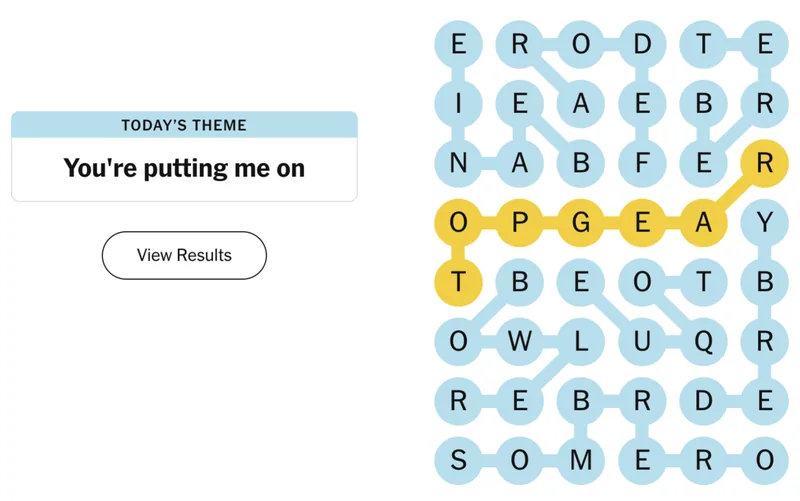
Upon starting, you're presented with a letter grid and a theme clue, like "Better with age." Your primary objective is to locate hidden words aligning with this theme. The most critical word is the "spangram," which explicitly defines the theme (e.g., FERMENTED for "Better with age"). This unique word stretches across the entire board, either horizontally or vertically, highlighted in yellow upon discovery.
Theme words, once found, are highlighted in blue. Words can traverse in any direction--up, down, left, right, or diagonally--and each letter can only be used once. There is always only one correct solution to each daily puzzle.
Leveraging Hints and Winning
Stuck on today's NYT Strands hints? The game offers a clever hint system. Submit any valid non-theme words (four letters or more). For every three non-theme words, the "Hint" button activates. Clicking it highlights all letters of one remaining theme word. You still need to connect these letters in the correct sequence. Using another hint before solving a previously hinted word reveals its letter order.
The beauty of Strands lies in its forgiving nature; you cannot fail. There are no limits on guesses or time constraints. A word is either correct, contributes to a hint, or is invalid. Victory is achieved when all letters on the board are used, identifying the spangram and every theme word. Your daily performance, showing blue dots for theme words, a yellow dot for the spangram, and lightbulbs for hinted words, is then presented on a shareable card.
Mastering Strands, like any habit, comes with practice and a keen eye for thematic interpretation. Keep these strategies in mind as you tackle future puzzles, and enjoy the satisfaction of unraveling each daily challenge.