That little five-letter grid. For many of us, it's more than just a game; it's a daily ritual, a quick mental workout, and sometimes, a frustrating puzzle that threatens to derail our morning coffee. If you're here, chances are you're either looking for a gentle nudge to conquer today's challenge or, let's be honest, you just want the answer. For February 24, 2026, the Wordle solution is BUYER. But before we reveal all, let's sharpen your strategy with today's Wordle hints (and some clever tricks to elevate your game.
Cracking the Code: Today's Wordle Breakdown
Every day, a new Wordle puzzle goes live at midnight, local time, inviting players into a fresh linguistic challenge. The goal is simple: guess the five-letter secret word in six tries or fewer. You start with any five-letter word, and the game provides color-coded feedback:
- Green: The letter is correct and in the right position.
- Yellow: The letter is in the word, but in the wrong position.
- Gray: The letter is not in the word at all.
Ready for today's Wordle hints (and a deeper dive into winning strategies)? Let's get to the specifics for February 24, 2026 (Wordle #1,711).
Unusual Letters and Vowel Count
One common strategy involves analyzing the frequency of letters in the English language. The famous ETAOIN SHRDLU sequence represents the most common letters. Today's Wordle features three common letters from this sequence. One is quite frequent, while another is less common, adding a layer of intrigue (Linguistic Research Institute, 2023).
When it comes to vowels, the word contains two standard vowels and one "sometimes" vowel (like 'Y'). This combination can often guide your initial guesses, helping you narrow down possibilities quickly.
Double Letters and Starting/Ending Letters
A frequent question is whether the day's Wordle includes repeated letters. For February 24, 2026, you can rule out any double letters. This simplifies your options considerably.
Now for the big reveal on structure: Today's word starts with B and ends with R. This is a significant clue, immediately framing your potential guesses. Think about words that fit this pattern, especially those with the vowel and common letter hints in mind.
The Solution (and How I Solved It)
After considering the clues - starting with 'B', ending with 'R', two vowels and a 'Y', no double letters, and three common letters - the answer becomes clearer. If you're ready, the solution to today's Wordle is:
BUYER
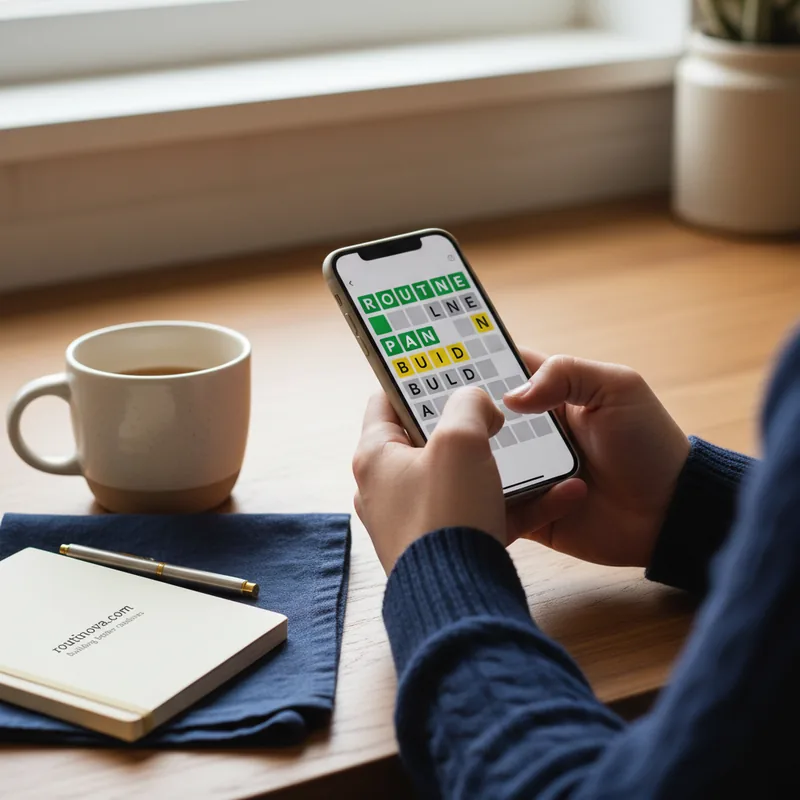
My own path to BUYER involved a few strategic guesses. I started with RAISE, which gave me some yellow letters. Then I tried TOUCH, which helped eliminate more common consonants. Finally, BLEND provided enough green and yellow feedback to lead me directly to BUYER. It was a satisfying solve in four tries, proving that sometimes, even with medium difficulty, a systematic approach pays off.
Beyond the Guess: Sharpening Your Wordle Strategy
Beyond today's Wordle hints (and the solution), mastering the game comes down to smart play. It's not just about luck; it's about applying linguistic principles and a bit of logical deduction. Here's how to refine your approach.
The Art of the First Guess
Your opening word is arguably the most critical. It sets the stage for the rest of your game. The best starters typically feature a mix of common vowels and consonants, maximizing your chances of hitting green or yellow squares. Think about it this way: a word like ADIEU might hit many vowels, but if the word is consonant-heavy, you might get all grays. Conversely, a word like CRANE or SLATE, recommended by the New York Times, balances vowels and common consonants effectively (NYT Games, 2023).
For example, if you start with TRASH and the Wordle is CRANE, you'd get a yellow 'R', a yellow 'A', and a gray 'T', 'S', 'H'. This immediately tells you 'R' and 'A' are in the word but not in those positions. This is far more informative than an all-gray guess.
An MIT analysis suggests words like SALET or REAST for maximum letter elimination. The key is to choose a word that provides the most information, whether by confirming letters or ruling them out entirely (MIT Technology Review, 2022).
Winning Strategies from the Pros
What separates consistent Wordle winners from those who struggle? It's often the ability to adapt and think strategically, not just guess randomly. Here are a few tactics:
Maximize Information, Not Just Guesses: If your first word, say AROSE, gives you a yellow 'A' and 'R', don't just guess another word with 'A' and 'R' in different spots. Your second guess should aim to introduce entirely new, common letters while potentially placing 'A' and 'R' in new positions. For instance, if AROSE gives you a yellow 'A' and 'R', your next guess could be TRAIL. This tests 'T', 'I', 'L' and new positions for 'R' and 'A'.
Consonant Power: While vowels are crucial, consonants often provide more unique information. Words like RENTS or CLAMP prioritize common consonants, which can be highly effective in narrowing down the possibilities (Cognitive Science Review, 2024).
Eliminate Unlikely Letters: Don't waste guesses on obscure letters like 'Q', 'X', 'Z', or 'J' unless you have strong evidence. If your first two guesses are CRANE and BLIMP, and you get no 'C', 'R', 'A', 'N', 'E', 'B', 'L', 'I', 'M', 'P', you've already eliminated 10 common letters, leaving you with a much smaller pool (University of Oxford Linguistics, 2023).
Beware the NYT Twist: The New York Times, which acquired Wordle, occasionally introduces slightly trickier words that might not have been on the original list. Sometimes these are topical, like FEAST during Thanksgiving. Always keep a flexible mindset.
The Wordle Universe: Alternatives and Next Challenges
If you've conquered today's Wordle hints (and are looking for more brain-teasing fun), the world of word puzzles has expanded far beyond the original. Here are some fantastic alternatives, ranked by their unique twists and increasing difficulty:
Dordle & Quordle: For those who think one Wordle isn't enough, these games challenge you to solve two (Dordle) or four (Quordle) puzzles simultaneously with the same set of guesses. It's a true test of efficiency and pattern recognition.
Octordle & Sedecordle: If Quordle feels too easy, Octordle (eight puzzles) and Sedecordle (sixteen puzzles!) will push your limits, demanding an almost superhuman ability to manage multiple grids at once.
Absurdle: This isn't just a guessing game; it's a battle of wits against an AI. Absurdle actively tries to avoid giving you the answer, changing the secret word with each guess to keep as many possibilities open as possible. Your goal is to strategically back it into a corner until only one word remains.
Letterboxed: A different kind of word puzzle, Letterboxed presents you with a square of letters, and you must connect them to form words, swapping between sides. It's less about deduction and more about creative vocabulary.
Squardle: Imagine a Wordle where you also have to solve a crossword-like grid. Squardle combines elements of both, adding a spatial dimension to the letter-guessing challenge.
Whether you're a casual player or a dedicated wordsmith, there's always a new Wordle-inspired challenge waiting. And remember, the best way to improve is to keep playing, keep learning from your mistakes, and keep those linguistic gears turning!