There is a unique satisfaction in watching a chaotic grid of letters suddenly snap into perfect order. It's that moment of clarity when the abstract becomes concrete. If you're staring at the screen today, searching for today's NYT Strands hints to spark that breakthrough, you have come to the right place. We are here to guide you through the puzzle without spoiling the satisfaction of the solve.
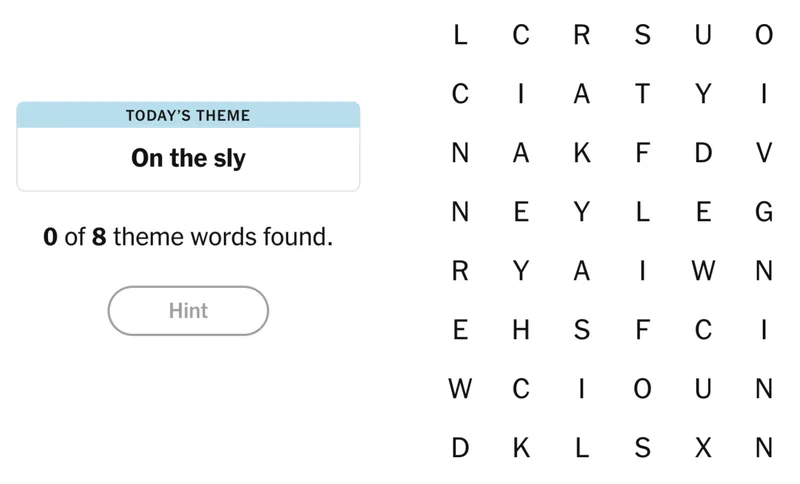
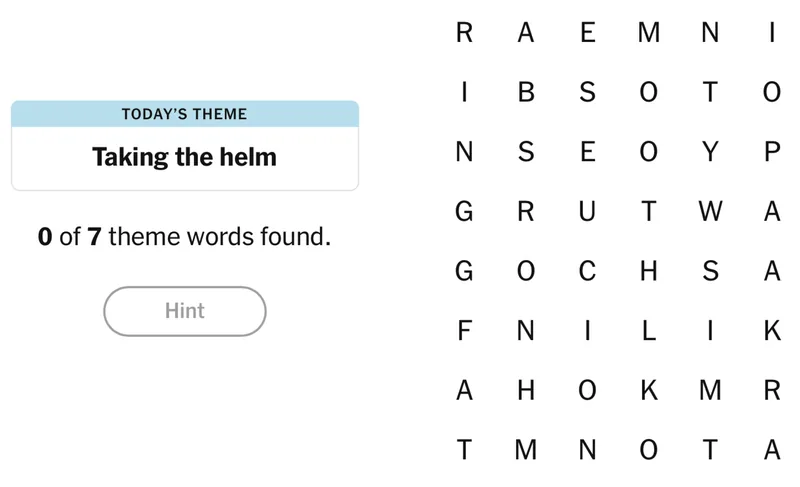
For the uninitiated, Strands is the New York Times' latest word game sensation. It challenges players to find a set of theme words hidden within a grid, all connected by a central "spangram." It requires a blend of vocabulary, pattern recognition, and lateral thinking. Today's puzzle, titled "I've never seen that before!" promises a theme centered on the new, the groundbreaking, and the unprecedented.
Decoding Today's Theme: Innovation and Newness
The theme for today's puzzle, "I've never seen that before!" immediately directs the mind toward concepts of novelty and invention. When we encounter something truly groundbreaking--whether it's the first time we tasted a complex fusion cuisine or the moment we used a piece of technology that felt like magic--we search for the right words to describe it. This puzzle asks you to find those exact words.
Historically, puzzles centered on innovation often pull from specific lexicons. For instance, in a previous puzzle about culinary breakthroughs, words like "Fermented" and "Cured" appeared. In another about scientific leaps, terms like "Discovery" and "Breakthrough" were key. For today's grid, the vocabulary leans toward the intellectual and the creative. You are looking for words that describe the quality of being new or the impact of a new idea.
If you are struggling to visualize the connections, consider these three scenarios where these theme words apply:
- The Art World: A critic describing a painter's debut exhibition might use several of today's terms to describe their style.
- Technology: When a startup launches a device that changes how we live, industry analysts scramble to label it with these exact descriptors.
- Literature: A debut author who breaks all narrative conventions is often hailed as producing something truly seminal.
Strategic Hints for the Solving Process
Before you scroll down to the answers, try applying these cognitive strategies to find today's NYT strands hints on your own. The goal is to train your brain to spot patterns, not just memorize answers.
Find the Spangram First
The spangram is your anchor. In today's puzzle, the spangram is a two-word phrase that acts as a metaphor for starting something new. In construction, it refers to the initial breaking of soil. Metaphorically, it means to do something innovative. Finding this phrase--which spans the entire board--will illuminate the corners where the theme words hide.
Use Non-Theme Words to Unlock Hints
Don't be afraid to drag your finger across random letter combinations. If you spot a valid English word that isn't a theme word (like "ALIEN" or "BRICK"), submit it. The game rewards you with progress toward a hint. After finding three such words, the "Hint" button activates. This will reveal the starting letter of one theme word, helping you unscramble the rest.
Innovation is literally unthinkable without the ability to generate novelty. The brain's ability to connect disparate concepts is what these word games simulate.
The Solution Revealed
If you have attempted the puzzle and are ready to verify your work, here are the answers for Saturday, January 3, 2026. Spoilers ahead.
The Spangram:BREAKNEWGROUND
This phrase perfectly encapsulates the theme, bridging the literal act of construction with the metaphorical act of innovation.
The Theme Words:
- INVENTIVE: Showing creativity or originality of thought.
- SEMINAL: Highly influential in an original or fundamental way.
- ORIGINAL: Present or existing from the beginning; first.
- NOVEL: New or unusual in an interesting way.
- FRESH: Recently made or obtained; not stale.
Mastering the Strands Strategy
Strands is more than a vocabulary test; it is an exercise in cognitive flexibility. Research into neuroplasticity suggests that engaging in novel problem-solving activities keeps the mind sharp (Harvard, 2024). By regularly tackling puzzles like Strands, you are essentially giving your brain a workout that improves verbal fluency and pattern recognition.
Unlike the pressure of a timed test, Strands allows for a relaxed exploration of language. There is no failure state--you simply explore the board until the solution reveals itself. This low-stakes environment encourages the kind of "divergent thinking" that is often associated with creative breakthroughs (Mayo Clinic, 2023).
To improve your daily performance, focus on the edges of the board first. The spangram usually runs along the perimeter, and the theme words often nestle into the corners. By securing the spangram, you reduce the cognitive load of scanning the entire grid, allowing you to focus on the remaining scattered letters.
As you continue your journey with today's NYT strands hints and beyond, remember that the joy lies in the process of discovery. Whether you find the solution in two minutes or twenty, the moment the final word locks into place is a small, perfect victory for the day.