If you've been feeling the pull towards lower-intensity training, you're not alone. The fitness world is buzzing about the benefits of Zone 2 cardio - a steady-state effort that aids endurance and recovery without the burnout. Now, Peloton now has its own curated collection of classes aimed at this popular training style. But does it actually deliver on the promise of Zone 2, or is it a clever marketing play? Let's dive in.
Peloton's New Zone 2 Collection
For those familiar with Peloton, you might recall a time when instructors explicitly guided you through heart rate zones. Those days are largely behind us, but Peloton is circling back, offering a new "Zone 2" collection. It's important to note that these aren't entirely new classes built from the ground up. Instead, Peloton has grouped existing workouts that align with the general principles of Zone 2 training. You'll find these classes on your Bike, Tread, or Row, or within the app.
Currently, the collection boasts 16 classes, offering a mix across disciplines:
- Cycling: Four classes are available, including two 60-minute Power Zone Endurance rides and two shorter Power Zone Recovery rides.
- Tread + Outdoor: Eight classes feature both walks and runs, designed to be performed on a treadmill or outdoors.
- Rowing: Four Endurance Row classes range from 20 to 45 minutes.
The core idea behind Zone 2 training is to maintain a moderate heart rate - typically around 60-70% of your maximum heart rate - for an extended period. This intensity is ideal for building aerobic base, improving fat utilization, and aiding recovery. It's the kind of workout where you can hold a conversation but might find singing a bit challenging (Mayo Clinic, 2023).
Diving Into a Zone 2 Class
To see how these classes stack up, I tried the 45-minute Power Zone Recovery Ride with Christian Vande Velde. Immediately, it's clear that Peloton's Power Zone system operates differently than traditional heart rate zones. Instead of focusing on your heart rate, instructors guide you through seven distinct power zones based on your pedaling output. This method is favored by many cyclists because power is a more direct and consistent measure of effort than heart rate, which can fluctuate due to external factors.
Normally, Power Zone workouts push you across zones 1 through 5. However, the classes within the new "Zone 2" collection are intentionally dialed back. The Power Zone Endurance rides in this group primarily keep you in Zone 2, a departure from the usual Zone 2 and 3 mix. The Recovery rides are even gentler, alternating between Zone 1 and Zone 2. As Christian Vande Velde emphasized during my ride, these are meant for recovery from training, not for pushing peak performance.
During the class, the cues involved short bursts in Zone 1, with brief intervals in Zone 2, particularly when standing. Long stretches in Zone 1 were interspersed. While this might feel less intense than a high-energy HIIT class, its purpose is distinct: to promote active recovery and build aerobic capacity without taxing the body excessively. This approach aligns with strategies for increasing training volume safely (ACSM, 2022).
Do Peloton's Zone 2 Classes Hit the Mark?
The key question, of course, is whether these classes actually keep you in heart rate Zone 2. The answer is… it depends on whose definition you're using. Peloton's own system defines Zone 2 as 65-75% of your maximum heart rate. My personal heart rate monitor, however, uses a different scale, defining Zone 2 as 50-60% of max heart rate.
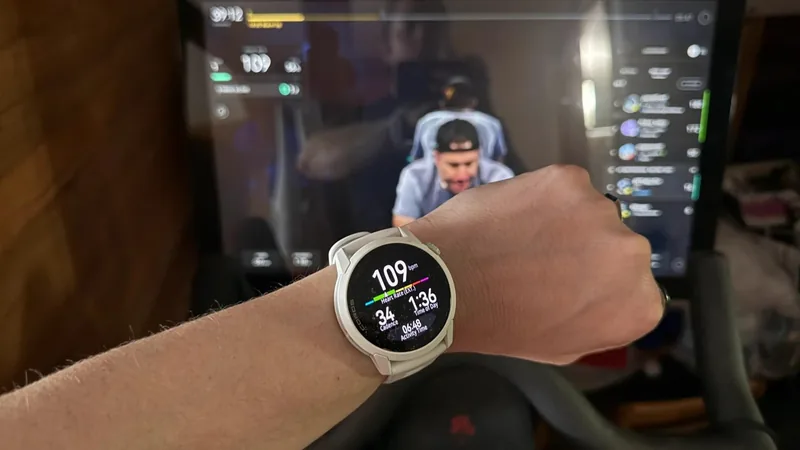
During the 45-minute ride, my average heart rate hovered around 60% of my max. According to my watch's metrics, this meant I spent roughly 39% of the time in its Zone 2 (labeled "warm up") and 43% in its Zone 3 ("fat burn"). Peloton's own dashboard, however, indicated 65% of my time was in Zone 1 and 31% in Zone 2. If I were using a simpler three-zone system (like some Fitbits), I'd be split between "moderate" and "vigorous" intensity. Apple Watch data would place me between Zone 1 and Zone 2, while Garmin's system was the most generous, showing 57% in Zone 2.
This discrepancy highlights a common challenge in heart rate training. Factors like body position (standing versus seated), room temperature, and your overall warm-up status can influence your heart rate independently of your physical exertion. For instance, standing during intervals on the bike quickly pushed my heart rate into Zone 3, even when seated efforts stayed within Zone 2. This is precisely why many athletes prefer power-based training for consistency.
So, while peloton now has its "Zone 2" collection, it's crucial to understand the nuances. These classes are excellent for active recovery or adding volume when you need a lower-stress workout. However, if your primary goal is to boost VO2 max or achieve peak fitness, you'll likely need to supplement these with higher-intensity sessions. For a true endurance challenge that still feels like a workout, sticking to Peloton's standard Power Zone Endurance classes might be more appropriate. These new classes offer a valuable tool for the recovery-focused athlete, but aren't a replacement for all forms of training.