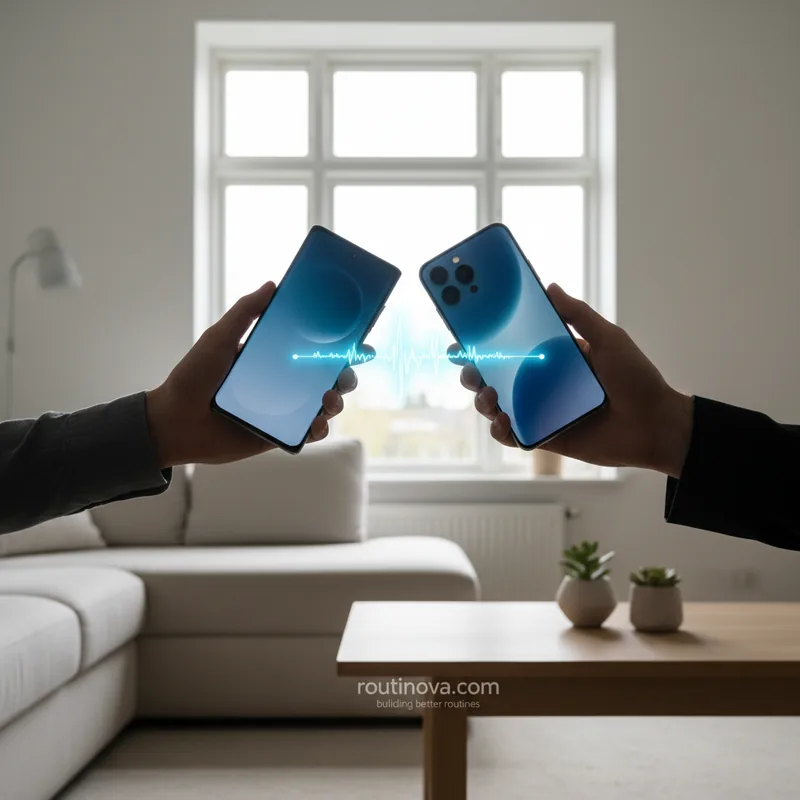
Ever felt that pang of frustration when trying to share a file with someone using a different type of phone? You know the feeling: you're on your Android, they're on their iPhone, and the simple act of sending a photo or document becomes a complicated dance of cloud storage links or clunky email attachments. Well, that friction is finally starting to ease.
The groundbreaking news is that Samsung now officially supports AirDrop, Apple's proprietary file-sharing technology. This isn't just a small tweak; it's a massive step towards true cross-platform convenience, breaking down the digital walls that have long separated Android and iOS users. While Google kicked off this integration with its Pixel phones, Samsung's adoption marks a significant expansion, signaling a future where sharing is truly seamless, regardless of your device.
A New Era of Sharing
For years, AirDrop on iOS and Quick Share on Android have been the go-to methods for quickly transferring large files between devices. The catch? They only worked within their respective ecosystems. This meant if you were an Android user and your friend had an iPhone, you were out of luck for instant transfers. This limitation has been a source of minor, yet persistent, annoyance for many.
The shift began with Google's announcement that Quick Share would become AirDrop compatible. Initially limited to specific Pixel devices, the promise was clear: this was just the beginning. Android's push for greater interoperability has been evident, with industry giants like Nothing exploring the feature and chip manufacturers like Qualcomm eagerly anticipating its integration into their technology.
Now, Samsung now officially supports this cross-platform magic. The much-anticipated Galaxy S26 series is the first to receive this capability. This includes the standard Galaxy S26, the Galaxy S26 Plus, and the premium Galaxy S26 Ultra. While it's a bit of a bummer for users of older Samsung models, it's a clear indicator that wider support is likely on the horizon, following the industry trend.
The rollout began on March 22nd, with South Korea being the first region to experience the update. For those of us in the U.S., the feature is expected to roll out later this week. This expansion to Samsung devices is a significant milestone, making it easier than ever to share photos, videos, and documents between your Samsung phone and an iPhone without the usual hassle.
Getting Started with AirDrop on Your Galaxy
If you've snagged a Galaxy S26 device and the update has landed on your phone, enabling this new feature is straightforward. First, ensure your device is up-to-date by navigating to Settings > Software update (or System updates) and tapping 'Download and install' or 'Check for updates.'
Once your phone is updated, you'll need to manually activate the AirDrop compatibility within Quick Share. Head over to Settings > Connected devices > Quick Share. Here, you'll find a new toggle: 'Share with Apple devices.' Simply switch this on.
Tapping on this new option provides a brief explanation. For the transfer to work, the recipient's iPhone must have its AirDrop settings configured to 'Everyone.' Similarly, when you wish to receive a file from an iPhone, you'll need to have Quick Share open on your Samsung device. Samsung also notes that your phone might temporarily disconnect from Wi-Fi while actively searching for or transferring files to iPhones, a small trade-off for such a significant convenience.
This development means that scenarios like sharing vacation photos with an iPhone-toting friend immediately after taking them, or sending a crucial work document to a colleague without needing a cloud service, are now within easy reach for Samsung users. Samsung now officially supports this much-needed feature, paving the way for a more interconnected mobile experience. It's a clear sign that the era of platform-specific limitations is drawing to a close, and Samsung now officially supports a more open, user-friendly future for file sharing.
The implications are vast: imagine collaborating on a project with mixed device users, or effortlessly sharing large video files with family members who prefer iPhones. The convenience factor alone is immense. As more manufacturers adopt this cross-platform approach, the digital divide continues to shrink, making our connected lives just a little bit simpler. Samsung now officially supports this move towards universal compatibility, and we can't wait to see what comes next.