Are you ready to unlock your mind’s full potential and stay mentally sharp for the challenges and opportunities of 2025? In today’s fast-paced world, keeping our brains agile and responsive is more crucial than ever. The good news? You don’t need complex routines to achieve this. Engaging with the best brain games offers a fun, accessible, and scientifically-backed way to boost your cognitive health. From classic puzzles to innovative apps, these mind-sharpening activities can significantly enhance memory, focus, and problem-solving skills, ensuring your brain remains in peak condition.
The best brain games are those that provide an enjoyable challenge, stimulating various cognitive functions without feeling like a chore. These engaging activities can range from traditional pen-and-paper puzzles like Sudoku and crosswords to sophisticated digital platforms like Lumosity and Elevate. By regularly exercising different parts of your brain, you can strengthen neural pathways, improve mental processing speed, and even build resilience against age-related cognitive decline. It’s about making mental fitness a rewarding part of your daily routine.
1. Why Brain Games Matter for Your Mind
In an increasingly demanding world, maintaining peak mental performance is essential for personal and professional success. Brain games provide a targeted and enjoyable approach to cognitive enhancement, offering a proactive strategy for mental well-being. They serve as a mental workout, engaging different parts of your brain to improve various cognitive functions, much like physical exercise strengthens muscles. This proactive engagement is vital for adapting to new information and complex tasks.
Regular interaction with these stimulating activities can help you stay alert, focused, and adaptable, qualities that are highly valued in any aspect of life. As we look towards 2025, with its rapid technological advancements and information overload, the ability to process information efficiently and make quick decisions becomes even more critical. Incorporating best brain games into your daily routine is a simple yet powerful way to future-proof your brain, ensuring it remains a powerful asset. It’s about investing in your long-term mental clarity and cognitive resilience.
Furthermore, brain games offer a fantastic way to de-stress and unwind while simultaneously boosting your mental faculties. Unlike passive entertainment, these games require active participation and problem-solving, which can redirect mental energy away from daily anxieties and towards productive cognitive engagement. This dual benefit of relaxation and mental sharpening makes them an ideal activity for anyone looking to improve their lifestyle and maintain a vibrant, active mind. The mental stimulation provided by these games can also spark creativity and enhance learning capabilities, proving beneficial for lifelong learners.
Embracing the world of brain games is a smart move for anyone committed to a lifestyle of continuous improvement and mental vitality. They offer a delightful blend of entertainment and efficacy, making the journey to a sharper mind both effective and enjoyable.
2. The Cognitive Science Behind Brain Games
The effectiveness of brain games stems from their ability to stimulate specific neural pathways and encourage neuroplasticity, the brain’s capacity to reorganize itself by forming new neural connections. When you engage in puzzles or strategic games, your brain is actively working to solve problems, recall information, and make decisions, which strengthens these connections. This constant mental exercise can lead to measurable improvements in various cognitive domains.
Research has consistently shown that targeted cognitive training can enhance functions such as working memory, processing speed, and executive functions (Harvard, 2024). For instance, games that require you to remember sequences or rules, like Sudoku, directly challenge and improve your short-term memory. Similarly, activities demanding quick responses or strategic planning can refine your processing speed and decision-making capabilities. These improvements are not just theoretical; they often translate into better performance in everyday tasks, from remembering appointments to making complex choices at work.
Moreover, the novelty and challenge inherent in the best brain games prevent your brain from settling into routine, forcing it to adapt and grow. When you learn a new game or tackle a harder difficulty level, your brain creates new strategies and pathways to cope with the increased demand. This continuous learning process is crucial for maintaining cognitive vitality and preventing mental stagnation. It’s a dynamic process that keeps your grey matter engaged and thriving, much like a muscle that grows stronger with consistent and varied workouts.
The scientific backing for brain games emphasizes their role as a valuable tool in a holistic approach to brain health. They are not a magic cure, but a powerful component that, when combined with other healthy habits, can significantly contribute to a more robust and resilient mind.
3. Unlocking Your Brain’s Potential: Key Benefits
Regularly playing the best brain games offers a wealth of benefits that extend far beyond simply passing the time. These activities are designed to actively engage and challenge your cognitive functions, leading to tangible improvements in how your brain operates. One of the most immediate advantages is a noticeable boost in focus and attention span. By requiring sustained concentration, games train your brain to filter out distractions and maintain attention on the task at hand, a skill invaluable in our increasingly distracting digital world.
Another significant benefit is improved memory. Many brain games, particularly those involving pattern recognition, sequence recall, or word association, directly target and strengthen both short-term and long-term memory functions. This can make it easier to remember names, dates, and important information, enhancing your daily life and professional performance. Furthermore, these games are excellent for sharpening problem-solving and critical thinking skills. They often present complex scenarios that demand logical reasoning, strategic planning, and creative solutions, honing your ability to tackle challenges effectively.
Beyond these immediate cognitive gains, consistent engagement with top brain games can play a crucial role in long-term brain health. Studies suggest that such mental stimulation can help slow cognitive decline associated with aging, allowing individuals to maintain mental independence for longer (Harvard, 2024). It can also contribute to faster processing speed, enabling quicker comprehension and response times. For many, the joy of mastering new puzzles or improving scores acts as a powerful motivator, fostering a positive feedback loop that encourages continued mental exercise.
Ultimately, integrating brain games into your routine is an investment in your mental capital. It’s a proactive step towards a sharper, more resilient mind, empowering you to navigate life’s complexities with greater ease and confidence.
4. Top Brain Games to Challenge Your Mind
To keep your mind sharp and engaged, a diverse selection of the best brain games is key. These carefully chosen options target various cognitive functions, ensuring a comprehensive mental workout. From classic puzzles to modern digital challenges, there’s something for every preference and skill level.
Sudoku
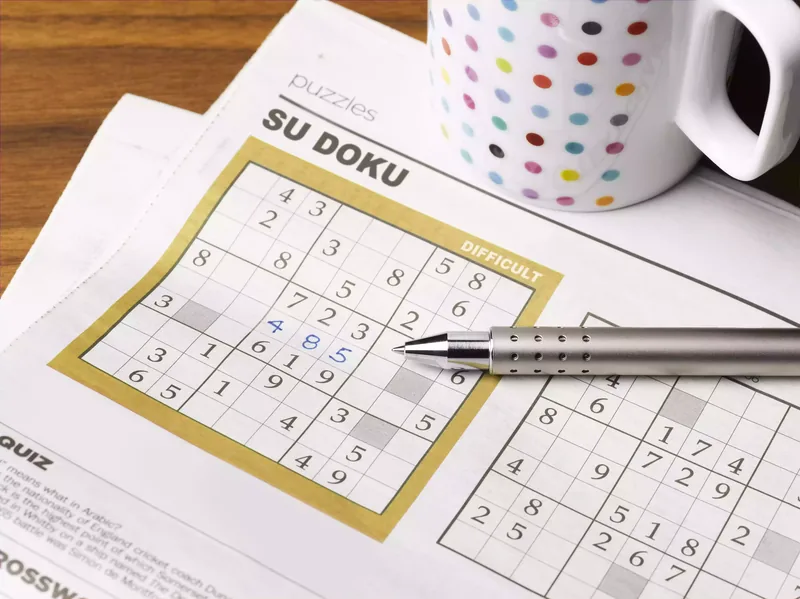
Sudoku is a number placement game renowned for its ability to boost short-term memory and concentration. To solve a Sudoku puzzle, you must strategically place numbers while remembering possibilities and eliminating options based on previous moves. This constant forward-thinking and trail-following significantly enhances your planning skills and working memory. It’s an exercise in logical deduction that strengthens your ability to hold and manipulate information mentally.
You can easily find Sudoku puzzles in newspapers, dedicated puzzle books, or through numerous free apps available for smartphones and tablets. Starting with easier puzzles helps you grasp the rules and build confidence, gradually progressing to more complex grids. The beauty of Sudoku lies in its simplicity yet profound cognitive benefits, making it a perennial favorite among the best brain games for mental agility.
Lumosity
Lumosity stands as one of the pioneers in personalized brain training, offering a suite of games designed to improve attention, memory, processing speed, and problem-solving. Users can sign up for a free account to access a limited number of daily games or subscribe for a more extensive training program. What makes Lumosity particularly effective is its adaptive nature, adjusting game difficulty based on your performance, ensuring you’re always challenged at the optimal level.
The platform tracks your progress over time, providing insights into your cognitive improvements. A 2018 study highlighted that consistent use of Lumosity’s exercises, even for just 15 minutes a day, led to enhanced attention and motor speed. Available via its website and as an app for iOS and Android, Lumosity provides a structured and engaging way to train various cognitive skills, making it a powerful tool in your brain-sharpening arsenal.
Crosswords
Crossword puzzles are a timeless and effective brain trainer that taps into verbal reasoning, general knowledge, and memory recall. They challenge your vocabulary, semantic memory, and ability to make connections between words and concepts. Whether you prefer a daily newspaper crossword or a specialized book of puzzles, the act of deciphering clues and fitting words into a grid provides a satisfying mental workout.
Many online platforms and apps also offer daily crosswords, often with varying difficulty levels. The AARP website, for example, provides a free daily crossword accessible to everyone. Engaging with crosswords regularly helps maintain and expand your vocabulary, improves your ability to retrieve information quickly, and sharpens your analytical skills, solidifying their place among the best brain games.
Elevate
Elevate is a highly-rated app that focuses on improving reading, writing, speaking, and math skills through a collection of over 35 interactive games. Its personalized training program allows you to concentrate on areas you wish to enhance, making it a customizable cognitive workout. The app’s design is sleek and engaging, making the learning process enjoyable and effective.
With tens of thousands of five-star reviews on both iOS and Android platforms, Elevate has proven its efficacy in helping users boost their communication and analytical abilities. The app tracks your progress, offering visual representations of your skill improvement over time. It’s an excellent choice for those looking for a structured, educational approach to brain training with a clear focus on practical, everyday cognitive skills.
Peak
Peak is another popular app-only brain training platform (available for iOS and Android) that offers a wide array of games targeting focus, memory, problem-solving, and mental agility. What sets Peak apart is its emphasis on neuroscientific research, ensuring that its games are designed to provide genuine cognitive benefits. The app features a “Coach” that guides you through personalized workouts, adapting to your performance.
For those with a competitive streak, Peak allows you to compare your scores with other users, adding an extra layer of motivation. While the basic version is free, a subscription unlocks more advanced features and games. Peak’s diverse game library and scientific approach make it an effective tool for anyone serious about enhancing their cognitive functions and enjoying the process.
Happy Neuron
Happy Neuron divides its brain games and activities into five crucial cognitive areas: memory, attention, language, executive function, and visual/spatial skills. This segmented approach ensures a comprehensive workout for different parts of your brain. Similar to Lumosity, Happy Neuron personalizes your training regimen, adapting challenges to your current skill level and tracking your progress over time.
Its games are grounded in scientific research, aiming to provide validated cognitive benefits. While it primarily operates on a monthly subscription model, a free trial is available for new users to experience its unique approach. Although its simplified app version is currently limited to Android users, the website offers a rich and engaging platform for mental fitness enthusiasts.
Braingle
Braingle boasts an impressive collection of over 15,000 brain teasers, puzzles, and games, making it one of the largest free online resources for mental stimulation. From optical illusions and codes to trivia quizzes and logic puzzles, Braingle offers an incredibly diverse range of challenges that cater to all interests and cognitive preferences. It’s a fantastic platform for casual brain exercise and deep dives into specific puzzle types.
Beyond just playing, Braingle also fosters an online community where enthusiasts can share their favorite puzzles and even create their own, providing an extra layer of engagement and creativity. This unique feature allows for a super workout as you devise challenges for others. Its sheer volume and variety make Braingle a standout choice for anyone seeking endless opportunities to flex their mental muscles.
Queendom
Queendom offers an extensive collection of “brain tools” alongside its personality tests and surveys. These tools include a wide array of logic, verbal, spatial, and math puzzles, as well as trivia quizzes and aptitude tests designed to exercise and assess your cognitive abilities. It’s an excellent platform for those who enjoy a blend of self-discovery and mental challenges.
While some tests offer snapshot results for free, a free account allows you to save your scores and track progress on many of its brain tools. Queendom provides a unique opportunity to not only challenge your brain but also gain insights into your cognitive strengths and weaknesses, making your brain training more targeted and effective.
Wordle
Wordle, the web-based puzzle game from The New York Times, became a global phenomenon in 2022 and continues to be a favorite daily mental workout for millions. The premise is elegantly simple: guess a five-letter word in six tries. This deceptively easy game combines elements of vocabulary, pattern recognition, and deductive reasoning, providing a satisfying cognitive challenge.
Wordle’s user-friendly interface and daily refresh encourage consistent engagement, making it a perfect habit for daily brain sharpening. Its combination of problem-solving and immediate feedback fosters a sense of accomplishment, proving that some of the best brain games can also be the simplest.
Chess
Chess is arguably the ultimate strategic board game, renowned globally for its profound impact on cognitive development and maintenance. Playing chess regularly sharpens critical thinking, problem-solving, and spatial reasoning skills. Each move requires foresight, planning, and the ability to anticipate multiple outcomes, forcing your brain to engage in complex calculations and pattern recognition. It’s a mental battle that significantly enhances concentration and decision-making under pressure.
From beginners learning the basic moves to grandmasters executing intricate strategies, chess offers endless opportunities for mental growth. It’s widely available in physical sets, online platforms, and mobile apps, making it accessible to everyone. Embracing chess is a powerful way to cultivate a highly analytical and strategic mind, positioning it firmly among the best brain games for serious mental athletes.
Jigsaw Puzzles
Jigsaw puzzles are a fantastic, often overlooked, brain game that offers significant benefits for visual-spatial reasoning, problem-solving, and attention to detail. The process of sorting pieces, identifying patterns, and fitting them together requires a unique blend of cognitive skills. It enhances your ability to perceive shapes, colors, and overall visual structure, improving spatial awareness and hand-eye coordination.
Whether you prefer a 500-piece landscape or a 1000-piece abstract design, jigsaw puzzles provide a calming yet highly engaging mental exercise. They can be a solo activity for focused meditation or a collaborative effort, fostering social interaction while stimulating the mind. Jigsaw puzzles are readily available in various sizes and complexities, offering a tangible and rewarding way to boost your cognitive functions.
5. Beyond Games: Holistic Strategies for Brain Health
While engaging with the best brain games is incredibly beneficial, true cognitive vitality comes from a holistic approach to brain health. Integrating brain games with other healthy lifestyle habits creates a powerful synergy that maximizes mental sharpness and resilience. Think of it as building a robust foundation for a strong, agile mind that can thrive in 2025 and beyond.
One of the most impactful strategies is regular physical activity. Research consistently shows that even moderate exercise, like a brisk 25-minute walk several times a week, is associated with increased brain volume and improved cognitive function. Physical activity boosts blood flow to the brain, delivers essential nutrients, and encourages the growth of new brain cells, making it a cornerstone of brain health.
Staying socially connected is another vital component. Evidence suggests that individuals who maintain active social lives are less likely to develop cognitive decline, including conditions like Alzheimer’s disease. Social interaction challenges your brain to process complex cues, interpret emotions, and engage in meaningful dialogue, all of which are powerful forms of mental exercise. Make time for friends, family, and community groups.
Practicing mindfulness and meditation has been linked to increased cognitive abilities, better emotional regulation, and even slower brain aging. These practices train your attention and focus, helping to reduce stress which can be detrimental to cognitive function. Even a few minutes of daily mindfulness can make a significant difference.
Crucially, prioritizing adequate sleep cannot be overstated. Lack of sleep severely impacts cognitive skills, including memory, attention, and decision-making. Aim for 7-9 hours of quality sleep each night to allow your brain to consolidate memories, clear waste products, and prepare for the next day’s challenges.
Finally, continuously learning something new is a powerful brain booster. Whether it’s picking up a new language, learning a musical instrument, or mastering a new skill, challenging your brain with novel information and tasks forces it to form new neural pathways, enhancing overall cognitive flexibility and resilience. Combine these strategies with your favorite brain games for a truly comprehensive approach to mental well-being.
6. Making Brain Training a Routinova Habit
Integrating brain training into your daily routine doesn’t have to be a chore; it can be a rewarding and enjoyable part of your lifestyle. The key is consistency and finding activities that genuinely engage you. Start small, perhaps with a 10-15 minute session of one of the best brain games each day, and gradually increase the duration or variety as you feel comfortable. Think of it as a mental coffee break that actually energizes your mind rather than just your body.
For 2025, consider making a “brain fitness” resolution. Challenge yourself to try a new brain game each month or dedicate a specific time each day to cognitive exercise. Whether it’s solving a Wordle over breakfast, tackling a Sudoku on your commute, or unwinding with a jigsaw puzzle in the evening, find what fits seamlessly into your day. The goal is to make it a sustainable habit, not an occasional task.
Remember, the journey to a sharper mind is ongoing. The best brain games are tools to help you along this path, but they are most effective when combined with a balanced lifestyle that includes physical activity, social connection, sufficient sleep, and continuous learning. By nurturing your brain with diverse stimuli and healthy habits, you’re not just improving your cognitive abilities; you’re enhancing your overall quality of life. Embrace the power of play and watch your mind thrive.