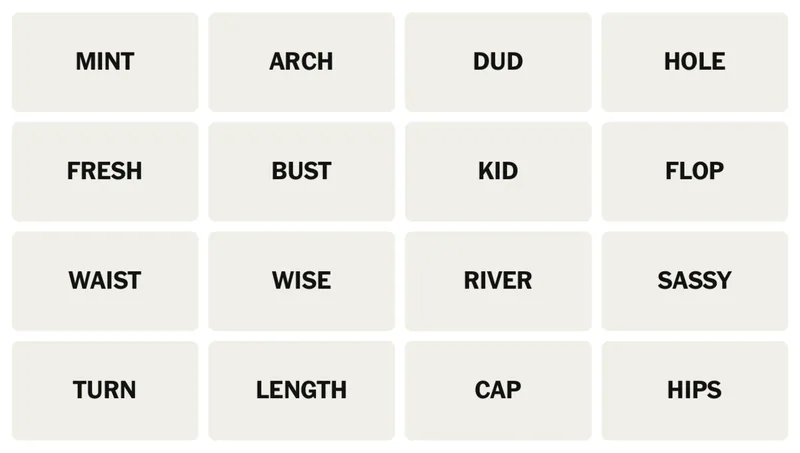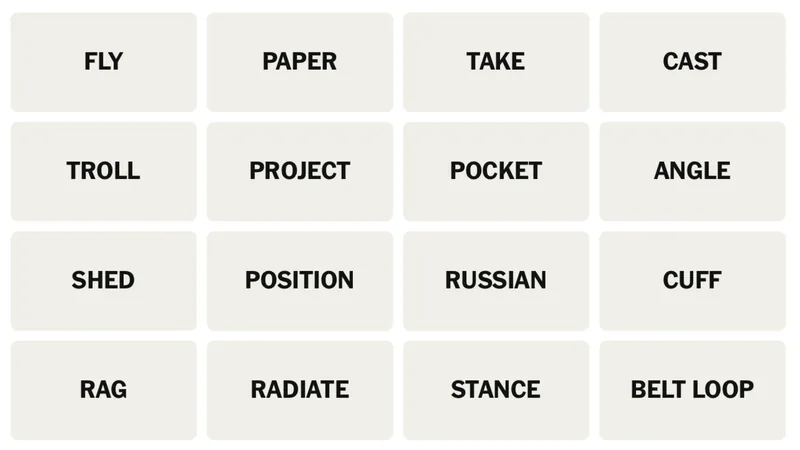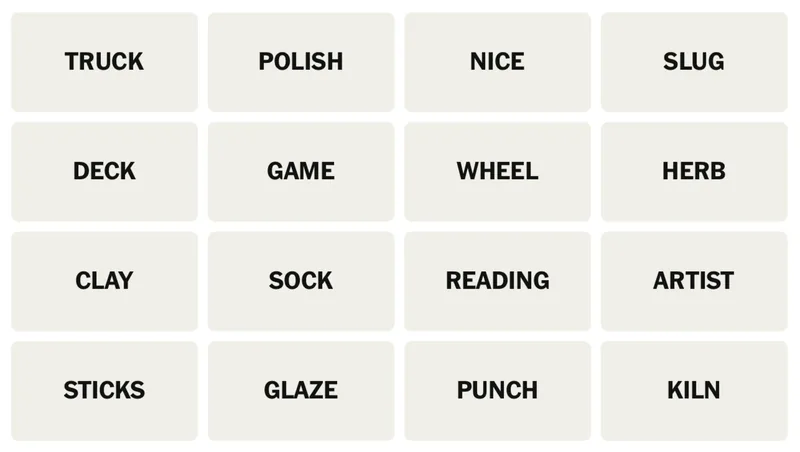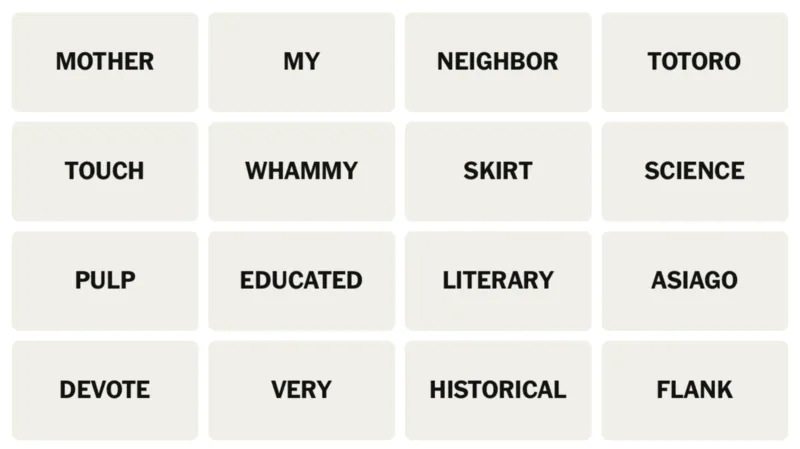
Have you ever stared at the grid of words in the New York Times Connections puzzle, feeling a mix of intrigue and mild panic? You're not alone. Today, April 23, 2026, brings another brain-bending challenge, and if you're seeking some guidance or the direct answer, you've come to the right place. We'll break down today's NYT Connections hints and reveal the solution to puzzle #1,047.
Decoding Today's Connections
The New York Times Connections puzzle is a daily test of word association and lateral thinking. Each day presents 16 words, and your mission is to group them into four sets of four words that share a common theme. Some themes are straightforward, while others rely on clever wordplay or obscure connections. Getting today's NYT Connections hints can be the difference between a triumphant solve and a frustrating four-mistake game. Let's explore the categories for April 23, 2026.
Category Breakdown and Hints
Before we dive into the answers, here's a spoiler-free look at the types of categories you'll encounter today, along with some gentle nudges to get you thinking.
Category Types
- Yellow Category: These often involve words that describe an action or a boundary.
- Green Category: Think about modifiers or descriptors that can apply to a broader concept.
- Blue Category: This group might relate to components or elements that form a larger whole.
- Purple Category: Prepare for a bit of wordplay or a more abstract connection.
Gentle Nudges
Sometimes, the trickiest part of Connections is recognizing how seemingly unrelated words can link. For instance, one common tactic is to look for words that can precede or follow other words to form common phrases or titles. Other times, it's about recognizing homophones or words that sound alike.
Here are some specific hints to help you along:
- Yellow: Consider words that define an edge or a limit.
- Green: What kinds of imaginative narratives exist?
- Blue: These words might help you remember something in space.
- Purple: Listen closely - these might have musical roots.
Spoiler Alert: The Solutions
Ready to see how it all fits together? Below are the revealed categories and their words. Scroll down slowly if you're still working on it!
The Yellow Category
This grouping is generally the most accessible. The theme here is BORDER, and the words are:
FLANK, NEIGHBOR, SKIRT, TOUCH
These words can all describe something that is adjacent or close to something else. For example, a house can flank a property, your neighbor lives next door, a skirt can skirt the edges of a fabric design, and a touch can be just barely touching something.
The Green Category
Often the second easiest, this category focuses on a specific type of storytelling. The theme is KINDS OF FICTION, and the words are:
HISTORICAL, LITERARY, PULP, SCIENCE
These are all distinct genres within the realm of fiction. You might encounter historical fiction, literary fiction, the often-thrilling world of pulp fiction, and imaginative science fiction.
The Blue Category
This is where things start to get a bit more challenging. The theme is WORDS IN A PLANETARY MNEMONIC, and the words are:
EDUCATED, MOTHER, MY, VERY
These words form the beginning of a well-known mnemonic device used to remember the order of the planets. Think: My Very Educated Mother... The rest of the popular phrase, "Just Served Us Nine Pizzas" (or similar variations), completes the planetary sequence (Mercury, Venus, Earth, Mars, Jupiter, Saturn, Uranus, Neptune, Pluto).
The Purple Category
Considered the most difficult, this category often involves wordplay. The theme is STARTING WITH FOUR-LETTER '80S BANDS, and the words are:
ASIAGO, DEVOTE, TOTORO, WHAMMY
This is a clever one! Each word begins with the first four letters of a popular four-letter band from the 1980s:
- ASIAGO (starts with ASIA, like the band ASIA)
- DEVOTE (starts with DEVO, the band DEVO)
- TOTORO (starts with TOTO, like the band TOTO)
- WHAMMY (starts with WHAM, like the band WHAM!)
This is a prime example of the wordplay that makes today's NYT Connections hints so engaging.
Mastering the Connections Game
The beauty of Connections lies in its deceptive simplicity. Here are some tips to improve your daily solve rate:
Look for multiple connections: Words can often fit into more than one category. Don't commit to a group until you're sure all four words exclusively belong to that theme. For example, the word "CLOSE" could relate to proximity or the painter "IMPRESSIONIST DAVID CLOWES".
Identify outlier words: If a word doesn't seem to fit any obvious theme, it might be the key to unlocking a more obscure category. Consider its potential alternative meanings or associations.
Embrace wordplay: Many categories rely on puns, homophones, or phrases. If a group of words seems nonsensical, think about how they might sound or be used in idioms.
Use the hints wisely: Our daily today's NYT Connections hints are designed to guide, not to give away the game instantly. Use them to nudge yourself in the right direction when you're truly stuck.
Learn from mistakes: Don't be discouraged by incorrect guesses. Each mistake reveals more about the puzzle's structure and helps you refine your approach for the next attempt. The game ends after four errors, so strategic guessing is key.
Playing Connections is a fantastic way to keep your mind sharp and discover new linguistic connections. Check back tomorrow for more today's NYT Connections hints and answers!