Forget everything you thought you knew about selling your home. It's not just about fresh paint and sparkling floors; it's a masterclass in human psychology. To truly maximize your profit and speed up the sale, you need to understand the powerful psychological levers that influence a buyer's decision-making. Routinova reveals six ways to use staging psychology to transform your property into an irresistible vision of their ideal future, making them not just want your house, but emotionally need it.
Selling a house is one of the most significant financial transactions most individuals will ever undertake. After investing substantial capital and countless hours of effort, it's only natural to seek the highest possible return. This is where strategic home staging becomes invaluable. It's the art of temporarily furnishing and arranging a home to highlight its best features and create an aspirational lifestyle narrative. While many acknowledge staging's effectiveness--it demonstrably accelerates sales and increases property values (National Association of Realtors, 2024)--its true power lies in its precise application of psychological principles.
The Hidden Power of Home Staging Psychology
At its core, staging isn't merely about cleanliness or presentability; it's about crafting a compelling story. You're not just selling four walls and a roof; you're selling a future. The goal is to enable prospective buyers to envision their lives unfolding within your home - from their serene morning coffee ritual to vibrant dinner parties with friends. The more effortlessly they can project their ideal life into the space, the stronger their emotional connection, and the smoother the path to a successful sale.
This narrative is supported by a series of psychological triggers that, when expertly pulled, guide a buyer's perception and decision-making. Understanding these mechanisms is crucial, especially if you're tackling the staging process yourself.
Influencing Perception: Cognitive Biases in Staging
To effectively influence potential buyers, you'll employ several well-documented cognitive biases. Here are three powerful psychological tools you can utilize:
The Primacy Effect: Making Unforgettable First Impressions
First impressions carry disproportionate weight, a phenomenon known as the primacy effect. This cognitive bias dictates that our initial perceptions heavily color subsequent judgments (Psychological Science, 2023). If a buyer's first encounter with your home screams luxury and comfort, this positive initial impression can subtly override any minor imperfections discovered later.
While comprehensive staging contributes significantly, particular attention must be paid to curb appeal and the entryway. A vibrant garden, a freshly painted front door, and an inviting foyer instantly set a high standard. Beyond the threshold, each room offers its own "first impression." This is precisely why meticulous decluttering is paramount. Clearing personal items and presenting a clean, thoughtfully curated visual allows buyers to see a move-in-ready home, rather than a list of chores. Consider also the garage: a meticulously organized and clean garage, perhaps with a freshly painted floor, can signal an owner who cares for the entire property, creating a powerful positive anchor for practical buyers.
Positive Anchors: Setting the Value Bar
The concept of anchoring involves establishing an initial perception of value that then influences all subsequent evaluations. When buyers perceive your home as high-value from the outset, that impression becomes firmly "anchored" in their minds. This is a primary reason why professionally staged homes consistently command higher sale prices.
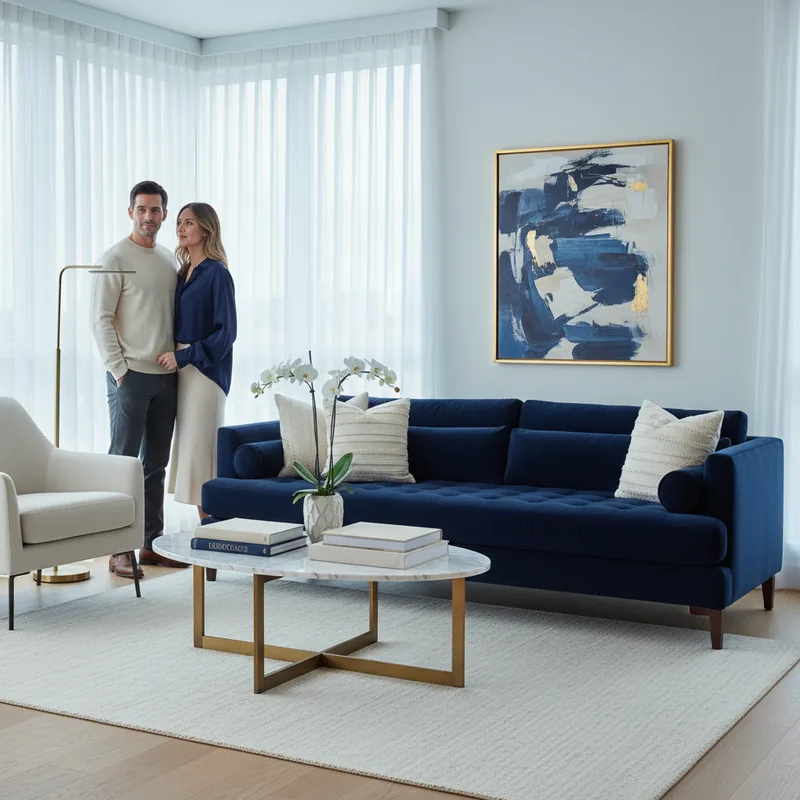
To achieve this, stage with furnishings and decor that exude quality and sophistication. Think elegant textures, smart home technology integrations, or subtle, high-end accents. Seeing these premium elements subliminally communicates that this is a valuable property, making buyers more willing to pay a premium. This anchored perception of value seamlessly leads into the next psychological strategy: the Halo Effect.
The Halo Effect: Overshadowing Imperfections
The Halo Effect is a cognitive bias where a strong positive impression in one area leads to generalized positive impressions across other, unrelated areas. If your property has minor flaws or could use some updates, a fresh, luxurious staging can not only anchor a higher perceived value but also cause potential buyers to overlook these imperfections. Their overall enthusiasm, driven by the comfortable and high-value narrative you've constructed, will guide their decision-making more than any minor drawbacks.
It is crucial to emphasize that this strategy is not about concealing defects, which would be unethical and potentially illegal. Instead, it leverages the power of positive perception to make buyers willingly prioritize the overwhelming sense of value and comfort over small issues. The goal is to inspire such excitement that minor flaws become insignificant in the face of the lifestyle presented.
Crafting an Experience: Engaging Senses and Emotion
Beyond visual cues, a truly world-class staging strategy engages all the senses to trigger a powerful emotional response. You want buyers to not just see themselves living there, but to feel themselves living their ideal life. Here are six ways to use sensory and emotional triggers:
Lighting: Setting the Mood
Strategic lighting is paramount. Soft, layered lighting combined with an emphasis on natural light creates an inherently warm, inviting, and spacious atmosphere. Ensure all blinds are open, curtains are drawn back, and every light fixture is working with appropriate wattage bulbs to brighten and expand each space.
Scent: A Subtle Invitation
The olfactory sense holds a powerful connection to memory and emotion. A home that smells subtly fresh and clean signals a well-maintained, comfortable space. It's wise to have a trusted friend "nose-test" your home, as we often become accustomed to our own house's unique scent profile. While the classic trick of baking cookies can evoke nostalgia, subtlety is key. Avoid overpowering air fresheners or the harsh smell of strong cleaning agents, which can backfire by signaling an attempt to mask something or indicating excessive work. A gentle, natural aroma, like freshly brewed coffee or a hint of vanilla, is often most effective.
Aspiration: Selling the Dream
We all harbor ideals about how we'd like to live. Staging provides an opportunity to tap into these aspirational desires. Perhaps you dream of a serene reading nook with a plush armchair and a cup of herbal tea, even if your reality is more chaotic. Create that exact scene for potential buyers. A carefully arranged home office that includes not just a stylish desk but also a yoga mat and a small meditation cushion can suggest a balanced, productive lifestyle that resonates deeply with modern buyers (Behavioral Economics Journal, 2022). Their emotional attachment to this idealized vision of life within your home will significantly enhance their overall positive perception of the property.
Strategic Design: The Art of Subtlety and Depersonalization
The final touches of staging involve strategic design choices that make the home universally appealing while retaining a sense of warmth. These are two more critical ways to use psychology to your advantage.
The Rule of Three: Visual Harmony
An intuitive psychological principle in design is the Rule of Three. This involves arranging elements--be it furniture groupings, decorative items, or even color palettes--in subtle, odd-numbered clusters, typically three. Varying the height, texture, and scale within these groupings creates a visually appealing and natural aesthetic that feels less "staged" and more organic. This subconscious engagement with visual balance and perceived symmetry makes the space more captivating and memorable for buyers. For example, on a bathroom vanity, instead of a lone soap dispenser, arrange three items: a high-end hand soap, a small, elegant vase with a single fresh bloom, and a neatly folded luxury hand towel. This subtle arrangement elevates the space without clutter.
Depersonalize: Inviting Their Story
The ultimate goal is to make it effortless for buyers to imagine their own lives unfolding in your home. This means removing your personal narrative. Depersonalizing doesn't equate to sterile, empty rooms; rather, it means opting for neutral decor, art, and accessories. Pack away personal collections, unique hobbies, and highly specific artwork. While a few tasteful, generic family photos can add warmth without being intrusive, the objective is to prevent buyers from feeling like intruders or walking through someone else's private space. The idea is to create a blank canvas, albeit a beautifully appointed one, where they can effortlessly paint their own future.
By understanding and applying these six ways to use staging psychology, you're not just presenting a house; you're crafting an experience, anchoring value, and inviting buyers to fall in love with a future they can vividly imagine within your walls. This strategic approach is the key to a faster sale and a significantly higher profit.