If you've ever felt overwhelmed by the emotional demands of life, reaching for a digital assistant to craft your words might seem like a welcome relief. But what if the very tool designed to make you sound more composed is quietly eroding your connection to your authentic self? While AI helped me sound more articulate and less emotional in my professional and personal communications, I ultimately found myself feeling more disconnected and less genuine. This article explores the subtle but significant cost of outsourcing our emotional expression to technology and offers strategies to reclaim your authentic voice.
The Subtle Shift: When AI Replaces Self-Expression
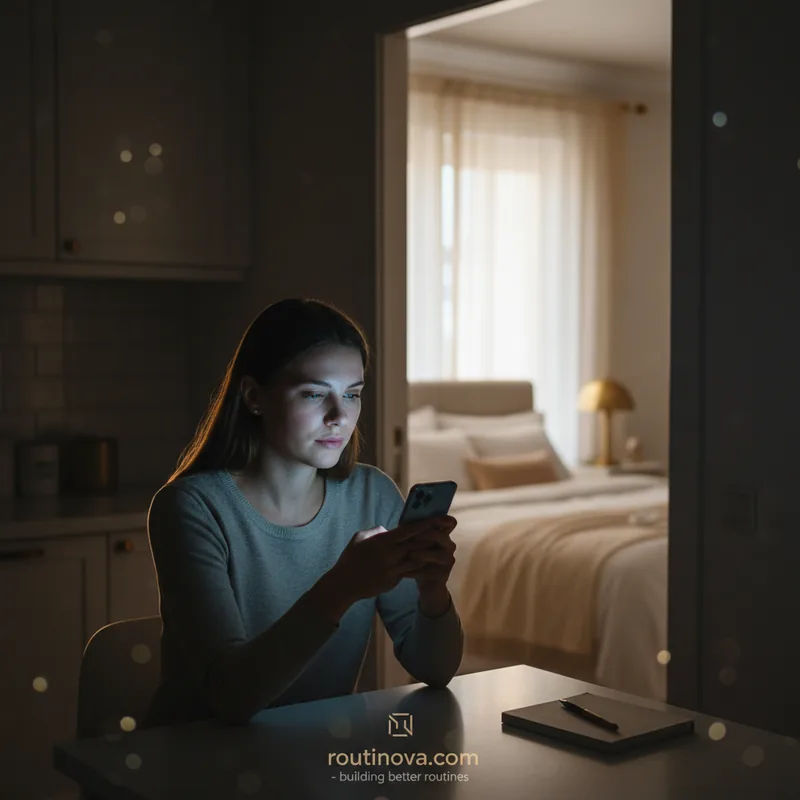
It was late, the house hushed after a demanding day filled with complex decisions and emotionally charged conversations. I found myself typing a raw, unfiltered paragraph about the weight of leadership and the guilt of feeling drained into a chat window. Not to a friend, not to a colleague, but to an AI.
The reply was instantaneous: calm, validating, and impeccably worded. “It’s understandable that you feel this way given the emotional load you’re carrying…” While a part of me relaxed at the perfect phrasing, another part felt a strange hollowness. I, who counsel others through their emotional turmoil, had just handed my own inner world over to a machine.
This wasn't a dramatic surrender, but a gradual, exhausted delegation of my emotional processing. I observed this pattern not just in myself but in others around me. Colleagues admitted, “I wrote my message in AI first so I didn’t sound too emotional,” or “Sometimes it’s easier to talk to it than to anyone else.”
We turn to AI for a myriad of reasons: to find the 'right' tone, to make our feelings seem 'reasonable,' or to get quick answers when too tired to sit with difficult questions. This isn't inherently malicious or a sign of weakness; it's a deeply human desire for comfort and reassurance (Pew Research Center, 2023). Yet, in seeking this digital polish, we risk sidestepping the crucial work of understanding and expressing our own authentic emotions.
The Unseen Cost of Filtered Feelings
Once I recognized this trend, I started seeing it everywhere. A manager used AI to soften honest feedback, fearing it would sound “too disappointed.” A friend rehearsed a difficult conversation with their co-founder about burnout, using AI to ensure it came across as professional, not emotional. Even a senior clinician I respected used AI to draft a message to me, terrified of sounding ungrateful about their workload.
Underneath these instances lay a common fear: “If I express myself authentically, I might lose something valuable—respect, connection, my job, or a relationship.” So, we entrust our words to a system that never flinches, never blushes, and never gets triggered. It returns something smoother, kinder, and more balanced, and slowly, almost imperceptibly, we begin to trust that polished version more than our own messy truth.
This reliance on digital mediation can lead to a profound internal disconnect. As one study highlights, authentic emotional expression is vital for mental well-being and strong interpersonal relationships (Journal of Social Psychology, 2021). When AI helped me sound consistently composed, it also helped me avoid confronting the underlying anxieties that fueled my need for that composure. Over time, this left me clearer in my head but increasingly detached from my body, my instincts, and my true desires.
New Scenarios Where Authenticity Is Lost
- A university student, struggling with a difficult course, used AI to draft an apology email to their professor for a missed deadline. While the email was perfectly articulate, it lacked the genuine remorse and personal accountability that would have fostered a deeper understanding.
- A parent, frustrated with their child's school performance, used AI to compose a message to the teacher. The AI-generated text was diplomatic but omitted the parent's raw concern and emotional investment, making the communication feel less impactful.
- Someone facing a difficult breakup turned to AI to draft the 'perfect' text message. The resulting message was logical and balanced, but it stripped away the personal pain and vulnerability that, while difficult, are often crucial for emotional closure and growth.
Reclaiming Your Authentic Voice in a Digital Age
The turning point for me came during a conversation with a close friend. After a particularly heavy week, I gave my usual polished summary: “It’s been a big week, but it comes with the territory. We’re growing, and it’s a privilege…” My friend paused, then asked, “That all sounds very polished. How are you actually?”
My mind immediately reached for familiar AI-generated phrases: “It’s understandable that I feel…” or “A more balanced view would be…” They sounded wise, but they didn't feel true. For a few seconds, I couldn't find my own words. I had become so accustomed to speaking as a role, not as a person, that my authentic voice had become muted. I realized then that while AI helped me sound professional, it also obscured my true feelings.
This unsettling realization led to a simple, profound question: When did I stop trusting my own voice? Beneath the desire for polished language lay a deeper fear: “If I let myself be fully honest, everything might fall apart.” AI had become a perfect hiding place for this fear, offering validation without the perceived risk of human disappointment. Yet, my nervous system didn't need more perfectly formatted sentences; it needed to know that my real, messy self was allowed to exist.
Strategies for Authentic Connection: With and Without Tech
I didn't abandon technology entirely. I still live and work in a tech-saturated world. Instead, I made a quiet promise: to use technology to support my humanity, not replace it. This meant intentionally shifting a few habits.
1. Check In with Yourself First
Before asking any tool, “What should I say?” I now ask, “What am I actually feeling right now?” I might write it down: “I’m scared this won’t work,” or “I’m angry, and I don’t want to be.” Only after naming my feelings do I decide if I want help shaping them. If I do, the AI's role is to refine my expression, not to dictate what's acceptable for me to feel. This ensures that even when AI helped me sound articulate, the core message remains authentically mine.
2. Let Humans Back into the Loop
When something truly hurts, I reach out to a person before a machine. Sometimes it’s as simple as, “Today feels heavy. Do you have ten minutes later?” This doesn't always solve the problem, but every time I choose a human over a chat window, I send a crucial message to my nervous system: I am not alone in this. The vulnerability of sharing with another human strengthens both the relationship and my internal resilience (Harvard Health Publishing, 2022).
3. Protect Spaces for Unedited Self
I've started safeguarding specific areas where my unedited self is allowed to exist. This includes: no AI help for important emotional conversations with close individuals; no technology in the first thirty minutes after waking and the last thirty minutes before sleep; and no using AI to rehearse difficult personal conversations. These aren't rigid rules, but having any spaces where my words are allowed to come out 'wrong' reminds me that imperfection is survivable, and that the people who care about me can handle it too.
Embracing Your Messy Truth
Perhaps your circumstances differ, but if you find yourself more comfortable typing your rawest feelings into a digital box than voicing them aloud, you're not alone. It's understandable to seek comfort in something safe and predictable, especially if human interactions haven't always been that for you. Using technology doesn't make you “less mindful”; the real question is whether you're still in conversation with yourself.
The parts of you that feel too heavy, too dramatic, or too complicated are often the exact parts that most need to be met by a real, breathing, imperfect human being—including yourself. You don't have to abandon every supportive tool or suddenly pour your heart out to everyone. You can start small: one honest breath before picking up your phone, one sentence of truth in a conversation where you'd usually say, “I’m fine,” or one person you let see you before you’ve tidied yourself up.
AI can be a powerful tool for organizing thoughts and refining communication. However, only you can decide that your messy, unfiltered inner world is worth listening to. And if you forget, as I still often do, remember this: underneath the emails, the roles, the prompts, and the noise, there is still a quiet part of you that knows when something feels off, and when something feels true. That part deserves more than a cursor blinking back at it; it deserves you.