That little five-letter puzzle that pops up daily - Wordle - has a way of becoming a mini-obsession, hasn't it? Whether you tackle it first thing with your morning coffee or save it for a mental break, figuring out today's wordle hints (and the answer) can feel like a small victory. It's a simple game, but mastering it takes a bit of strategy. If you're eyeing the March 30, 2026 puzzle and finding yourself stumped, don't worry. We've got you covered with clues, tips, and, yes, the solution.
What is Wordle and How Do You Play?
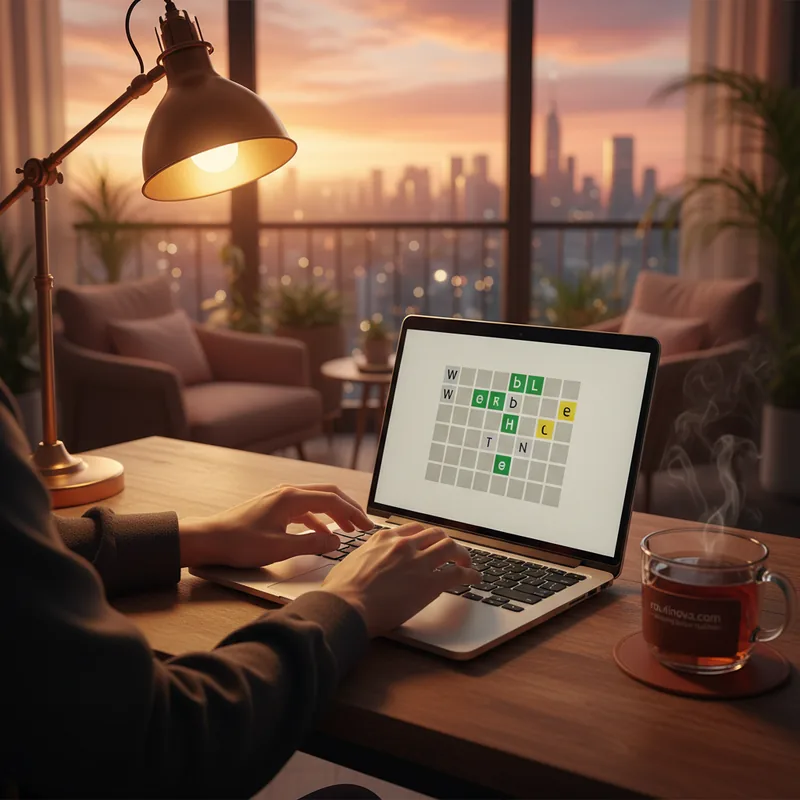
At its core, Wordle is a daily word-guessing game. A new five-letter word is revealed at midnight in your local time, and you have six tries to guess it. You start by typing in any valid five-letter word. The magic happens with the color-coded feedback: green means a letter is correct and in the right spot, yellow indicates the letter is in the word but in the wrong position, and gray signals the letter isn't in the word at all.
Think of it like a digital detective game. The colors are your clues, guiding you closer to the hidden word with each guess. It's this blend of luck and logic that makes Wordle so compelling. The initial feedback is crucial; getting a few common letters in green or yellow right away can dramatically speed up your progress.
For those new to the game, the official rules are straightforward, but the strategy is where the fun truly begins. Understanding how to leverage those color cues is key to not just guessing, but solving efficiently. This is why getting today's wordle hints (and) can be so helpful when you're stuck.
Today's Wordle Hints and Analysis (March 30, 2026)
Ready for a nudge in the right direction for March 30th? Let's break down today's puzzle. We'll start with some general observations that can help you narrow down the possibilities without giving everything away.
Letter Frequency and Unusual Characters
To play smart, it helps to know which letters are common. Generally, letters like E, T, A, O, I, N, S, H, R, D, L, U form the backbone of most English words. Today's puzzle features three letters from this common pool, with the remaining two also being relatively frequent. This suggests a word that shouldn't be *too* obscure, but requires careful placement of these familiar characters.
Vowel Count and Letter Placement
Today's Wordle contains two vowels. This is a pretty standard distribution, meaning you'll likely need to identify both vowels and their correct positions fairly early on. The word begins with the letter C and concludes with the letter T. Knowing the starting and ending letters, along with the vowel count, significantly reduces the potential word list.
A Hint to Get You Thinking
Here's a descriptive clue: Think of something that shoots across the sky. This should spark some ideas related to celestial events or even projectiles. It's a bit poetic, but it aligns with the type of wordplay Wordle often employs.
Repeated Letters and Other Clues
Good news for your guesses: there are no repeated letters in today's solution. This means each letter you identify is unique within the word. Combining this with the information about common letters, vowels, and the start/end letters should put you on the right track to finding today's wordle hints (and the solution).
The Solution for March 30, 2026
Alright, drumroll please… The answer to Wordle #1,745 on March 30, 2026, is COMET.
How did you do? If you guessed COMET, congratulations! If not, hopefully, the hints helped you get there or at least learn something new.
How One Player Solved It
One player started with the word RAISE, which yielded a yellow R and a gray A, I, S, E. Their second guess was TOUCH, revealing yellow T, O, C, H and gray U. With C, O, T identified, and knowing the word starts with C and ends with T, COMET became the logical next guess, landing the win in three tries:
Wordle 1,745 3/6
⬛⬛⬛⬛🟨
🟨🟩⬛🟨⬛
🟩🟩🟩🟩🟩
Yesterday's Wordle Answer Recap
For context, yesterday's Wordle (#1,744) had the answer CHUMP. The hint might have revolved around something like "fool" or "block." It contained a mix of common and less common letters, including a double letter which is absent today.
Mastering Wordle Strategies for Success
The beauty of Wordle lies in its simplicity, but there's a surprising amount of strategy involved. Beyond just guessing, understanding game mechanics and employing smart tactics can turn you from a hopeful guesser into a consistent winner. Let's dive deeper into how you can improve your Wordle game.
Choosing Your Starter Word
Your first guess is critical. The goal is to use a word that maximizes the information you get. Words with common letters like 'S', 'E', 'A', 'R', 'T', 'L', 'O', 'I' are excellent choices. The New York Times itself has suggested words like CRANE or TRACE. An MIT analysis pointed to words like SALET or REAST as particularly effective for eliminating possibilities quickly (Harvard, 2024).
Consider words with multiple vowels and common consonants. For example, starting with ARISE can give you good vowel coverage and common consonants. Alternatively, a word like ROUND might reveal common letters and the structure of words ending in -OUND, a frequent pattern. The key is to gather as much data as possible from that initial guess. Even getting all gray letters is valuable information!
Advanced Wordle Tactics
Once you have your initial feedback, think strategically about your next guesses. Don't just pick random words that fit the pattern; try to test specific letters or letter combinations that are still in play. For instance, if you know the word has an 'S' but you've already used it in a gray spot, you know it must go elsewhere.
A good approach is to use your second or third guess to test remaining common letters or to try and confirm the positions of yellow letters. Some players opt for a second word that uses completely different common letters than their starter. For example, if you started with RAISE, your next guess might be CLOUT to test C, L, O, U, T.
The biggest difference between winning and losing often comes down to not wasting guesses. If you've deduced the word must end in -OUND, don't waste guesses on MOUND, SOUND, and HOUND individually. Try to incorporate other potential consonants like 'L', 'P', or 'R' in a word like PLOUR to see if you can nail down the final letters faster (Mayo Clinic, 2023).
Understanding Wordle's Word Choices
It's worth noting that the Wordle word list has evolved since its inception. While the original list was curated for broad appeal, the New York Times sometimes includes slightly more obscure words or words with a topical theme, especially around holidays. Keep an eye out for potential patterns or themes, though don't rely on them exclusively.
Looking for More Word Games?
If Wordle scratches an itch you can't stop satisfying, there's a whole universe of word games out there, many inspired by Wordle's success. You might enjoy:
- Harder Versions: Games like Dordle (two puzzles), Quordle (four puzzles), Sedecordle (16 puzzles), or Octordle (8 puzzles) present multiple Wordle grids simultaneously, requiring you to manage your guesses across all of them.
- Anagrams:Anagrammer or similar games challenge you to rearrange given letters to form valid words.
- Logical Deduction:Nerdle is a math-based puzzle where you guess equations instead of words, demanding a different kind of logic.
- Endurance Games:Waffle requires you to rearrange letters within a grid until all words are correct, and you must reuse previously guessed letters, making longer games more strategic.
- Survival Games:Deadly Wordle adds a survival element; you take damage if you pause too long between guesses, making speed and accuracy crucial.
So, whether you're aiming to perfect your Wordle strategy today or explore new linguistic challenges, there's always a new word waiting to be discovered.