It's 4:30 PM. Your child just got home from school, but instead of the usual chatter, they've retreated to their room, slamming the door. Or maybe they're lashing out, their usual cheerful demeanor replaced by unpredictable outbursts. You've tried talking, reasoning, even bribing, but the words just aren't coming, or worse, they're met with defiance. You watch, helpless, as your little one struggles to navigate big feelings, leaving you wondering: what's really going on inside their head, and how can I help them find their way back to themselves?
You're not alone. Many children face emotional hurdles that are simply too complex for them to articulate with words. This is exactly where play therapy steps in, offering a profound and natural way for kids to process their inner worlds. It's a specialized form of counseling that leverages a child's inherent language - play - to help them understand and express emotions, cope with trauma, and develop crucial social and communication skills. It's not just 'playing around'; it's a carefully guided process within a safe, therapeutic space.
What is Play Therapy, Really?
At its heart, play therapy is a form of psychotherapy primarily designed for children, though adults can also benefit. Think of it as a bridge between a child's inner emotional landscape and the external world. Children, unlike adults, often lack the verbal sophistication to explain their fears, anxieties, or traumatic experiences. But give them a dollhouse, some action figures, or a bucket of sand, and a narrative often begins to unfold.
A trained play therapist guides this process, creating an environment where a child feels secure enough to explore their emotions through creative and imaginative activities. This isn't about the therapist telling the child what to do or how to feel. Instead, it's about observing, understanding, and gently facilitating their journey toward healing and self-discovery. If you're wondering what to know about this unique approach, it's that it meets children where they are, using their most comfortable and natural form of expression.
In essence, play therapy leverages the power of play to help children develop critical skills like self-regulation, empathy, and problem-solving. It's a space where they can safely experiment with different roles, situations, and feelings without the pressure of verbal articulation, ultimately leading to greater emotional resilience and understanding.
Two Paths to Healing: Directive vs. Non-Directive Play
Just as every child is unique, so too are the approaches within play therapy. Therapists typically utilize one of two main forms, tailored to the individual needs of the child.
Directive Play Therapy
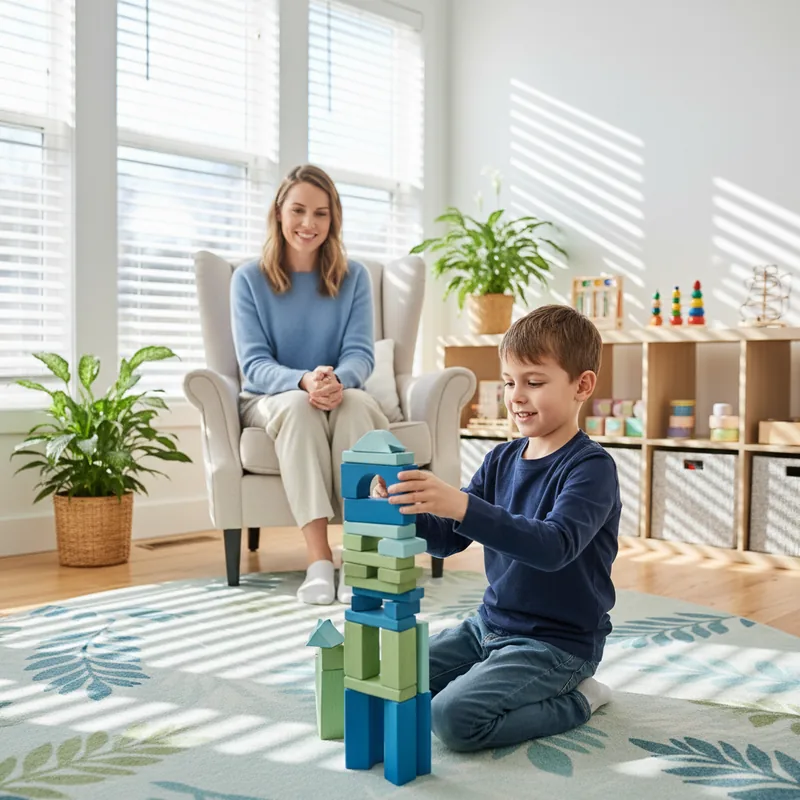
With directive play therapy, the therapist takes a more structured, hands-on role. They might introduce specific games, activities, or instructions designed to target particular issues or emotions. For instance, a therapist might suggest a game where the child has to build a 'safe house' out of blocks, prompting discussion about security and protection. They'll supervise closely, offering prompts and guiding the child through the activity to help them express themselves (University of North Texas, 2021).
This approach can be particularly effective for children who might be hesitant to initiate play or who benefit from clear boundaries and tasks. It helps them focus on specific areas of concern that the therapist has identified.
Non-Directive Play Therapy
In contrast, non-directive play therapy embraces a less controlled environment. Here, the child is given the freedom to choose their own activities and lead the session. The therapist provides a variety of toys and materials, then observes and reflects on the child's choices and interactions with minimal interference (Georgia State University, 2021).
This method allows for deep, spontaneous expression, as children naturally gravitate towards activities that reflect their current emotional state or unresolved conflicts. It fosters a powerful sense of autonomy and control for the child, which can be incredibly healing, especially if they've experienced situations where they felt powerless. If you're asking what to know about the different types, it's that both aim for healing but take different routes based on the child's personality and needs.
Beyond Just Fun: Techniques and Tools in Play Therapy
A typical play therapy session lasts between 30 to 45 minutes, creating a consistent rhythm for the child. The therapist meticulously designs a comfortable and safe space filled with a curated selection of toys and creative materials. Initially, the therapist might simply observe the child's natural interactions with these items, gaining invaluable insights into their world.
As the child grows more comfortable and a trusting relationship forms, the therapist might introduce specific play activities tailored to address the child's unique emotional issues. These techniques are far from random; they are carefully chosen tools designed to facilitate expression and insight. Here's a glimpse into some common techniques:
- Building Blocks and LEGOs: Constructing and deconstructing worlds, reflecting feelings of control, chaos, or organization.
- Creating Art: Drawing, painting, or sculpting can be powerful outlets for emotions that are difficult to verbalize.
- Engaging in Sand Play: Creating miniature worlds in a sandbox allows children to externalize inner conflicts and relationships.
- Playing with Dolls and Action Figures: Acting out family dynamics, social interactions, or traumatic events. For example, a child might use action figures to re-enact a difficult situation at school, allowing the therapist to observe their coping strategies and emotional responses.
- Puppet Play: Using puppets to voice feelings or experiences that feel too scary or vulnerable to express directly.
- Board and Card Games: Learning about rules, turn-taking, frustration tolerance, and social interaction.
- Having Tea Parties: Practicing social graces, role-playing, and exploring themes of nurturing or control.
- Strategy Games (like Chess or Checkers): Developing problem-solving skills, foresight, and understanding consequences.
- Playing Hide-and-Seek: Exploring themes of separation, connection, and safety.
These activities are not just games; they are carefully chosen mediums through which children communicate. If you're curious what to know about the specific activities, remember that each one offers a unique window into your child's inner world, allowing them to process and heal.
Who Benefits Most from Play Therapy?
Play therapy can be a lifeline for children who struggle to communicate their feelings effectively, especially when traditional talk therapy feels out of reach for their age or developmental stage. It's particularly beneficial for children who have experienced significant trauma or stressful life events, helping them regain a sense of normalcy and safety in their world.
Children with certain neurodevelopmental or emotional disorders often find play therapy to be an accessible and effective pathway to healing. Research indicates that play therapy can be impactful for children dealing with conditions such as (Ray et al., 2009):
- Autism Spectrum Disorder
- Attention-Deficit/Hyperactivity Disorder (ADHD)
- Depression
- Anxiety disorders
- Post-Traumatic Stress Disorder (PTSD)
- Physical or emotional trauma
- Experiences of physical, emotional, or sexual abuse
- Grief and loss
- Family changes (divorce, relocation)
The beauty of play therapy lies in its adaptability. It doesn't force a child to conform to adult communication styles; instead, it adapts to their natural way of processing information and emotion. If you're wondering what to know about if your child is a good candidate, consider if they are struggling to express themselves verbally or if they've experienced significant life stressors.
The Unexpected Power: Why Play Therapy Works
It's easy for parents to look at play therapy and think, "They're just playing. How is this helping?" But here's the thing: children naturally communicate through play, whether they're in therapy or not. A child meticulously lining up toys might be seeking order in a chaotic home environment. Another child aggressively smashing toy cars could be reflecting unexpressed anger or frustration they witness or experience.
The benefits of this seemingly simple approach are profound and far-reaching:
- A Voice for the Voiceless: For children who struggle with verbal communication, play provides an essential outlet. A child might draw a vivid picture of a monster to express an overwhelming fear they can't put into words, allowing the therapist to engage with that fear symbolically.
- A Safe Haven: Unlike more traditional forms of therapy that might feel intimidating, play therapy creates a comfortable, non-judgmental space where a child can truly be themselves, free from expectations.
- Child-Led Healing: Effective play therapy empowers the child to take charge of their healing process. They choose the toys, the activities, and the pace, fostering a sense of control that is vital for emotional growth.
- Emotional Literacy: It helps children understand and identify their complex emotions. Through play, a child might act out a scenario where a doll feels sad or angry, allowing the therapist to help them label and process those feelings. For instance, a child struggling with sibling rivalry might use play dough to create different-sized figures, then express their feelings about fairness and attention through the characters.
- Building Core Skills: With time and consistent sessions, play therapy helps children build communication, social, and problem-solving skills. A child who was initially withdrawn might begin to use puppets to engage in dialogue, eventually translating that confidence into real-world interactions.
Evidence in Action: The Effectiveness of Play Therapy
While the intuitive appeal of play therapy is strong, scientific research also supports its effectiveness. It's particularly valuable because many traditional talk therapies aren't suitable for children as young as 3 to 12 years old.
Consider a 2009 study on the effectiveness of play therapy with aggressive children. Researchers divided a group of students with a history of aggressive behavior into two groups: one received play therapy, and the other served as a control. The findings were compelling: children who participated in play therapy showed significant improvement in aggressive behaviors compared to the control group (Ray et al., 2009).
Further reinforcing these findings, a comprehensive 2005 meta-analysis reviewed 93 studies conducted between 1953 and 2000 on the efficacy of play therapy. The review concluded that this form of therapy consistently produced positive effects for children. Interestingly, these positive outcomes were even more pronounced when parents were actively involved in the child's therapy process. The analysis also highlighted that play therapy appeared to be effective across various ages and genders (Bratton et al., 2005).
These studies underscore that play therapy is a legitimate and powerful therapeutic intervention, providing a pathway to emotional health for countless children.
Taking the First Step: Finding the Right Support
While the play therapist leads the sessions, your role as a parent or guardian remains incredibly important. Typically, a play therapist will conduct initial consultations with both you and your child, and often separate sessions, to gain a comprehensive understanding of your child's needs, history, and family dynamics.
When searching for a play therapist for your child, expertise and experience are paramount. Look for a licensed psychologist, psychotherapist, or clinical social worker who specializes in child therapy and has specific training and experience in play therapy. It's also crucial to find someone with whom your child feels an absolute sense of comfort and trust, as this relationship is foundational to the therapeutic process. If you're asking what to know about getting started, it's about finding the right professional match and committing to the process over several sessions.
If you suspect your child could benefit from this powerful approach, reaching out to a qualified professional is the first, most empowering step you can take. You're not just seeking help; you're opening a door to a world where your child can heal, grow, and finally express what they've been holding inside.