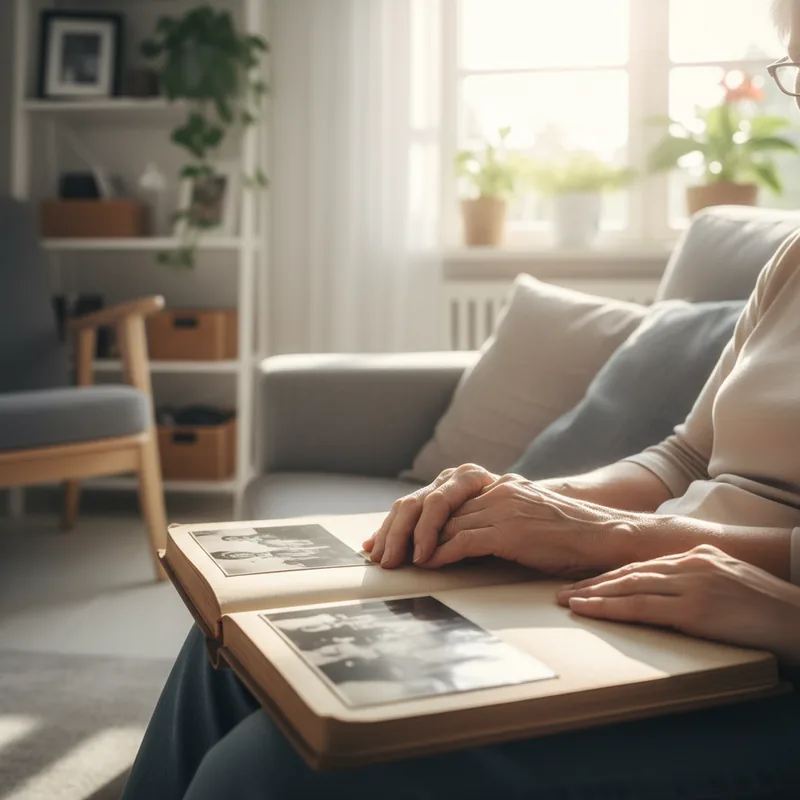
The afternoon sun painted golden stripes across my mother's living room floor as she paused mid-sentence, searching for a memory that seemed just beyond her reach. In that suspended moment, I realized why I'm listening to her now with an intensity I never managed before--because her stories aren't just nostalgia, they're living history that will disappear if I don't learn to receive them properly.
The Art of Presence
Modern life trains us for efficiency, not presence. We listen to respond, not to understand. But with my mother, I've discovered that real listening means surrendering my agenda entirely. Research from Harvard (2024) shows that attentive listening activates different neural pathways than casual conversation, creating deeper emotional connections.
Why I'm listening to her stories about ration cards during the war isn't just about historical curiosity. It's about understanding resilience through firsthand accounts. When she describes saving sugar for months to bake a birthday cake, I'm not just hearing a recipe--I'm learning about sacrifice and celebration in ways no history book could teach.
I've started asking different questions now. Instead of "How are you feeling?" I ask "What's the strongest memory you have of your grandmother's kitchen?" The specificity matters. It gives her mind a specific doorway to enter, rather than the overwhelming question of summarizing ninety-six years.
What We're Really Preserving
Every culture has its own relationship with aging, but Western societies particularly struggle with what gerontologists call "successful aging"--the balance between physical health and continued engagement (Mayo Clinic, 2023). When we dismiss elders as "outdated," we're not just being ageist--we're actively destroying libraries of lived experience.
Why I'm listening to my mother's meandering stories about her first job isn't about employment history. It's about capturing the texture of a world that no longer exists--the sound of manual typewriters, the smell of mimeograph machines, the social codes of office life in the 1950s. These details vanish unless someone preserves them.
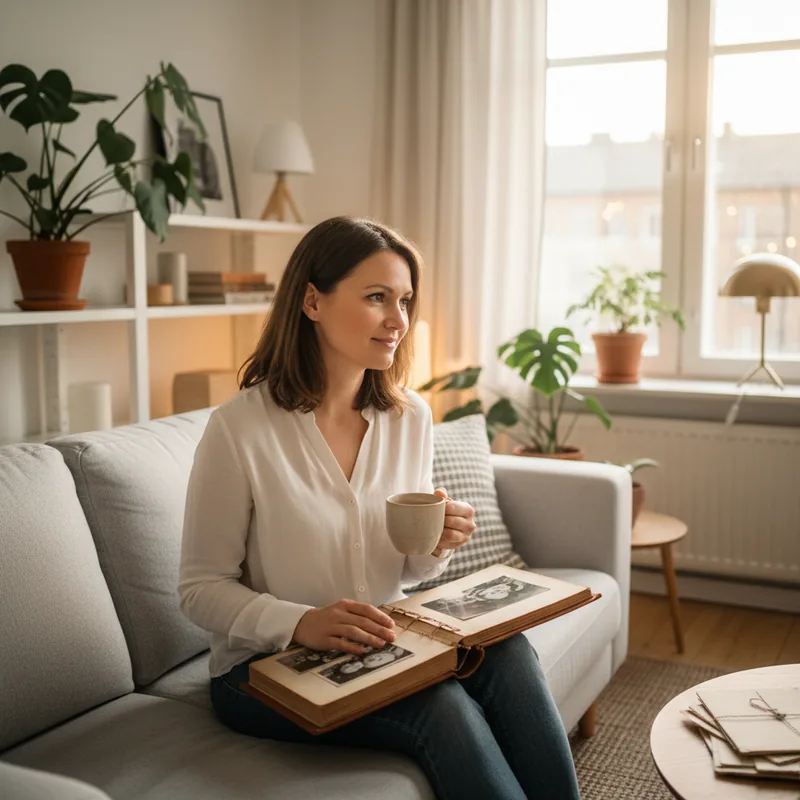
I've created what I call a "wisdom journal" where I record not just her stories, but the pauses between them, the way her voice changes when she remembers something joyful, the particular words she uses that have fallen out of fashion. These linguistic artifacts are as valuable as the narratives themselves.
The Gifts of Slow Attention
The most surprising discovery has been what this practice gives back to me. Why I'm listening to my mother has become less about her needs and more about my own development. In learning to sit through her silences, I've become better at sitting through my own discomfort in other areas of life.
Consider these three practices I've developed:
- The Five-Minute Rule: When visiting, I commit to the first five minutes being entirely about her world, without checking my phone or thinking about what comes next
- Story Prompts: I keep a list of open-ended questions like "Tell me about a time you felt truly proud" or "What's something you believed as a child that you now know differently?"
- Multigenerational Connections: I record her telling stories to my children, creating bridges between generations that will outlast us all
Why I'm listening to her recollections of neighborhood changes isn't just urban history. It's understanding how communities form and dissolve, how relationships shift with geography, how the physical spaces of our lives shape our emotional landscapes. When she describes the corner store where everyone knew her name, I'm learning about belonging in a digital age where such places are disappearing.
A Legacy of Attention
The African proverb says when an old person dies, a library burns. But I've come to believe the greater tragedy is when those libraries stand empty while their keepers are still alive--when we're too busy, too distracted, or too impatient to check out the volumes.
Why I'm listening to my mother now, in these final chapters, is ultimately selfish in the best sense. I'm learning how to age with grace by watching her navigate this territory first. I'm discovering that memory isn't just about accuracy--it's about meaning-making, about how we construct our identities from the raw material of our experiences.
This practice has taught me that listening is the ultimate act of preservation. We preserve not just stories, but dignity. Not just facts, but feelings. Not just history, but humanity. And in doing so, we prepare ourselves for the day when we'll be the ones searching for words, hoping someone has learned to listen as deeply as we're learning to now.
The golden light has faded from the room, but the warmth remains. My mother has found her memory, and I've found something too--the understanding that why I'm listening to her might be the most important question I've ever asked myself.