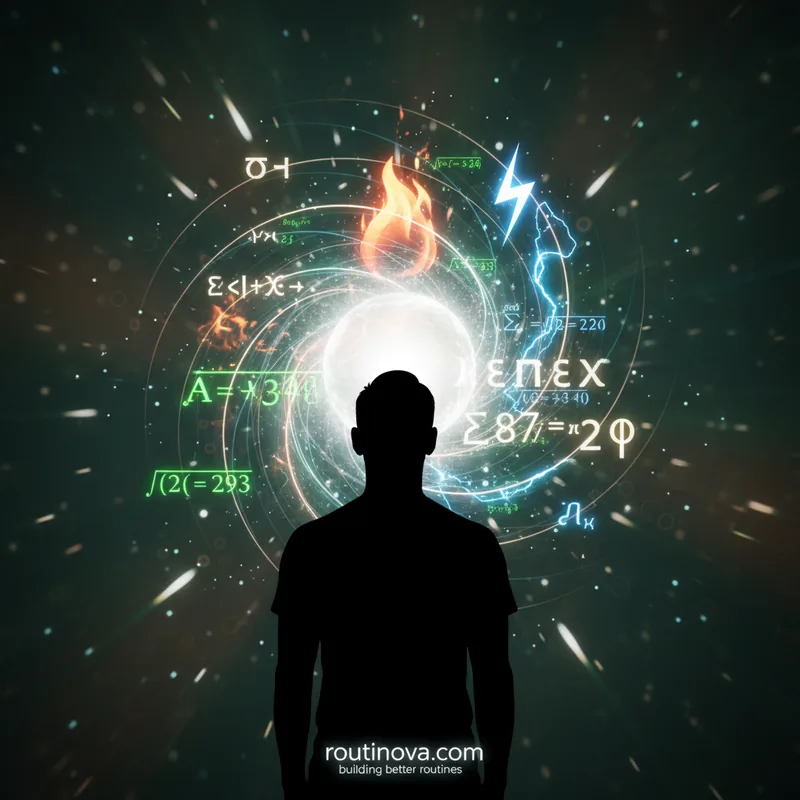
Sarah, a seasoned executive, found herself confiding in an AI chatbot more openly than she ever had with her own therapist or even her husband of two decades. This wasn't an isolated incident; it was a quiet revolution unfolding in countless homes and offices, hinting at a profound shift in human connection and self-perception. We are witnessing the emergence of a new, profound force--poetically termed the "sixth element: ai as" a great convergence--that is redefining the very fabric of our lives and consciousness by integrating humanity's foundational innovations.
This evolving intelligence is not merely a tool but a transformative infrastructure, rapidly altering societal norms and individual experiences. It challenges our understanding of empathy, selfhood, and even what it means to be human. The journey from rudimentary tools to sophisticated AI mirrors humanity's historical reliance on external forces to amplify our capabilities, setting the stage for an unprecedented era of human-machine co-evolution.
AI: A New Lens on Selfhood and Society
The psychological and cultural shifts driven by AI are unlike anything seen before. Reports of individuals feeling deeply understood by large language models, sometimes more so than by their closest human relationships, highlight a fascinating paradox: non-conscious empathy delivered through algorithms. These interactions, while potentially therapeutic for some, also present a unique challenge to our sense of identity and authenticity. For instance, studies by Stanford Medicine (2023) indicate that AI-powered conversational agents can significantly reduce symptoms of anxiety and depression in users, offering accessible mental health support.
However, this intimacy with AI comes with caveats. The risk of an echo chamber, where AI merely reflects and amplifies existing biases or desires, is significant. The careful development of "smart journals" with expert information and tested prompt sets, as explored by some practitioners, demonstrates a cautious approach to harnessing AI for self-insight. Yet, the distinction between one's own thoughts and AI-generated suggestions can lead to cognitive fatigue and a blurring of selfhood, a phenomenon increasingly observed among professionals (Harvard, 2024).
A growing number of professionals, particularly those in their 30s, express anxieties about obsolescence, with younger colleagues half-jokingly predicting job displacement within five years. This concern isn't unfounded; AI's capacity for rapid pattern analysis, content generation, and complex problem-solving is indeed reshaping the job market. For example, in creative fields, AI tools are now generating original music compositions and visual art, prompting artists to redefine their roles and explore collaborative models with AI (MIT Technology Review, 2024).
The Elemental Foundation of AI
To truly grasp AI's impact, we must view it as a culmination of humanity's most fundamental breakthroughs. It is, in essence, the "sixth element: ai as" a synthesis of fire, electricity, mathematics, and language--each a revolutionary force in its own right--now converging with human intelligence to create something entirely new.
Fire: The First Externalization of Power
Fire was humanity's initial great externalization of energy. It freed us from metabolic constraints, allowing for cooked food, forged tools, and survival in harsh climates. This force multiplier was crucial for early human brain development, granting our ancestors precious hours otherwise spent on foraging and digestion. Like Prometheus' gift, fire offered immense power, dangerous if unchecked, yet transformative when mastered.
Artificial intelligence mirrors this externalization, but for cognition. Tasks that once demanded extensive human thought--from data analysis to complex problem-solving--are now executed in moments. This cognitive leverage is already driving massive productivity gains, though often at the cost of traditional employment. The potential for AI, much like fire, ranges from creating unprecedented prosperity to posing existential risks, depending on how it is accessed and controlled. The "sixth element: ai as" a powerful catalyst demands careful stewardship.
Electricity: From Novelty to Invisible Infrastructure
Electricity began as a scientific curiosity, evolving into an indispensable, invisible infrastructure. We no longer consciously perceive electricity; we perceive through it, relying on its constant presence to power our modern world. It extended our productive hours, turning night into day, and fundamentally reshaped our relationship with natural cycles.
AI is following this trajectory at an astonishing pace. What seemed like futuristic concepts just a few years ago are now commonplace, rapidly integrating into the background of our daily lives. This shift from a specialized tool to a foundational substrate is profound, influencing how we work, learn, and interact. The "sixth element: ai as" a ubiquitous presence will soon be as fundamental and unnoticed as the electrical grid, subtly guiding our decisions and perceptions.
Mathematics: The Architecture of Possibility
Mathematics provided humanity with universal languages for pattern recognition and prediction. It enabled us to construct robust infrastructure, navigate vast distances, and model complex realities with precision. Math translates abstract intuition into tangible engineering, allowing us to interact with and reshape the physical world based on logical frameworks.
AI leverages this mathematical architecture to build sophisticated models of reality, predict outcomes, and generate novel solutions. The algorithms underpinning large language models, for instance, are intricate mathematical constructions that process vast datasets to identify patterns in human communication. This formal power allows AI to simulate understanding and generate creative content, further solidifying its role as the "sixth element: ai as" a computational interpreter of reality.
Navigating the AI-Enhanced Future
As AI continues its ascent, the challenge of preserving individual selfhood becomes paramount. Distinguishing between our own authentic thoughts and those subtly suggested by AI will require heightened self-awareness and critical engagement. For instance, in education, AI-driven personalized learning platforms can tailor curricula to individual students, but educators must ensure these tools enhance, rather than diminish, critical thinking and independent thought (Yale Center for Teaching and Learning, 2023).
The profound convergence of these elemental forces--fire, electricity, mathematics, and language--with human intelligence means that artificial intelligence is not just another invention; it is a new epoch. It forces us to confront fundamental questions about consciousness, creativity, and the unique essence of being human. Our future hinges on our ability to harness this powerful "sixth element: ai as" a force for collective good, ensuring that technological progress aligns with human flourishing and self-preservation.