In our complex world, how do we acquire new skills, adopt social norms, and understand intricate behaviors without constantly resorting to trial and error? The challenge of mastering new competencies, from learning to drive to navigating professional etiquette, often seems daunting if direct instruction or personal experience were our only teachers. This is where the profound power of learning through observation steps in.
Observational learning, a cornerstone of human development, offers a powerful alternative to purely experiential learning. It explains how simply watching others can equip us with the knowledge and capacity to perform new actions. Understanding how observational learning actually works is crucial for personal development, educational strategies, and even shaping societal trends, particularly in today’s digitally connected environment where modeling is ubiquitous. This framework highlights how we internalize behaviors, motivations, and consequences observed in our surroundings, making it an indispensable tool for growth and adaptation.
1. The Failures of Traditional Learning Approaches
For much of the 20th century, behavioral psychology dominated our understanding of how learning occurs. This school of thought proposed that all learning was a direct result of our interactions with the environment, primarily through conditioning, reinforcement, and punishment. According to behaviorists, every new behavior was meticulously shaped by immediate consequences: actions followed by rewards were repeated, while those met with negative outcomes were extinguished. This perspective, while foundational, presented significant limitations when attempting to explain the full spectrum of human learning.
Consider the sheer inefficiency and danger inherent in learning every single behavior through direct experience. Imagine a child having to experience the painful consequence of touching a hot stove to learn not to do it, or a new employee having to make every possible mistake before understanding proper workplace conduct. These scenarios highlight the impracticality of relying solely on direct reinforcement. Many complex human behaviors, such as language acquisition, social etiquette, or intricate motor skills like playing a sport, cannot be adequately explained by simple stimulus-response mechanisms. There simply isn’t enough time or opportunity for direct conditioning to account for the vast amount of knowledge and skills we accumulate throughout life. This gap in understanding underscored the need for a more comprehensive theory, one that acknowledged the cognitive and social dimensions of human learning, setting the stage for a revolutionary shift in psychological thought.
2. The Root Cause: Bandura’s Insight into Social Learning
The limitations of purely behavioral theories became increasingly apparent as psychologists observed how humans, especially children, acquired complex skills and behaviors without direct reinforcement. This intellectual void was notably addressed by psychologist Albert Bandura, who challenged the prevailing notion that all learning stemmed from direct experience. Bandura believed that while conditioning played a role, it could not account for the rapid and nuanced learning that people exhibit in social contexts. He observed that individuals frequently learn things with which they have no direct experience, simply by watching others.
Bandura’s groundbreaking work, particularly his famous Bobo doll experiments, provided compelling evidence that learning is a far more social and cognitive process than previously understood. He demonstrated that children could learn aggressive behaviors purely through observation, even without being directly rewarded or punished for those actions themselves. This insight formed the bedrock of his social learning theory, which later evolved into social cognitive theory. His work highlighted that internal mental states—such as attention, memory, and motivation—play a crucial role in mediating the observed behaviors and their eventual reproduction. This shift from an exclusive focus on external stimuli to an inclusion of internal cognitive processes was the root cause for developing a more robust and accurate model of human learning, recognizing the profound impact of social interactions and mental frameworks on our acquisition of knowledge and skills.
3. The Ultimate Solution: How Observational Learning Actually Works
Observational learning, also known as social learning, offers the ultimate solution to understanding how individuals acquire new behaviors and information by watching others. This process accounts for how people learn by observing models, noticing the outcomes of their actions, and using that information to guide their own behavior. It’s a fundamental aspect of human development, allowing us to rapidly adapt and integrate into social structures without the slow, often risky, process of direct trial-and-error. Understanding how observational learning actually works involves recognizing the interplay between environmental influences and cognitive factors.
At its core, observational learning actually functions through several interconnected stages. First, an individual must pay attention to the model’s behavior. Without focused attention, the details of the action cannot be encoded. Next, the observed information needs to be retained in memory; this involves mentally organizing and rehearsing the behavior. Following retention, the learner must possess the physical and cognitive capacity to reproduce the behavior, translating mental representations into action. Finally, motivation drives the decision to actually perform the learned behavior. This motivation is often influenced by the observed consequences for the model—whether they were rewarded or punished—and the learner’s own expectations and values. Thus, how observational learning actually works is a dynamic, multi-stage process that integrates external observation with internal cognitive processing, explaining why rewarded behaviors tend to spread and why we often mimic what we see in our everyday lives and media (Harvard, 2024). This comprehensive framework allows for efficient and often subconscious learning, shaping our actions and beliefs in profound ways.
4. Key Components of Effective Observational Learning
For observational learning to be truly effective, several specific requirements and steps must be successfully navigated by the learner. It’s not merely about passive viewing; rather, it’s an active cognitive process that determines whether an observed behavior is successfully learned and subsequently reproduced. Understanding these four core components is essential to grasping how observational learning actually works in practice.
The first crucial element is Attention. To learn anything through observation, you must actively pay attention to the model. Distractions, a lack of interest in the model or behavior, or the complexity of the observed action can all hinder this initial stage. If the model is engaging, the behavior is novel, or the situation is personally relevant, an individual is far more likely to devote their full attention, thereby capturing the necessary details for learning. This focused engagement is the gateway through which observational learning actually begins.
Next comes Retention. Once attention has been paid, the ability to store the observed information in memory is vital. This involves mentally coding the behavior, perhaps through verbal descriptions or vivid mental images. Effective retention allows the learner to recall the behavior later, even if they don’t immediately perform it. The quality of this mental storage influences how accurately the behavior can be reproduced. For example, remembering the sequence of steps in a complex recipe after watching a cooking show is an act of retention.
The third stage is Reproduction. This is where the learner translates the mental representations of the observed behavior into actual actions. It requires the physical and cognitive capabilities to perform the behavior. Initial attempts might be clumsy or imperfect, but practice and feedback lead to refinement and improved skill. A child mimicking a TikTok dance, for instance, might initially struggle with coordination but improves with repeated attempts, demonstrating the reproduction phase of how observational learning actually manifests.
Finally, Motivation acts as the driving force. For observational learning to be successful, the learner must be motivated to imitate the modeled behavior. This motivation can stem from vicarious reinforcement (seeing the model rewarded), vicarious punishment (seeing the model punished and thus avoiding the behavior), or direct reinforcement (receiving a reward for performing the behavior oneself). Intrinsic factors, such as a sense of accomplishment or pride, also play a significant role. If a colleague is praised for their innovative presentation style, you might be motivated to adopt similar techniques, showcasing how observational learning actually influences professional development (Harvard, 2024). Without adequate motivation, even perfectly observed and retained behaviors may never be expressed.
5. Real-World Impact: Applications of Observational Learning in 2025
Observational learning is not just a theoretical concept; it profoundly impacts our daily lives and offers practical solutions across various domains, especially in the rapidly evolving landscape of 2025. Its principles are actively employed to address complex societal issues, enhance education, and even shape personal habits. Understanding how observational learning actually manifests in the modern world reveals its enduring relevance.
In understanding and mitigating aggression, researchers continue to use social learning theory to investigate how violent behaviors might be transmitted through observational learning. With the prevalence of online gaming, streaming services, and social media, the influence of media violence on children and young adults is a constant concern. By studying what children observe in popular culture—from aggressive characters in video games to cyberbullying scenarios online—researchers gain crucial insights into factors that might lead them to imitate such actions. This understanding helps develop strategies for media literacy and responsible content creation, highlighting how observational learning actually informs public policy.
Conversely, observational learning is a powerful tool for teaching positive behaviors. Educators and public health campaigns leverage the theory to promote desirable actions. For instance, campaigns featuring positive role models demonstrating healthy eating habits, sustainable living practices, or civic engagement can encourage widespread adoption. In 2025, social media influencers often serve as powerful symbolic models, inadvertently or intentionally shaping the behaviors of millions. Watching an influencer adopt eco-friendly habits, for example, can motivate followers to make similar lifestyle changes, illustrating how observational learning actually drives social change in the digital age.
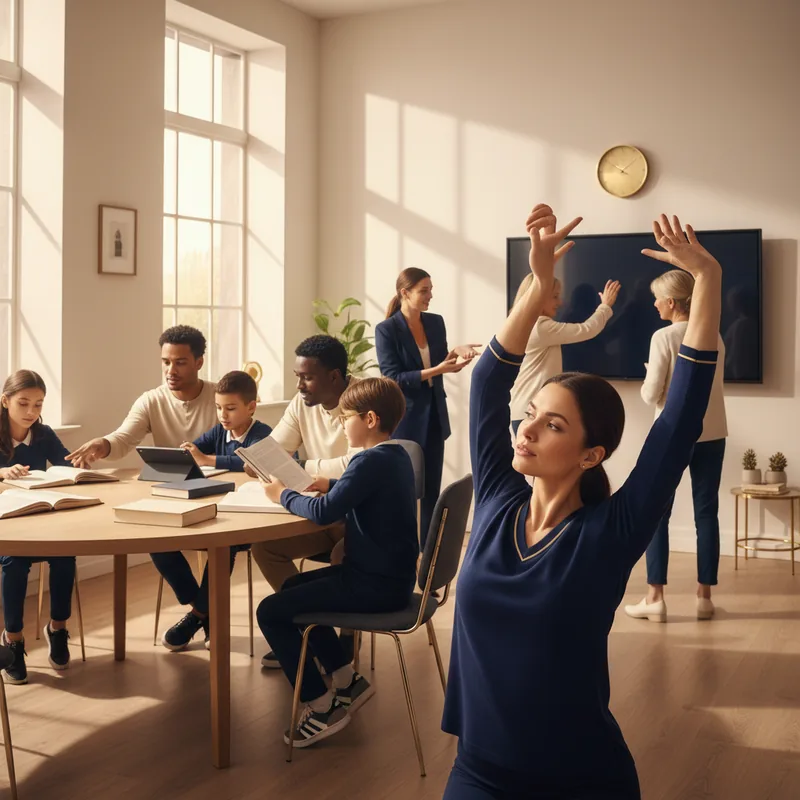
Within classroom learning, observational learning remains indispensable. Teachers model problem-solving strategies, reading techniques, and respectful communication, providing students with clear examples to emulate. Collaborative learning, guided practice, and peer modeling are all rooted in social learning theory. For instance, when a student struggles with a math problem, observing a peer successfully work through it can be more effective than direct instruction alone. The ability to see a process unfold, step-by-step, makes complex tasks more accessible, demonstrating how observational learning actually enhances educational outcomes.
Furthermore, it plays a critical role in reducing anxiety and phobias. Therapeutic approaches often involve individuals observing others successfully navigate feared situations. This vicarious experience can gradually reduce fear and build confidence, helping people to overcome anxieties without direct, overwhelming exposure. For example, watching a video of someone calmly interacting with a dog might help an individual with cynophobia gradually become less fearful, showing how observational learning actually contributes to mental well-being. The pervasive nature of online tutorials and skill-sharing platforms in 2025 further amplifies these applications, enabling individuals to learn complex software skills, master new hobbies, or even cope with challenging situations by observing expert demonstrations.
6. Empowering Your Growth Through Observational Learning
The profound insights offered by social learning theory, and specifically how observational learning actually functions, provide an empowering framework for personal growth and societal improvement. It liberates us from the sole reliance on painful trial-and-error, opening up a world where learning is efficient, adaptable, and deeply interconnected with our social environment. By consciously recognizing the models around us—both positive and negative—we can actively shape our own development and the development of those we influence.
In our daily lives, this understanding means we can be more intentional about who and what we observe. Choosing positive role models, whether in person, through media, or in digital spaces, becomes a deliberate strategy for acquiring desirable traits and skills. Conversely, recognizing the potential for negative observational learning encourages us to critically evaluate the content we consume and the environments we inhabit. The principles of attention, retention, reproduction, and motivation are not just academic concepts; they are practical tools for anyone looking to master new skills, overcome challenges, or simply understand the pervasive influence of social dynamics on behavior. By appreciating how observational learning actually works, we unlock a powerful mechanism for continuous learning and adaptation, ensuring that we are not just products of our direct experiences, but also active architects of our observed world.