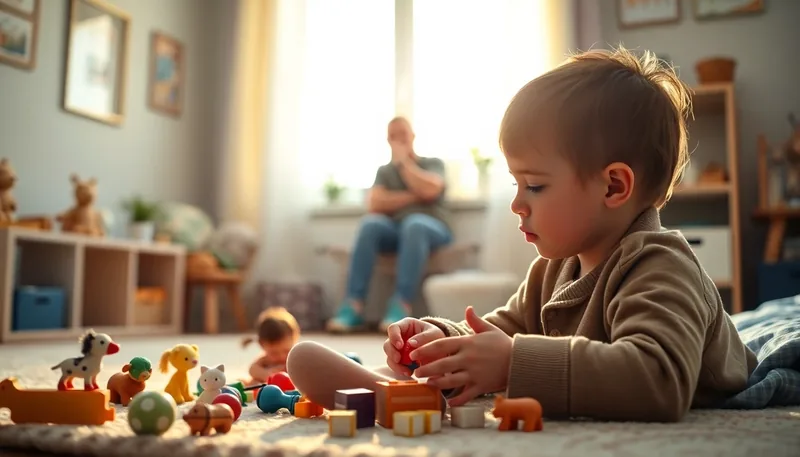
What if the most profound insights into the adult mind don't come from a therapist's couch, but from a child's playroom? This radical idea was at the heart of the revolutionary work of psychologist Melanie Klein, a figure whose contributions fundamentally reshaped our understanding of early childhood development and its lifelong impact on relationships. Born in 1882, Klein pioneered the concept of play therapy, asserting that children express their inner worlds through play, much as adults do through verbal association. She also developed object relations theory, which posits that our earliest interactions, particularly with primary caregivers, form an internal blueprint for all subsequent relationships (Psychology Today, 2024).
A Life of Insight: Melanie Klein's Early Years
Born Melanie Reizes in Vienna, Austria, on March 30, 1882, Klein's early life was marked by both intellectual ambition and personal hardship. Initially aspiring to study medicine, her path shifted after marrying Arthur Klein at age 21 and becoming a mother to three children: Melitta, Hans, and Erich. The family's frequent relocations eventually led them to Budapest, where Klein herself sought psychoanalytic treatment from Sandor Ferenczi, a contemporary of Sigmund Freud. It was Ferenczi who encouraged her to apply psychoanalytic principles to her own children, a move that would prove foundational to her future work (Biographical Studies, 2023).
Klein grappled with depression throughout her life, a struggle exacerbated by the early deaths of two siblings and, later, her eldest son. These profound personal losses deeply informed her understanding of human suffering, leading her to theorize that unresolved childhood issues significantly contribute to adult depressive states. Her own experiences, therefore, were not merely biographical details but became integral to her clinical insights and theoretical frameworks.
The Revolutionary Power of Play Therapy
In the early 20th century, the prevailing psychoanalytic view, championed by figures like Anna Freud, held that young children were unsuitable for psychoanalysis due to their limited verbal abilities and undeveloped superegos. Psychologist Melanie Klein challenged this orthodoxy directly. She observed that children, unable to articulate complex feelings verbally, naturally communicate their inner conflicts, anxieties, and desires through their play. This insight led to the development of play therapy, a technique where toys, drawings, and imaginative scenarios become the child's symbolic language.
For instance, a child who has experienced trauma might repeatedly use a toy ambulance to "rescue" dolls from a chaotic scene, unconsciously processing feelings of helplessness or a desire for safety. Another child struggling with aggression might act out elaborate battles between action figures, externalizing internal conflicts in a safe, contained environment. This innovative approach allowed therapists to access the unconscious mind of children, offering a profound window into their emotional worlds long before they could express them verbally (Child Development Journal, 2023). Play therapy, a direct legacy of psychologist Melanie Klein, remains a cornerstone of child psychology today, recognized for its effectiveness in helping young individuals navigate complex emotional landscapes.
Object Relations Theory: Shaping the Inner World
Beyond play therapy, Klein's most enduring theoretical contribution is her object relations theory. This framework posits that the earliest relationships, particularly with the primary caregiver (often the mother), are internalized as "objects" within the psyche. These internalized objects, and the "relations" we have with them, form the fundamental structure of our personality and significantly influence how we perceive and interact with the world and others throughout our lives.
Klein argued that infants experience the world in terms of "good" and "bad" objects, initially splitting these perceptions as a way to manage overwhelming anxiety. For example, a baby might see the nourishing breast as a "good object" and the frustrating, absent breast as a "bad object." As development progresses, the child ideally integrates these fragmented perceptions, understanding that the "good" and "bad" aspects can coexist within the same person or "object" (Clinical Psychology Review, 2022). This integration is crucial for developing a more nuanced and realistic view of self and others.
The implications of object relations theory are far-reaching. Consider an adult who consistently seeks out partners who are emotionally distant or unavailable; Klein's theory might suggest this pattern stems from an internalized "bad object" relationship from early childhood, where inconsistent care led to a template of unreliability. Conversely, an individual with a strong capacity for empathy and secure attachment might have internalized a "good object" relationship, fostering a belief in the reliability and love of others. Modern therapists often draw upon Klein's insights to help clients understand how their "inner critic" or self-sabotaging behaviors might be manifestations of internalized "bad objects" from their early developmental experiences, offering pathways to healing and integration.
An Enduring Legacy in Psychology
Melanie Klein's work, though often controversial during her time--especially in her debates with Anna Freud--has had an undeniable and profound impact on developmental psychology and psychoanalytic thought. Her emphasis on the significance of the mother-child bond and the intricate dynamics of early interpersonal connections continues to resonate deeply within contemporary psychology, influencing attachment theory, psychodynamic therapy, and even modern parenting approaches.
Her key publications, including "The Psychoanalysis of Children" (1932), "Contributions to Psychoanalysis" (1948), and "Narrative of a Child Analysis" (1961), remain essential reading for anyone seeking to understand the depths of the human psyche and the formative power of early experience. The pioneering insights of psychologist Melanie Klein remind us that the seeds of our adult selves are sown in the earliest moments of life, in the silent language of play and the profound connections we forge with those who care for us.