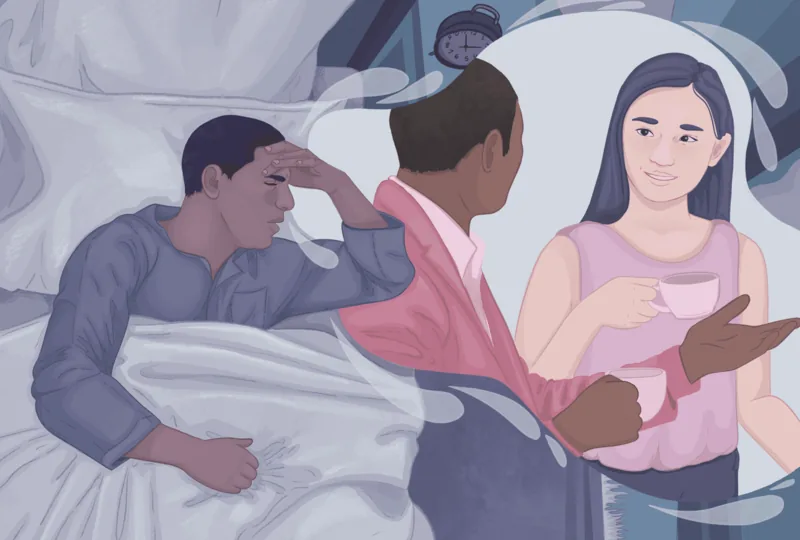
Imagine a final moment of profound clarity, a brief, unexpected return of self and connection just before death. This isn't a scene from a movie, but a documented phenomenon known as terminal lucidity, a mystery that challenges our understanding of the mind and its capabilities, especially when the mind returns.
The Mystery of Terminal Lucidity
Terminal lucidity describes brief, spontaneous episodes of mental clarity in individuals suffering from severe neurological impairment, most often advanced dementia. These moments, though fleeting, offer glimpses of the person they once were, a stark contrast to the cognitive decline that has characterized their illness. For families and caregivers, these lucid intervals can be profoundly moving, offering a chance for reconciliation, shared memories, and a final, meaningful connection.
Consider the case of Mrs. Davison, who had lived with advanced Alzheimer's for years, barely recognizing her own children. On the eve of her passing, she sat up, asked her son about his new job, and discussed family news with a coherence that hadn't been seen in nearly a decade. Similarly, Mr. Chen, who had been non-verbal for months due to a stroke, suddenly began speaking to his wife, recounting a cherished memory from their honeymoon. These instances, while rare, are powerful reminders of the complex nature of consciousness.
These episodes appear to defy conventional medical models that link cognition strictly to the physical state of brain tissue. If a brain is severely damaged, how can such a sophisticated return of function occur? This question has long puzzled physicians and caregivers alike, prompting a deeper scientific investigation into when the mind returns.
From Anecdote to Scientific Inquiry
For centuries, accounts of unexpected clarity near death have appeared in medical literature, often noted as curious diagnostic signs preceding a rapid decline. However, these observations remained largely anecdotal until a small but dedicated group of researchers began to systematically collect and study these cases. This collective effort has been instrumental in moving terminal lucidity from the realm of scattered stories to that of coordinated scientific inquiry.
A significant step forward occurred in 2018 when the National Institute on Aging convened the first international research workshop dedicated to unexpected lucid episodes in dementia. This landmark event brought together a dozen experts from various fields--including neurology, psychiatry, psychology, and palliative care--to share findings and establish a common framework for research (National Institute on Aging, 2018). The goal was to understand the phenomenon of when the mind returns, seeking patterns and potential explanations.
This growing body of research is crucial, especially as global populations age and the prevalence of degenerative brain diseases rises. Understanding terminal lucidity is not only vital for neuroscience but also for improving palliative care and enhancing how we support individuals and their families during life's final stages. It prompts us to reconsider the boundaries of our understanding regarding consciousness and the brain.
Profound Implications at Life's End
For families navigating the end-of-life journey with a loved one suffering from dementia or other neurological impairments, moments of terminal lucidity can be incredibly significant. These episodes offer a rare and precious opportunity to reconnect, to say unspoken goodbyes, and to affirm love and identity. The daughter of A.M., a woman with advanced dementia, described her mother's final lucid hour: she recognized her daughter, spoke coherently, and they reminisced about childhood memories and future plans. This profound exchange, though brief, transformed the daughter's experience of her mother's final day, imbuing it with both joy and a deep sense of closure (Batthyány, 2020).
These lucid moments can reshape perceptions of identity, memory, and connection. They challenge the notion that a person is entirely lost to their illness, reminding loved ones of the enduring essence of the individual. While medical science continues to explore the biological underpinnings of when the mind returns, the emotional and psychological impact on those present is undeniable. These experiences highlight the importance of presence, connection, and open communication, even in the face of severe cognitive decline.
The research into terminal lucidity continues, seeking to unravel the complex interplay between brain function, consciousness, and the dying process. It is a field that bridges scientific curiosity with deep human experience, offering comfort and understanding to those facing the profound mystery of life's end. The possibility that when the mind returns, even for a moment, offers a powerful testament to the enduring human spirit.