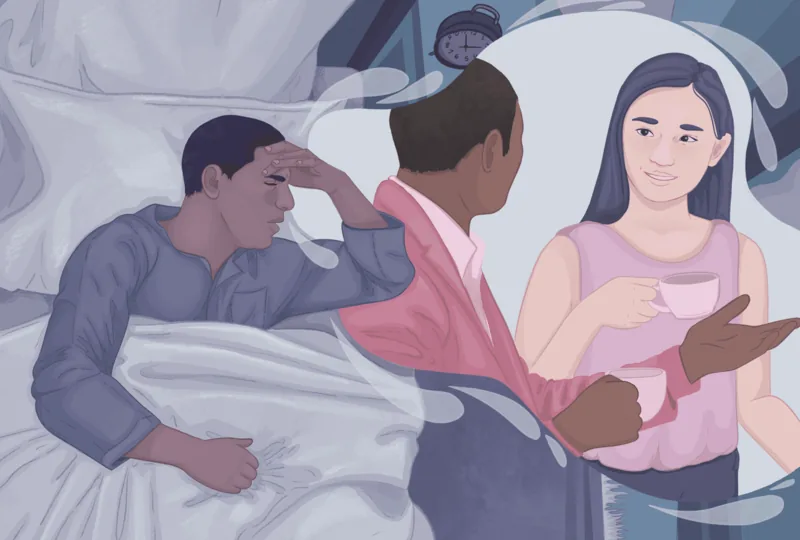
Imagine a drastic shift in your immediate surroundings - a car suddenly changing color or a person's outfit transforming instantly. You'd notice it, right? Surprisingly, not always. Our brains are constantly bombarded with visual information, far too much to process entirely, leading us to often miss even significant alterations. This intriguing phenomenon is known as change blindness: when we fail to perceive noticeable changes in our visual field.
Change blindness occurs because our attention has limited capacity, forcing us to selectively focus on certain details while others fade into the background. Additionally, our expectations often guide what we perceive; we don't anticipate sudden, dramatic shifts, making us less likely to detect them even when they happen (University of Pennsylvania, 2023).
The Science Behind Change Blindness
The concept of change blindness isn't new; researchers have explored it for decades, revealing its profound implications for daily life. Detecting change is crucial, whether it's noticing a vehicle veering into your lane or a new person entering a room. Numerous experiments have shed light on the mechanisms of this visual oversight.
For instance, studies have shown how a rapid change in a stimulus's direction can induce change blindness, a principle often exploited in magic tricks (Psychological Science Journal, 2019). Other research has investigated how factors like stimulus strength and stability influence our ability to perceive changes (Neuroscience of Consciousness, 2019).
Experiments involving brief interruptions between two versions of an image highlight how these breaks make changes harder to spot (Blackmore et al., 1995). Another classic study involved participants failing to notice when their conversation partners were swapped during a brief distraction, a vivid demonstration of change blindness: when we are focused elsewhere (Simons & Levin, 1998).
Why We Miss the Obvious: Causes of Change Blindness
Given the importance of perceiving change, why do humans frequently overlook even major ones? Researchers point to several key factors that contribute to change blindness.
Limited Attention and Cognitive Resources
At any given moment, your attention is directed towards specific details, like these words you are reading. Are you consciously aware of the pressure of your feet on the floor or the ambient sounds in the room? Until prompted, probably not. This is because our cognitive resources are finite, compelling us to prioritize what we focus on.
According to cognitive scientists, our limited capacity for attention means that a vast amount of visual information simply bypasses our conscious awareness. We lack the mental bandwidth to process every detail simultaneously, making us susceptible to change blindness: when we are overwhelmed by sensory input (MIT Research, 2022).
The Role of Expectations and Experience
Many changes, especially those artificially created in experimental settings, go unnoticed because they defy our everyday expectations. How often does a person's shirt suddenly change color, or an object spontaneously appear? These events are so uncommon in real life that our brains are not primed to detect them.
People often believe they would easily spot such changes, largely because real-life changes are frequently accompanied by motion, providing a natural cue (Goldstein & Brockmole, 2017). Without these expected cues, our brains tend to overlook unexpected alterations, a prime example of change blindness: when we rely too heavily on past experiences.
Other Influencing Factors
Several other elements can exacerbate change blindness, including our current level of attention, age, the way information is presented, and even the use of psychoactive substances. Distraction, in particular, significantly increases our susceptibility to missing changes.
Age also plays a role; studies indicate that older individuals are generally less adept at detecting visual changes compared to younger adults (Costello et al., 2010). This further underscores how the brain's ability to process visual information is constrained by diminishing resources over time.
"The basic problem is that far more information lands on your eyes than you can possibly analyze and still end up with a reasonable-sized brain." - Natalie Angier, The New York Times (2008)
To manage this overwhelming influx of data, our brains strategically focus on what they deem most important, often at the expense of other details.
Change Blindness in the Real World
The implications of change blindness extend far beyond laboratory experiments, potentially leading to serious consequences in everyday situations.
- Air Traffic Control: In a high-stakes environment like air traffic control, a controller's failure to detect subtle changes in flight paths, takeoffs, or landings could lead to catastrophic accidents.
- Driving: On the road, failing to notice a pedestrian stepping out, a traffic light changing, or another car slowing down can have dire results. Distractions like talking on the phone or texting significantly reduce attention, increasing change blindness: when we need it least (Romer et al., 2014).
- Eyewitness Testimony: Change blindness can profoundly affect an eyewitness's ability to accurately recall the details of a crime or correctly identify a perpetrator. Witnesses might miss critical visual information due to stress or distraction (Nellson et al., 2011).
- Social Interactions: Even in social settings, change blindness can cause awkward moments, such as failing to notice a new haircut on a friend until they point it out, or asking the wrong waiter for the check in a busy restaurant.
- Medical Procedures: A surgeon intently focused on a delicate part of an operation might miss a critical, but subtle, change on a patient's vital signs monitor, leading to delayed intervention (Harvard Medical School, 2024).
- Security Monitoring: Security personnel monitoring CCTV feeds might miss a suspect entering a restricted area if their attention is drawn to another part of the screen, or if the change is gradual (Stanford University, 2023).
Summary
Change blindness is a fascinating and sometimes alarming aspect of human perception, revealing the limitations of our visual attention. It's not that we don't see changes; rather, our brains are so efficient at filtering information that they often omit details deemed less critical, especially when attention is elsewhere or expectations are unmet. Understanding this phenomenon highlights the importance of focused attention in critical situations and reminds us that our perception of the world is often a constructed reality, not a perfect mirror of what's truly there.