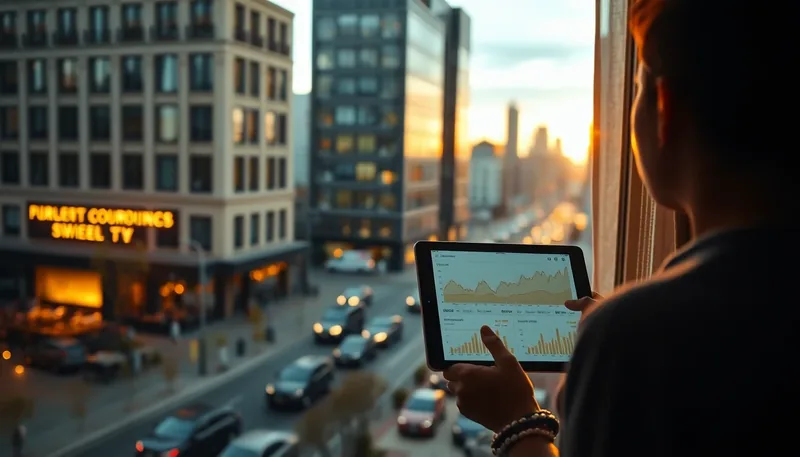
I remember a conversation with a friend, Mark, back in 2010. The news was grim - lingering shadows of the Global Financial Crisis, widespread talks of a double-dip recession. Yet, Mark's world seemed detached from the headlines. His tech startup had just secured a major funding round, his favorite restaurants were perpetually booked, and he'd just upgraded his car. "Am I living in a parallel universe?" he asked me, genuinely perplexed by the disconnect between his booming reality and the bleak economic reports. Today, that sentiment echoes louder than ever for many. Yes, it's entirely possible for individual experiences to diverge sharply from national economic narratives due to localized prosperity or specific industry booms, creating a feeling where one might question their own economic reality.
The Disconnect: Why Perception Skews Reality
The economy, much like a complex organism, rarely moves in a single, uniform direction. While national statistics might paint a picture of struggle or slow recovery, particular sectors or geographic regions can experience robust growth. This phenomenon is often referred to as a K-shaped recovery, where some segments of the economy rebound strongly, while others lag significantly (Brookings Institute, 2023). For those benefiting from the upward stroke of the 'K,' like tech professionals in Silicon Valley or property owners in rapidly appreciating markets, the notion of widespread economic hardship can feel alien. This leads to the fundamental question: am I living in a bubble of prosperity?
Consider the period following the 2008 financial crisis, and again after the 2020 lockdowns. Despite initial widespread fear, markets like stocks and real estate quickly surged, driven by factors such as low interest rates and massive fiscal stimulus. This creates a fascinating paradox where wealth accumulation for some accelerates, even as others face job insecurity or business closures. The daily experience of navigating packed restaurants, dense traffic, and booming local businesses can genuinely make one wonder if the official economic narrative truly reflects their personal reality.
Anecdotes of Affluence: Local Economic Indicators
When official reports conflict with daily observations, personal anecdotes become powerful, albeit localized, indicators of economic health. In thriving urban centers, the signs of a robust economy are often palpable, leading many to ask, "am I living in a thriving economic zone?"
- Traffic Congestion: Increased commute times, from 25 minutes to 35 minutes on major routes, suggest more people are working and traveling.
- Dining Out: Popular establishments, like high-end steakhouses, are consistently booked, requiring reservations days in advance for late-night slots.
- Luxury Car Sales: Dealerships report sales paces not seen in years, with new models like a $72,000 luxury sedan moving quickly.
- Venture Capital Activity: Private equity firms are flush with capital, actively funding startups at high valuations, signaling investor confidence and innovation.
- Lending Activity: Mortgage brokers confirm banks are actively lending again, indicating a healthier credit market and demand for housing.
- Recruitment Boom: Headhunters are incessantly calling, even past mid-year, suggesting high demand for talent across industries.
- Leisure and Recreation: Exclusive clubs see membership surges and difficulty securing prime-time reservations, as individuals have more disposable income and flexible schedules.
- Real Estate Market: Homes receive multiple offers and go under contract within days, reflecting strong buyer demand and confidence.
- Retail Demand: Limited edition luxury items, such as a $340 pair of retro sneakers, sell out within minutes of store opening, often to younger demographics with significant purchasing power. (New Example)
- Premium Travel: Demand for first-class flights and luxury resort bookings has surged, with travelers willing to pay a premium for exclusive experiences (Forbes, 2023). (New Example)
- Home Improvement Services: Landscapers and contractors face backlogs, prioritizing larger, more lucrative projects, indicating a willingness to invest in property enhancements.
- Digital Services Boom: The valuation of companies providing remote work solutions and digital entertainment has skyrocketed, reflecting a shift in consumer and business spending (Statista, 2024). (New Example)
These local snapshots, while not representative of the entire nation, paint a compelling picture of prosperity for those experiencing them firsthand. They create a powerful contrast with any lingering doubts about economic recovery.
Beyond the Bubble: Interpreting Economic Signals
While personal experiences are vivid, understanding the broader economic landscape requires looking beyond local anecdotes. The stock market, for instance, often serves as a leading indicator, its recovery from lows signaling investor optimism about future corporate earnings. Yet, persistent concerns about unemployment or inflation can create a "double dip recession" narrative, even amidst market rallies (Federal Reserve, 2024).
Government policies, such as quantitative easing (QE2, as mentioned in the original context), aim to stimulate the economy by injecting liquidity, often leading to asset reflation. This means the value of stocks and real estate can increase, making those who own these assets feel wealthier. However, this doesn't always translate into universal prosperity, especially for those without significant asset ownership or who are grappling with stagnant wages.
The tension between official pronouncements of recovery and cautious media reports highlights the complexity. While governments might emphasize positive trends, independent analysts often urge caution, focusing on underlying structural issues. For individuals, discerning whether their personal prosperity is sustainable or if am I living in a temporary boom requires a nuanced view of both micro and macro trends.
Charting Your Financial Future in a Dynamic Economy
Ultimately, navigating an economy that presents a mix of thriving sectors and persistent challenges demands a proactive financial strategy. The lesson from past economic cycles is clear: those who accurately anticipated growth, even amidst uncertainty, often reaped substantial rewards. For example, an investment in the S&P 500 and real estate in 2010 would have yielded significant returns over the subsequent 15 years, underscoring the power of long-term vision.
Diversification remains a cornerstone of robust financial planning. While traditional stocks and bonds are foundational, exploring other asset classes can enhance efficiency and growth potential. Real estate, for instance, offers a blend of income stability and growth potential. Furthermore, with private companies staying private for longer, access to private market opportunities, such as investments in transformative technologies like AI, becomes increasingly relevant for portfolio exposure.
Understanding your own economic reality and taking deliberate action--optimizing existing assets and positioning wealth for long-term growth--is paramount. Whether you feel you are in a personal boom or navigating headwinds, continuous learning and strategic adjustments are key. The question of "am I living in a parallel universe?" often prompts a deeper look into one's own financial landscape and the broader forces at play.