Your shoulders creep up to your ears. Your jaw clenches. Your mind races through tomorrow's to-do list at 2 AM. We've all been there, caught in the relentless grip of stress or discomfort that traditional medicine sometimes struggles to fully address. But what if there were other paths to wellness, ancient practices that have stood the test of time? Alternative therapies, encompassing everything from the mindful movement of yoga to the targeted touch of acupuncture, offer a complementary approach to healing. They represent a growing area of interest for those seeking holistic well-being, but understanding what to know about them is crucial before diving in.
What Are Alternative Therapies?
Alternative therapies are essentially non-conventional medical treatments. Think of them as a different toolkit for managing your health, one that can be used either alongside your doctor's prescribed treatments or, in some cases, as a standalone option. When these practices are used in conjunction with traditional medicine, they're often called 'complementary.' If they're used instead of conventional medicine, they're termed 'alternative.' The broader umbrella term often used in medical circles is Complementary and Alternative Medicine (CAM).
The distinction can be subtle, but the National Institutes of Health (NIH) clarifies that 'complementary' means used with conventional treatment, while 'alternative' means used in place of it. Many people find the most benefit when these approaches are integrated, forming what's known as integrative medicine, where healthcare providers blend all available therapeutic methods for optimal patient health.
Understanding the Landscape of Alternative Care
The world of alternative therapies is vast and varied, with some practices becoming so integrated into mainstream wellness that they're almost unrecognizable as 'alternative' anymore. The National Center for Complementary and Integrative Health (NCCIH) helps us categorize these diverse approaches, making it easier to grasp their underlying principles. This categorization is key to understanding what to know about the different options available.
Broadly, these therapies fall into a few key areas:
Nutritional Approaches
This category encompasses dietary strategies, including specific diets, the use of dietary supplements, probiotics, and, of course, herbs. It's about leveraging what we consume to influence our health.
Physiological Approaches
Here, the focus shifts to practices that influence the mind and body's internal states. Meditation and hypnosis are prime examples, aiming to alter consciousness and mental focus.
Physical Approaches
These therapies involve direct physical manipulation or stimulation. Acupuncture, with its needle-based technique, and various forms of massage therapy fall under this umbrella.
Combination Approaches
Many powerful therapies work by engaging both the mind and body simultaneously. Yoga, Tai Chi, and dance therapy are excellent examples, weaving together movement, breath, and mental focus.
Most alternative therapies can be neatly placed within these categories, offering a structured way to explore the many options available.
Exploring Popular Alternative Therapies
While the categories provide a framework, it's the individual practices that often capture our attention. Let's delve into some of the most widely recognized and practiced alternative therapies, understanding what to know about each.
Ayurveda: The Ancient Indian System
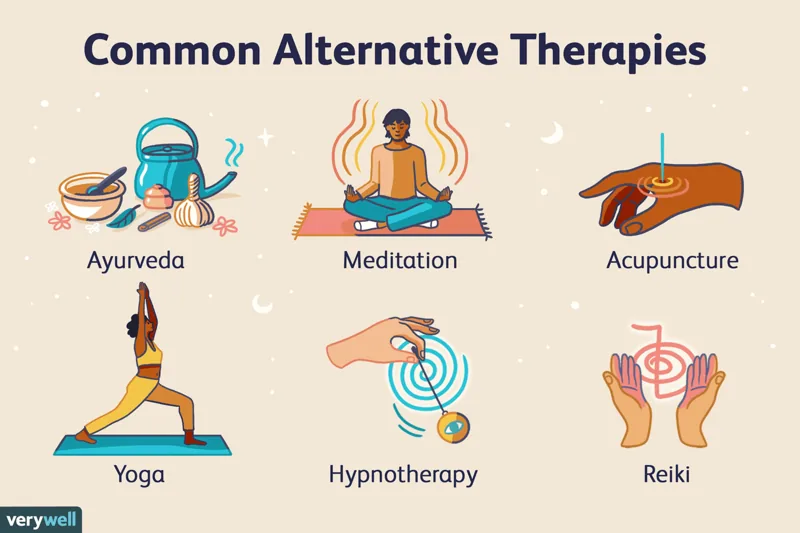
Originating in India thousands of years ago, Ayurveda is a holistic system that emphasizes balance. It uses a combination of specific herbs, dietary adjustments, massage, and purification techniques to treat a wide array of conditions. Research suggests Ayurvedic medicine can be beneficial for managing symptoms associated with osteoarthritis, type 2 diabetes, and inflammatory conditions like colitis (Sharma, 2015).
Meditation: Cultivating Inner Calm
Meditation, a practice with roots stretching back centuries, is all about training your attention. Whether you focus on your breath, a mantra, or bodily sensations, the goal is to achieve a state of calm and relaxation. This mental quietude can be a powerful tool for coping with stress, improving sleep, and even positively impacting physical health markers like blood pressure. It's also recognized for its ability to boost immunity and combat the effects of chronic stress (National Center for Complementary and Integrative Health, n.d.).
Homeopathy: A Diluted Approach
Homeopathy operates on the principle that 'like cures like' - a substance that causes symptoms in a healthy person can, in highly diluted form, treat similar symptoms in an ill person. Homeopaths believe extreme dilution enhances a substance's therapeutic power. However, it's important to note that homeopathy faces significant skepticism within traditional medical communities. In the UK, for instance, the National Health Service (NHS) recommended discontinuing its provision due to a lack of supporting scientific evidence (NHS UK, n.d.).
Hypnotherapy: Accessing the Subconscious
Hypnotherapy utilizes hypnosis to facilitate therapeutic change. During a hypnotherapy session, you're guided into a deeply relaxed state, allowing a hypnotherapist to work with your subconscious thoughts and beliefs. This can be a powerful tool for encouraging behavioral shifts or alleviating symptoms. Studies suggest hypnotherapy can be helpful for pain management, managing ADHD symptoms, reducing chemotherapy-induced nausea, and alleviating irritable bowel syndrome symptoms (Jensen et al., 2017). Contrary to myth, you remain in control throughout the process.
Acupuncture: Balancing Energy Flow
A traditional Chinese medicine technique, acupuncture involves inserting very fine needles into specific points on the body. Historically used for pain relief, it's believed to stimulate nerves and muscles, prompting the release of the body's natural painkillers. Research indicates acupuncture can be effective for tension and chronic headaches, and some studies suggest benefits for anxiety symptoms as well (Linde et al., n.d.; Yang et al., 2021).
Yoga: Mind-Body Integration
More than just exercise, yoga is an ancient practice that profoundly impacts physical and mental well-being. Its combination of postures, breathing techniques, and meditation can effectively relieve stress, manage anxiety, and aid in pain management. While generally safe, practicing with a certified instructor is recommended, especially when starting out, to prevent injuries (National Center for Complementary and Integrative Health, n.d.).
Massage Therapy: For Well-being
Therapeutic massage focuses on manipulating soft tissues to relieve pain and promote healing. Beyond simple relaxation, research highlights massage therapy's benefits in managing symptoms of anxiety, stress, and depression. The type of massage can be tailored to specific goals, making it a versatile tool in a wellness regimen (National Center for Complementary and Integrative Health, 2023).
Herbal Medicine: Nature's Remedies
Herbal medicine harnesses the power of plants--leaves, seeds, and roots--to create treatments for various conditions. These remedies can come in many forms, from teas and tinctures to capsules and creams. It's crucial to approach herbal medicine with caution, as some herbs can interact with conventional medications or have side effects. Always consult your doctor before starting any new herbal treatment. Examples include St. John's Wort for mild depression, green tea for weight management and cholesterol, Ginkgo biloba for circulation issues, and Saw Palmetto for prostate health (US National Library of Medicine, n.d.).
Chiropractic Medicine: Spinal Alignment
Chiropractic care focuses on the diagnosis, treatment, and prevention of mechanical disorders of the musculoskeletal system, especially the spine. Chiropractors use manual adjustments to manipulate the spine, joints, and skeletal system to ease pain and improve function. Like conventional medical practitioners, chiropractors review your history, conduct tests, and provide a diagnosis before creating a treatment plan (National Center for Complementary and Integrative Health, n.d.).
Reiki: Energy Healing
Reiki is a Japanese practice based on the belief in a universal life force energy. Practitioners lay their hands on or near the body, aiming to channel this energy to promote healing and restore balance. Studies suggest Reiki can be more effective than placebo in alleviating certain mental health symptoms, potentially serving as a complementary approach for individuals experiencing depression, anxiety, and stress (Zadro & Stapleton, 2022).
When to Consider Alternative Therapies
It's estimated that a significant portion of the population, possibly between 25% and 75% annually, utilizes some form of complementary or alternative therapy (Lee et al., 2022). This widespread use underscores a desire for broader approaches to health and well-being. These therapies are employed for a multitude of reasons, often to address conditions like depression, anxiety, chronic pain, and hypertension, either as standalone treatments or, more commonly, in support of conventional medical care.
The key takeaway here is that these therapies can offer valuable support, but informed decisions are paramount. Understanding what to know about their potential benefits and risks is the first step.
Safety and Effectiveness: What to Know
The conversation around the safety and effectiveness of alternative therapies is ongoing, and more research is always needed. While some practices like meditation, yoga, and massage have a long history of use and are widely accepted, others, such as homeopathy, continue to be subjects of debate.
It's crucial to remember that 'natural' doesn't automatically equate to 'safe.' Some herbal supplements, for instance, can have potent effects, interact with prescription medications, or cause adverse reactions. This is precisely why talking to your doctor before starting any alternative therapy is non-negotiable. Inform them about all medications, supplements, and substances you are currently taking.
Most importantly, alternative therapies should never be viewed as a complete replacement for conventional medical treatment. If you're experiencing symptoms of a medical or mental health condition, your primary healthcare provider is your best resource for discussing all appropriate treatment options, whether conventional, complementary, or a combination of both.
Thorough research into the specific therapy you're considering is essential. While your doctor may lean towards conventional medicine, their input on an alternative therapy you wish to explore can provide invaluable guidance.