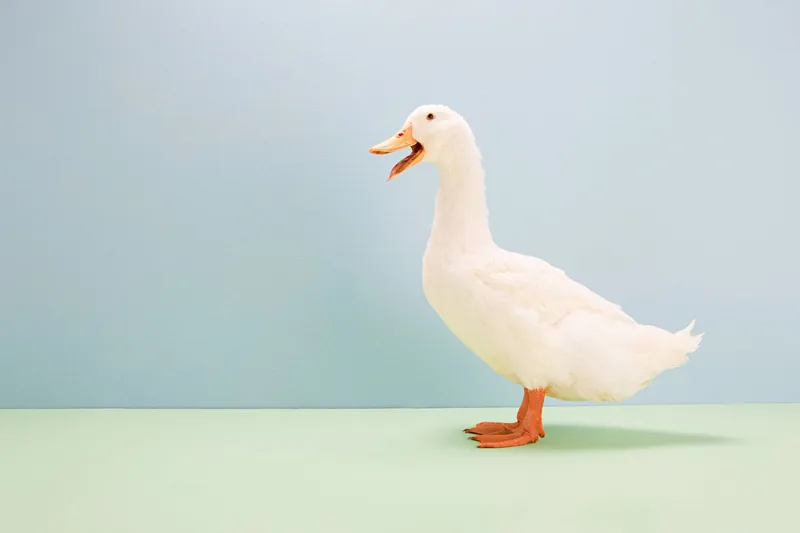
Could it be true that some people genuinely fear being watched by ducks? While the specific term 'anatidaephobia' sounds plausible, it's actually a fictional concept born from a beloved comic strip. This playful 'fauxbia' has, however, sparked curiosity about real fears of birds. So, is anatidaephobia real phobia? The short answer is no, but the fear of birds, known as ornithophobia, is very real and can certainly include ducks.
The Origin of a 'Fauxbia'
Anatidaephobia emerged from Gary Larson's iconic comic, *The Far Side*. Larson humorously defined it as 'The fear that somewhere, somehow, a duck is watching you.' The accompanying illustration depicted a man in his office, a duck a constant, unnerving presence across the street. This was never intended as a clinical diagnosis but rather a satirical take on how any object or situation can become a source of anxiety.
Despite its fictional origins, the idea of anatidaephobia has captured the public imagination. A quick online search reveals discussions and articles that either playfully explore Larson's concept or, more confusingly, misrepresent it as a genuine phobia. The term itself is a clever blend: 'Anatidae' refers to the biological family of waterfowl (including ducks and geese), and 'phóbos' is Greek for fear.
But here's the crucial distinction: while anatidaephobia isn't a recognized medical condition, the fear of ducks or geese is absolutely possible. It falls under the umbrella of a genuine specific phobia called ornithophobia, the fear of birds.
Ornithophobia: The Genuine Fear of Birds
Specific phobias are classified within anxiety disorders and are characterized by an intense, irrational fear of a particular object or situation. The National Institute of Mental Health estimates that a significant portion of adults will experience a phobia in their lifetime (National Institute of Mental Health, 2023). Ornithophobia is categorized as an 'animal type' specific phobia.
For some, the fear is generalized to all birds; for others, it's specific. This could mean a deep-seated dread of pigeons in the park, a paralyzing fear of large birds of prey, or indeed, a profound discomfort around ducks and geese. The underlying cause often traces back to a negative experience.
Imagine a childhood incident where a flock of geese aggressively chased you at a park, or perhaps a vivid memory of Alfred Hitchcock's chilling film *The Birds*. These experiences, even if seemingly minor, can imprint a lasting fear response. It's a testament to how our minds can create powerful associations, sometimes with little conscious control.
Consider Sarah, who developed a fear of seagulls after a particularly aggressive bird snatched her ice cream cone on a beach vacation as a child. While comical in hindsight, the experience left her feeling vulnerable and anxious whenever she saw seagulls, a fear that extended to other birds in open spaces. This is a classic example of how a specific event can trigger a broader phobic response, even if the term 'anatidaephobia' isn't clinically accurate for her situation.
When Fear Takes Hold: Symptoms of Specific Phobias
Encountering the object of a specific phobia, like ducks or birds in general, can trigger a cascade of anxiety symptoms. These aren't just mild nerves; they can be profoundly distressing and physical:
- Rapid heartbeat and breathing
- Chest pain or tightness
- Shaking and trembling
- Dizziness or lightheadedness
- Nausea or stomach upset
- Sweating
- Feelings of confusion or detachment
For individuals with severe phobias, the avoidance behavior can become debilitating. They might go to extreme lengths to steer clear of feared situations, impacting their daily lives. This could mean avoiding parks, zoos, or even certain travel destinations. In some cases, the intensity of the fear can lead to a full-blown panic attack, a sudden surge of overwhelming fear that can feel terrifyingly real, making one feel as if they are losing control or even dying (Anxiety and Depression Association of America, n.d.).
Finding Relief: Treating Ornithophobia
While anatidaephobia is a myth, ornithophobia and other specific phobias are very real and treatable. The goal of therapy is to help individuals manage their anxiety response and regain control over their fears.
One of the most effective approaches is exposure therapy. This involves gradually and systematically exposing the individual to the feared object or situation in a safe, controlled environment. Think of it as retraining the brain's alarm system. A therapist might start with pictures of birds, then perhaps bird sounds, progressing to observing birds from a distance, and eventually, perhaps, being in the same space as a bird, all while employing relaxation techniques. Research supports both real-world (in vivo) exposure and virtual reality exposure as effective methods (Wechsler et al., 2019).
Another powerful tool is Cognitive-Behavioral Therapy (CBT). CBT helps individuals identify and challenge the negative thought patterns that fuel their phobic responses. By understanding the irrationality of their fears and replacing them with more realistic perspectives, people can dismantle the emotional charge associated with the trigger (Kaczkurkin & Foa, 2015).
In some instances, medication might be prescribed to manage severe anxiety symptoms, often used in conjunction with therapy. This could include antidepressants or anti-anxiety medications, helping to stabilize mood and reduce the intensity of panic responses.
Living With and Managing Phobias
Beyond formal treatment, several coping strategies can empower individuals to manage phobic anxiety:
- Practice mindfulness and breathing exercises: Learning to calm your nervous system through deep, slow breaths can be incredibly effective when anxiety strikes.
- Visualize calming scenarios: Mentally transport yourself to a peaceful place - a quiet beach, a cozy room - to counter anxious thoughts.
- Engage in distraction techniques: Sometimes, shifting your focus is key. Listen to music, go for a walk, or immerse yourself in a hobby.
- Consistent practice: The more you can pair your coping strategies with moments of anxiety, the stronger the association becomes, making it easier to access calm when needed.
- Challenge your thoughts: Actively question the validity of your fearful thoughts. Are they truly realistic? Replace them with more balanced and rational self-talk.
If a phobia significantly disrupts your daily life, persists for more than six months, or causes intense distress, seeking professional help is crucial. While is anatidaephobia real phobia? is a question rooted in fiction, the very real struggles of ornithophobia are worthy of attention and treatment. Talking to a doctor or mental health professional is the first step toward understanding and overcoming these fears (NHS, n.d.).