Imagine this: you're reaching for your coffee mug in the dark. You don't need to see it; your hand just knows where to go, how to grasp it, and how much pressure to apply. This isn't magic; it's kinesthesia, your body's incredible internal GPS.
It's the sense that tells you where your limbs are in space, how they're moving, and the effort involved. We're diving deep into this often-overlooked sense, and here's what to know about how it shapes your reality, from walking to learning.
Your Body's Sixth Sense
Kinesthesia, also known as kinesthetic sense, is your body's ability to perceive its own movements and position. Think of it as a constant internal report from your muscles, joints, and tendons to your brain. This sensory feedback loop allows you to understand how your body is oriented in space, even with your eyes closed. It's fundamental to almost every physical action you take, whether you're consciously aware of it or not.
When you tense or stretch your muscles, specialized receptors within them fire off signals. These signals communicate information about the degree of muscle stretch and the tension present, painting a detailed picture of your body's state. This intricate system is what allows for smooth, coordinated movement, making everyday actions like walking, typing, or even just standing feel effortless. It's a fundamental part of proprioception, your body's awareness of its position and movement.
This internal sensing is distinct from your sense of balance, which is primarily managed by the vestibular system in your inner ear. While both are crucial for movement, kinesthesia is about the *feeling* of movement and position, whereas the vestibular sense is about orientation and equilibrium. You use your kinesthetic sense every time you engage in physical activity - from the subtle adjustments needed to maintain posture while sitting to the dynamic movements of playing a sport.
Catching Kinesthesia in Action
How do you know when your kinesthetic sense is hard at work? Look for these tell-tale signs:
- Effortless Coordination: Performing complex physical tasks like playing a musical instrument, cooking, or painting without constantly needing to look. Your hands just seem to know what to do.
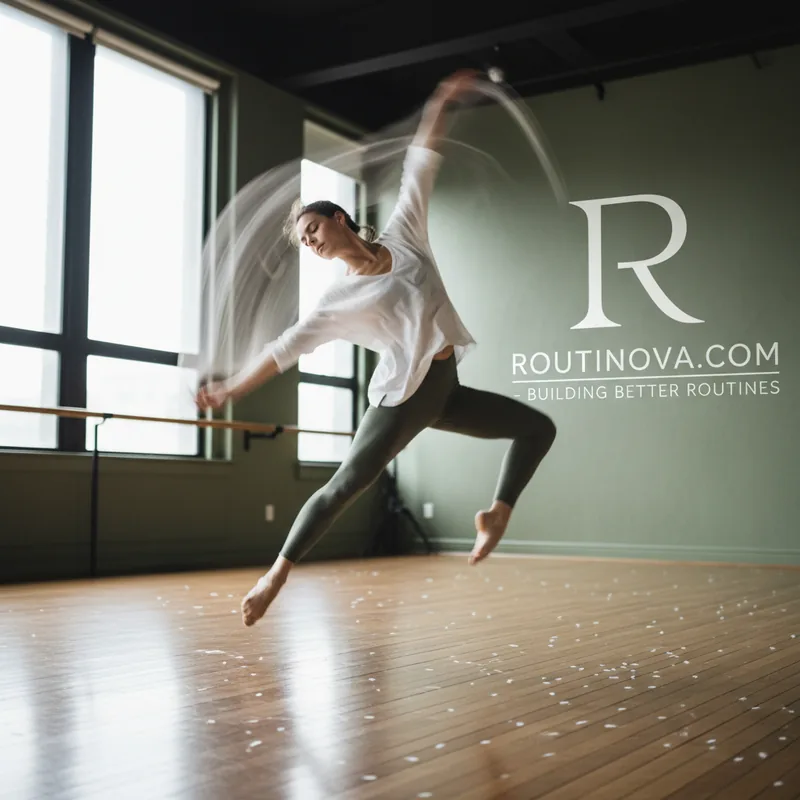
- Precision Stopping: The ability to stop a movement precisely when you intend to, without overshooting or undershooting. Think of a dancer hitting a specific pose or a driver smoothly braking.
- Weight Detection: Sensing the approximate weight of an object as soon as you pick it up, allowing you to adjust your grip and movement accordingly.
- Muscle Memory in Practice: Learning and repeating physical skills, such as riding a bike, typing on a keyboard without looking, or mastering a golf swing. This is often referred to as muscle memory, powered by kinesthetic feedback.
- Hand-Eye Coordination: Engaging in activities that require precise interaction between what your eyes see and what your hands do, like catching a ball or threading a needle.
These aren't just random abilities; they are direct results of your kinesthetic sense providing real-time data to your brain, allowing for continuous adjustments and fine-tuning of your movements. It's a sophisticated system that allows you to navigate the physical world with remarkable dexterity.
Kinesthesia and the Way We Learn
The concept of learning styles has gained significant traction, and kinesthesia is a key player. In models like Fleming's VARK (Visual, Auditory, Read/Write, Kinesthetic), the kinesthetic learner thrives on doing. If you often find yourself learning best by physically engaging with a subject, you might lean towards a kinesthetic learning preference. Here's what to know about this learning style:
Kinesthetic learners absorb information most effectively through hands-on experiences. They prefer to be active, moving, and interacting with their environment while learning. Abstract concepts can be challenging if presented solely through lectures or reading. Instead, practical application, experimentation, and physical engagement make learning stick.
Imagine trying to understand how a car engine works. A visual learner might prefer diagrams, an auditory learner a detailed explanation, and a read/write learner a manual. However, a kinesthetic learner would likely benefit most from dismantling a small engine, assembling parts, or even driving a vehicle to feel the mechanics in action. This direct experience solidifies understanding in a way that passive learning often can't.
While the scientific evidence supporting the effectiveness of tailoring instruction to specific learning styles is debated (Pashler et al., 2009), understanding your preferred mode of learning can still be incredibly beneficial. Knowing that you learn best by doing can empower you to seek out opportunities for hands-on engagement, boosting your motivation and making the learning process more enjoyable and effective for you.
Kinesthetic Sense vs. Vestibular Sense
It's easy to confuse kinesthesia with the vestibular sense, as both are vital for movement and spatial awareness. However, they are distinct systems serving different purposes. Here's what to know about their differences:
Kinesthesia is your sense of body position and movement, derived from receptors in your muscles, joints, and tendons. It tells you where your limbs are and how they are moving relative to each other.
The vestibular sense, located in your inner ear, is primarily responsible for your sense of balance and spatial orientation. It detects changes in head position, gravity, and motion, helping you maintain equilibrium and stable vision as you move.
Think of it this way: When you stumble, your vestibular system immediately signals that you're losing balance, prompting a rapid adjustment. Simultaneously, your kinesthetic sense helps you feel which way your limbs are moving and how to reposition them to regain stability. They work in tandem, but kinesthesia is about the *awareness* of your body's mechanical state, while the vestibular sense is about your *orientation* in space and maintaining balance.
The Impact of Kinesthesia in Daily Life and Therapy
Kinesthesia is more than just a sensory input; it's a critical component of our daily functioning and has significant therapeutic applications. Understanding its impact is key to appreciating its importance. Here's what to know:
In everyday life, kinesthesia is indispensable. Navigating your environment, performing household chores, driving, or even just walking without tripping all rely heavily on this sense. Without it, simple actions could become hazardous. The ability to judge distances, control force, and make micro-adjustments in posture is all thanks to kinesthetic feedback (Proske & Gandevia, 2018).
Beyond basic mobility, kinesthesia plays a role in skilled activities. Athletes, musicians, surgeons, and artisans all hone their kinesthetic sense to achieve peak performance. It allows for the precise, fluid movements required in their respective fields, often developed through extensive practice and repetition.
Therapeutic Applications
The importance of kinesthesia extends into various therapeutic interventions:
- Movement-Based Therapies: Physical therapy, occupational therapy, dance therapy, and yoga therapy all leverage kinesthetic principles. These therapies help individuals regain motor control, improve coordination, and enhance functional independence after injury or illness. For example, physical therapists use kinesthetic cues to guide patients through specific exercises, helping them relearn proper movement patterns.
- Massage and Bodywork: Techniques like kinesthetic massage focus on improving body awareness and movement patterns rather than solely on muscle manipulation. This can be particularly beneficial for those experiencing chronic pain or recovering from injuries, helping them reconnect with their bodies and move more freely (Elmoneim et al., 2021).
- Balance and Fall Prevention: Kinesthetic exercises are designed to improve balance and coordination, which are crucial for preventing falls, especially in older adults. By challenging the body's ability to sense its position and react accordingly, these exercises build resilience and confidence.
- Athletic Performance Enhancement: Coaches often use kinesthetic training methods to refine an athlete's technique. By focusing on the feel of a movement, athletes can develop more efficient and powerful actions, reducing the risk of injury and improving their competitive edge.
Essentially, kinesthesia is a foundational sense that underpins our ability to interact with the world, learn new skills, and maintain our physical well-being. Understanding it offers a deeper appreciation for the complex interplay between our minds and bodies.