Every morning, millions of us face the same delightful challenge: the New York Times Connections puzzle. It's more than just a game; it's a daily mental workout, a test of lateral thinking that keeps our brains sharp and our problem-solving skills honed. If you're grappling with today's NYT Connections hints for Tuesday, March 10, 2026, you've landed in the right place. We'll guide you through some strategic clues and insights before revealing the full solution to help you conquer puzzle #1,003.
The Daily Brain Teaser: Why Connections Matters
Engaging with daily puzzles like Connections isn't just a pastime; it's a powerful habit for cognitive health. Studies suggest that regular mental challenges can improve memory, enhance problem-solving skills, and even support brain longevity (Harvard Medical School, 2023). For many, tackling today's NYT Connections hints has become a cherished part of their morning routine, a quick burst of mental gymnastics before the day truly begins.
But here's the thing: Connections is designed to be tricky. The creators deliberately lay traps, presenting words that seem to fit multiple categories. This requires not just recognizing connections, but also discerning the *strongest* and *most precise* one. It's a skill that translates well beyond the puzzle board, fostering a deeper attention to detail and nuance in everyday thinking.
Unlocking Today's NYT Connections: Spoiler-Free Hints
Before we dive into the specific answers, let's prime your brain with some general directions. This section offers oblique hints, describing the *type* of categories you'll encounter and giving you a nudge toward the themes without giving away the words themselves. Take your time, ponder each clue, and see what clicks.
Category Types for March 10, 2026
- Yellow category: Think action words, specifically those related to a common activity.
- Green category: These are terms you might use to address someone close to you.
- Blue category: Consider geographical locations, but with a twist--something essential is abbreviated.
- Purple category: Another set of action words, often associated with a particular type of physical impact.
Thematic Nudges
Ready for a little more guidance? Here are some thematic hints to help you narrow down your options for today's NYT Connections hints:
- Yellow category: Imagine you're following a recipe that involves heat.
- Green category: How do you affectionately shorten family titles?
- Blue category: These are familiar places, but they're not spelled out in full.
- Purple category: Picture a boxing match or a forceful strike.
Navigating the Nuances: Tricky Words & Deeper Clues
The genius of Connections lies in its ability to make seemingly obvious groupings red herrings. Many words have multiple meanings or associations, and the puzzle often exploits these ambiguities. To truly master today's NYT Connections, you need to be wary of these linguistic traps. Here are a few words from today's grid that might throw you off:
- UNC: While it might make you think of a famous university, consider its other, more familial context.
- BROWN: This isn't just a color or another university. Think about its culinary application.
- SOCK: Forget the item of clothing. This word can describe a forceful action.
- MISS: It's not the feminine counterpart to 'Mister'. Look for a different kind of abbreviation.
Remember, the key is to ensure your chosen four words fit *only* their specific category, leaving no stragglers that could belong elsewhere. This precision is what separates a good guess from a truly insightful solution.
The Full Reveal: Today's Connections Solution
Ready to see how all the pieces fit together? Below, we'll lay out the complete solution for Connections puzzle #1,003, detailing each category and its corresponding words. Scroll slowly if you're still hoping to solve some on your own!
Yellow Category: COOK WITH DRY HEAT
The most straightforward grouping often involves common verbs or nouns. For March 10, the yellow category centers on methods of cooking using dry heat. The words are: BROWN, ROAST, SEAR, TOAST.
Green Category: FAMILIAL NICKNAMES
This category plays on common, affectionate shortenings for family members. The green words are: CUZ, GRAM, POP, UNC.
Blue Category: U.S. STATE ABBREVIATIONS
This grouping required you to look beyond the obvious. These aren't universities, but rather common abbreviations for states. The blue words are: MASS, MISS, PENN, WASH.
Purple Category: PUNCH
Often the trickiest, the purple category for today involved synonyms for a forceful strike or punch. The words are: BOX, DUKE, SLUG, SOCK.
Mastering Connections: Strategies for Daily Wins
Solving Connections consistently requires more than just a good vocabulary; it demands a strategic approach. Here's how to refine your game, making today's NYT Connections hints a stepping stone to your own daily victories:
How to Play Connections
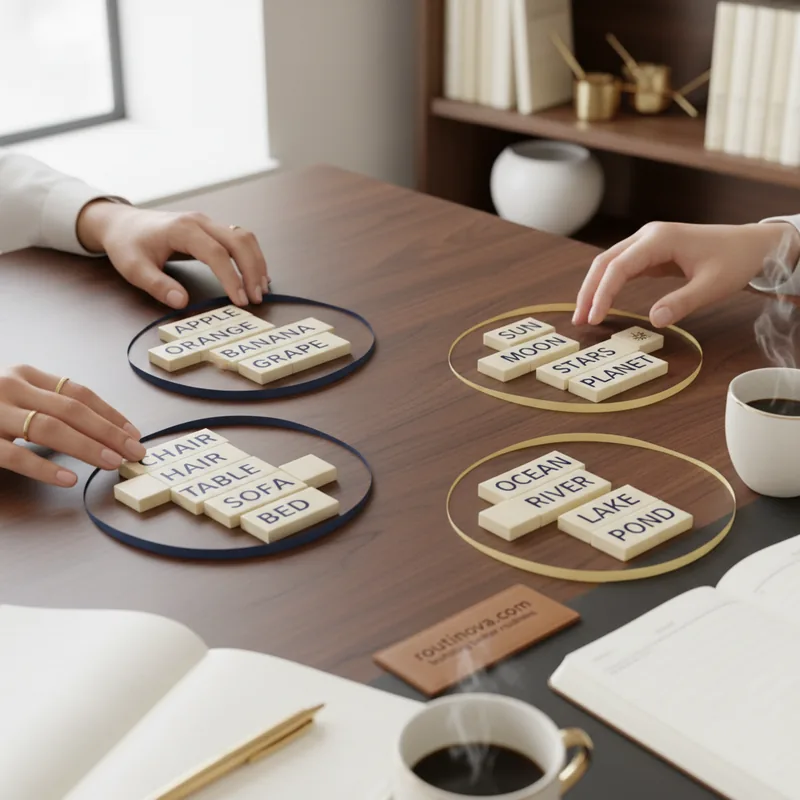
The game presents 16 words, and your task is to find four groups of four words that share a common thread. These connections can be straightforward (e.g., types of fruit) or involve wordplay (e.g., words that can precede "list"). You select four words and hit submit. Correct guesses reveal the category and its color (yellow being easiest, then green, blue, and purple). You win by identifying all four groups, but four incorrect guesses will end your game.
Winning Strategies for Connections
Beware of Overlapping Groups: This is the most crucial rule. Many words will seem to fit multiple categories. For instance, you might see "BAND, RING, GROUP, TROUPE" as synonyms for a collective, but then realize "BAND" could also go with "ORCHESTRA, CHOIR, ENSEMBLE" for musical groups. Always confirm your chosen four *only* fit their intended category. A common pitfall is locking in a group too early, only to find you've used a word essential for another category.
Identify the Odd Ones Out: If you're stuck, look for words that seem to have no obvious connection to anything. These often become the linchpins of the harder categories. For example, if you see "BAT" and it doesn't fit with common sports equipment, consider its other meanings like "flying mammal" or "to hit."
Consider Wordplay and Homophones: Sometimes the connection isn't about direct meaning but how a word sounds or can be used in a phrase. For example, a category might be "Things that are broken" with words like "HEART, LAW, ICE, BANK." The trick is to think laterally, beyond the most obvious definitions (Mayo Clinic, 2023).
Use the Process of Elimination: As you successfully identify categories, the remaining words become easier to group. If you're confident in three words for a category, the fourth often reveals itself more clearly from the remaining pool.
By integrating these strategies into your daily routine, you'll not only solve today's NYT Connections with greater ease but also cultivate a sharper, more agile mind. Keep practicing, and you'll find yourself anticipating the puzzle's clever twists and turns.