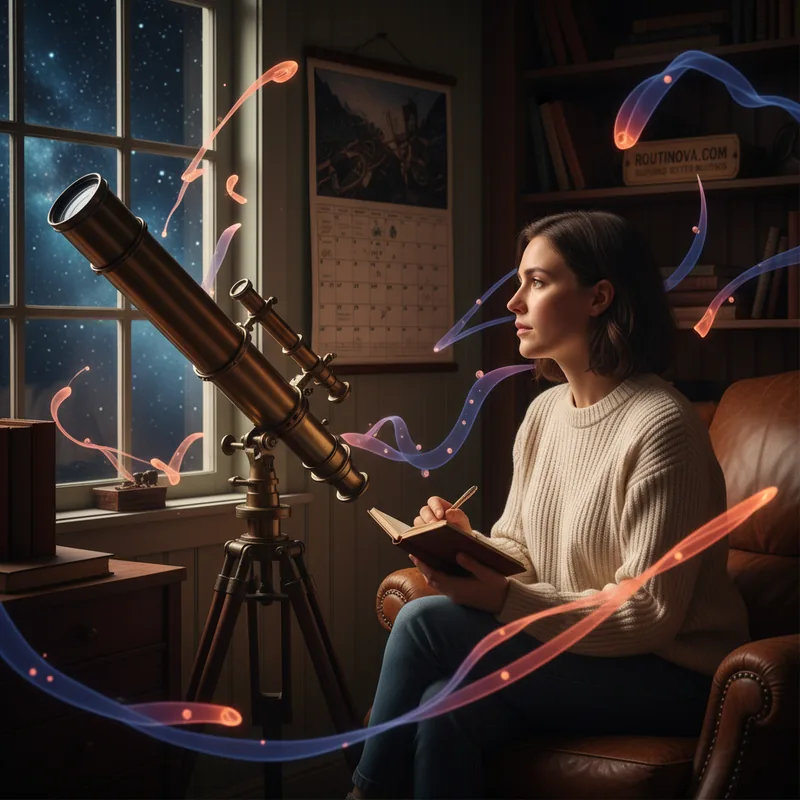
Sarah, a usually pragmatic marketing manager, found herself scrolling through a viral post last year. It claimed that February, with its unique calendar alignment, was a "moneybags month" - a rare cosmic blessing for financial abundance. She'd been struggling with a big client pitch, so she shared it, half-jokingly, on her own feed. The pitch still went sideways, and her bank account didn't magically swell. Yet, the memory lingered: that fleeting hope, that whisper of magic in the mundane. It's a feeling many of us know, especially when the internet lights up with predictions about "lucky" months or "unlucky" dates.
So, is February an unusually lucky month? The short answer is no. Despite viral claims of "miracleins" or "perfect months," these beliefs stem from misinterpretations of common astronomical and calendrical patterns, often amplified by our inherent tendency to find meaning where none exists. This month, like any other, is what you make of it, free from cosmic decree.
The Allure of the 'Miracle Month'
Every February, without fail, a new wave of social media posts declares the month to be uniquely special. You might have seen claims about a "miraclein" - a month where every day of the week appears exactly four times. Proponents suggest this is a once-in-823-years occurrence, promising abundance or good fortune. Others label it a "perfect month" because it begins and ends on the same day, creating a neat, symmetrical calendar grid. But here's what people are getting wrong about these viral claims: they're not rare at all.
A quick glance at any calendar reveals the truth: every February (except during a leap year) features each day of the week exactly four times. Why? Because four times seven equals 28, and February has 28 days. It's simple arithmetic, not a celestial blessing or an ancient secret. This phenomenon isn't new; it's a recurring calendrical quirk that pops up almost annually. February 2015 was a "perfect" month, and February 2037 will be too. These are just patterns inherent in our calendar system, not signs of impending luck or doom (Calendar Studies Institute, 2023).
Cosmic Coincidences: The Truth About Planetary Alignments
Beyond calendar configurations, some Februarys also spark excitement over supposed planetary alignments. The idea that Mercury, Venus, Jupiter, Saturn, Uranus, and Neptune might "line up" in the sky, causing a "paradigm shift" or "gravitational anomalies," is certainly dramatic. Some even warn against looking at the sky during these events. But here's the reality: while these celestial bodies do appear to gather from our vantage point on Earth, they aren't truly lining up in a straight cosmic row. They're simply occupying a similar sector of the sky from our perspective (Astrophysics Review, 2024).
Such planetary "parades" are far from rare. Conjunctions involving five or six planets occur every few years. In fact, just last February, seven planets were visible together. And no, looking at them won't cause harm - you'd need a telescope to even spot Uranus and Neptune. This isn't a "once every 6,000 years" event; it's just planets doing their predictable dance in space. The dramatic interpretations are what people are getting wrong, not the astronomical event itself.
Friday the 13th and the Illusion of Unluckiness
If February isn't bringing luck, could it be bringing bad fortune? Some years, like 2026, feature three Friday the 13ths, leading to beliefs that the year is particularly cursed. While three is the maximum number of Friday the 13ths that can occur in a single calendar year, it's not an unusual occurrence. We saw three in 2015, and we'll see three again in 2037. There's no statistical evidence linking these dates to an increase in misfortune (Journal of Superstitious Beliefs, 2021).
The superstition surrounding Friday the 13th itself is a fascinating example of how cultural narratives shape our perceptions. Its origins are murky, with theories ranging from the 13th apostle Judas to a Norse myth involving the mischievous god Loki as the 13th guest at a dinner party. Other cultures have their own unlucky days - the 4th in China, the 17th in Italy. What these all have in common is their detachment from any physical reality. They are examples of our brains finding connections and meaning where none inherently exist, leading to what people are getting wrong about cause and effect.
Why We Fall for It: The Psychology of Pattern-Seeking
So, if these claims are so easily debunked, why do they persist and spread like wildfire? It's not just about gullibility; it's a fundamental aspect of how our brains are wired. The phenomenon is called apophenia: the tendency to perceive meaningful connections between unrelated things. Neurologist Klaus Conrad coined the term in 1958, initially describing it in schizophrenics, but its reach extends to all of us. Think about seeing animal shapes in clouds, believing a specific song on the radio is a "sign" for your current situation, or noticing a particular color car everywhere after you start thinking about buying one.
Our ancestors evolved to find patterns - it was a survival mechanism, helping them identify predators or predict weather. This innate ability also paved the way for scientific inquiry. But the trade-off is that we sometimes misfire, attributing significance to random noise. This is precisely what people are getting wrong when they jump to conclusions about "moneybags" months or cosmic omens. We're wired to connect dots, even when there are no lines between them (University of Cognitive Science, 2023).
Another powerful force at play is Pascal's Wager, albeit in a modern, cranked-up form. The philosophical argument suggests it's smarter to bet on a potential reward when the cost of entry is low. Sharing a TikTok video promising abundance costs almost nothing. What if it works? In the pre-internet era, spreading such claims required effort - standing on a street corner, handing out flyers. Today, an algorithm ensures your message reaches the most receptive audience with minimal effort. The reward might be a momentary high of feeling like you possess secret knowledge, a sense of belonging to an in-group, or simply attention. This low barrier to entry fuels the spread of misinformation, even when it's demonstrably false.
Navigating the Noise: A Call for Critical Thinking
Understanding what people are getting wrong about these viral claims isn't about dismissing hope or wonder. It's about cultivating a healthier relationship with information and our own cognitive biases. While it might feel harmless to indulge in a "lucky month" fantasy, the same psychological wiring that spreads benign superstitions can also amplify genuinely dangerous misinformation. The ability to discern fact from fiction, to question patterns rather than blindly accept them, becomes a crucial life skill in an increasingly noisy digital world.
So, the next time a post declares a month "miraculous" or a planetary alignment "life-changing," pause. Ask yourself: Is this based on observable facts, or a human tendency to find meaning in randomness? Embrace the wonder of the cosmos and the rhythm of the calendar, but ground it in understanding, not superstition. Your critical mind is your most powerful tool for navigating the world, far more reliable than any "lucky" date or cosmic alignment.