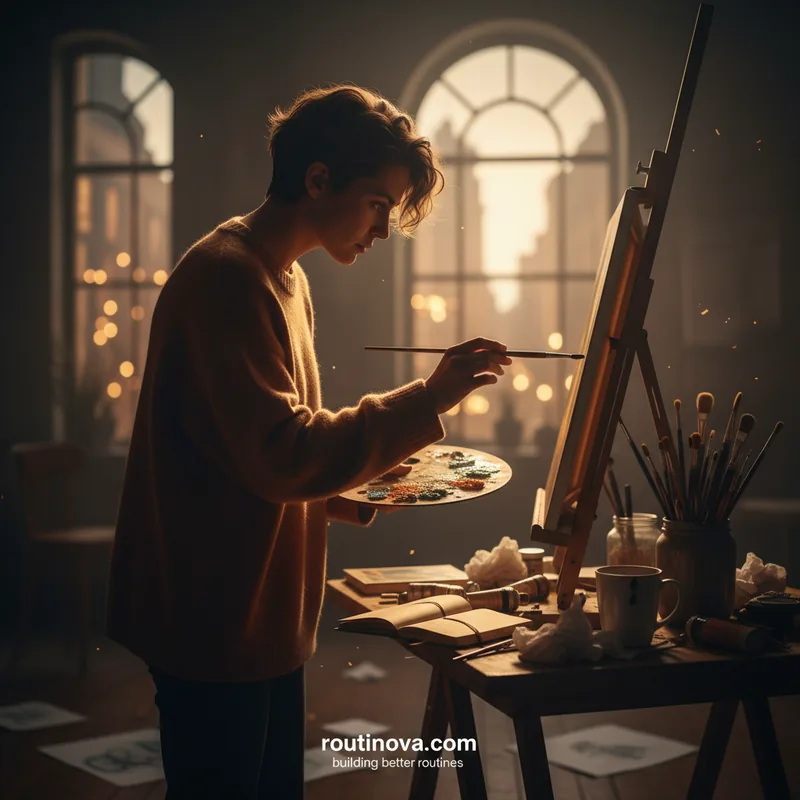
Have you ever wondered if the romanticized image of the 'tortured artist' holds any truth? The idea that profound creative output is somehow intertwined with deep emotional struggles, particularly depression, is a persistent one. But is it just a myth, or is there a genuine, albeit complex, connection?
The Tortured Artist: Myth and Reality
For centuries, the narrative of the 'tortured artist' has captivated our imagination. Think of Vincent van Gogh, whose intense inner turmoil was vividly documented in his letters, or Sylvia Plath, whose raw poetry and prose laid bare her struggles with mental illness. These figures, along with countless others like Edvard Munch and Frida Kahlo, fuel the notion that a certain kind of pain is essential for artistic brilliance. It's a compelling, almost seductive, idea that suggests suffering unlocks a deeper level of creativity.
However, the reality is far more nuanced than this popular stereotype suggests. While it's true that many creative individuals have battled mental health challenges, the relationship isn't a simple cause-and-effect. Instead, research points to a complex interplay where the emotional intensity often present in conditions like depression might indeed influence certain creative processes. Conversely, the act of creating can serve as a powerful coping mechanism, a way to process and explore those very difficult emotions.
This paradoxical association is what we aim to unpack. Let's delve into the surprising connection between depression and creativity, exploring what the science says and how artistic expression can be a profound force for healing.
Mood Disorders and Creative Minds
The link between mood disorders and artistic talent has long been a subject of fascination and scientific inquiry. Early research often pointed to a higher prevalence of mental illness among artists, leading to the popularization of terms like 'mad artist.' Studies have explored whether mood disorders might foster creativity, if creativity leads to mood disorders, or if an underlying factor influences both.
What has emerged is a picture that's far from straightforward. While some studies suggest certain creative professions might have higher rates of mood disorders, others indicate that creative individuals are not necessarily more prone to psychological problems than the general population. The data becomes even more specific when looking at different types of mood disorders. For instance, a 2017 study highlighted that bipolar disorder, characterized by extreme mood swings, appears to have a more frequent association with creativity than persistent depressive disorder (PDD), also known as dysthymia (Taylor, 2017).
Interestingly, persistent depressive disorder, a low-grade but long-lasting form of depression, didn't show a strong link to enhanced creativity. Instead, research indicates that individuals experiencing major depressive disorder (MDD) might show more creative potential than those with milder, chronic forms. It's crucial, however, to note that there's no definitive evidence suggesting that a mood disorder *causes* artistic talent. Instead, the demanding and often stressful lifestyles of artists--marked by tight deadlines, intense criticism, and the pressure to constantly innovate--may contribute to the development or exacerbation of depressive symptoms.
Here's what's fascinating: the very experience of intense creativity can sometimes mirror symptoms of mood disturbances. Think about the rapid-fire ideas and reduced need for sleep that can accompany hypomanic states - these can also be present during periods of intense creative flow, where focus is paramount and time seems to warp. This overlap makes definitive conclusions challenging, leading some researchers to call for more specific questions rather than broad generalizations about the surprising connection between depression and creativity (Taylor, 2017).
Art as a Healing Force
While the connection between mental health challenges and creativity is complex, the therapeutic benefits of art and creative expression are increasingly recognized. For individuals navigating mental distress, engaging in artistic pursuits can offer a vital outlet for processing difficult emotions and experiences. It's not uncommon for people experiencing trauma or depression to instinctively turn to art as a means of coping or healing.
The benefits are multifaceted. Engaging in creative activities has been linked to:
- Reduced feelings of stress and anxiety.
- Improved coping mechanisms for life's challenges.
- A decrease in symptoms of depression.
- Enhanced memory function.
- Increased resilience and a stronger sense of self.
- Better self-esteem and confidence.
- More effective ways to process past traumas.
This therapeutic potential is why art therapy is becoming a more common recommendation for individuals dealing with various mental health conditions. Research has even shown that the simple act of writing about painful past events can lead to temporary improvements in immune function (BBC, n.d.). The act of creation, in essence, can be a powerful tool for self-discovery and emotional regulation.
One prominent theory, the dual-pathway model of creativity, suggests that creativity stems from a combination of cognitive persistence and flexibility. This means that cultivating creativity can simultaneously enhance mental well-being by developing skills that help individuals navigate their emotional landscape more effectively.
Beyond the Stereotype: New Perspectives
Delving deeper into the research reveals more intricate patterns. A comprehensive review of studies involving millions of individuals in Sweden found that while certain creative groups, particularly writers, showed a slightly higher incidence of bipolar disorder diagnoses and suicide rates compared to the general population, this wasn't universal across all artistic fields. Notably, dancers, visual artists, and directors were less likely to report mental illness (Kyaga, 2018).
Perhaps more intriguingly, the study also highlighted that close relatives of individuals with conditions like autism, schizophrenia, and bipolar disorder were disproportionately represented in creative professions. This suggests a potential genetic or familial predisposition that might influence both creative tendencies and certain psychological traits. For instance, non-psychologically disordered family members of individuals with schizophrenia often exhibit schizotypal personality traits, such as unusual perceptual experiences and a less rigid boundary between self and others (Kyaga, 2018).
Researchers propose that a phenomenon known as 'aberrant salience'--assigning unusual significance to ordinary stimuli--might play a role. Both individuals experiencing psychosis and highly creative people can exhibit heightened aberrant salience. However, the key difference lies in how it's managed: artists can channel these heightened perceptions into creative expression, whereas in psychosis, they can become overwhelming (Patti et al., 2024). This doesn't imply that mental illness *causes* creativity, but rather that the brain states involved in intense creative work might share certain characteristics with those experiencing psychiatric disorders.
So, while we cannot definitively say that suffering from depression makes you more creative, the exploration of this surprising connection between depression and creativity reveals a profound truth: the human mind is capable of extraordinary feats, and the journey through emotional complexity can, for some, lead to unique forms of expression. Whether through painting, writing, music, or dance, engaging with the creative process offers a powerful avenue for both understanding ourselves and finding solace.
If you or someone you know is struggling with depression, seeking professional help is paramount. Alongside treatment, exploring creative outlets--whether it's journaling your thoughts, picking up a paintbrush, or simply dancing to your favorite music--could offer unexpected relief and a pathway to greater well-being.
(Taylor, 2017), (Kyaga, 2018), (Patti et al., 2024), (BBC, n.d.)