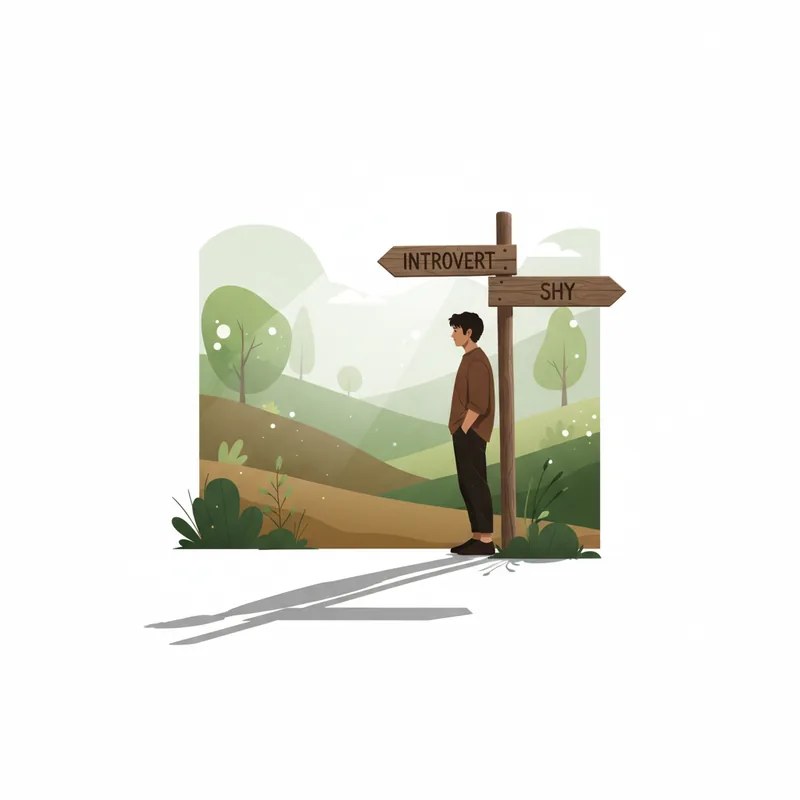
Ever feel like the world expects you to be a social butterfly, but your natural inclination is to retreat? You're not alone. Many of us grapple with understanding our social energy and comfort levels, often confusing two distinct traits: introversion and shyness. But here's the crucial distinction: introversion is about how you recharge your energy, while shyness is about how you perceive social evaluation. So, where do you fit on this spectrum?
Understanding these differences is the first step to navigating social interactions more confidently and authentically. It's about recognizing your unique needs rather than trying to fit a mold that wasn't made for you.
The Core Differences: Energy vs. Fear
Let's break down the fundamental distinctions between introversion and shyness. Introversion is an innate personality trait, rooted in how your brain processes external stimuli. Introverts tend to become overstimulated by too much social interaction or intense environments. They need quiet, solitary time to recharge their mental batteries. Think of it as an energy meter that depletes faster with social input and refills with alone time.
Shyness, on the other hand, is more about a fear of negative evaluation. It's the anxiety that arises when you worry about what others think of you, leading to avoidance of social situations or discomfort when you can't avoid them. This fear can manifest as nervousness, self-consciousness, or even physical symptoms like blushing or a racing heart.
The key takeaway? You can be an introvert who isn't shy, or even extroverted yet shy. It all depends on where you land on these two independent scales.
Mapping Your Social Style: Where Do You Fit?
To truly understand where you fit, it helps to visualize introversion and extroversion as one dimension, and shyness and outgoingness as another. This creates four potential combinations:
- Outgoing Extrovert: High energy from social interaction, little fear of judgment.
- Shy Extrovert: High energy from social interaction, but fears judgment.
- Outgoing Introvert: Drained by social interaction, but comfortable and unafraid in social settings.
- Shy Introvert: Drained by social interaction and fears judgment.
These categories aren't rigid boxes, but rather helpful guides to understanding your tendencies. Most people will lean towards one combination more than others.
The Outgoing Extrovert
Imagine Sarah at a bustling party. She's the life of the party, effortlessly striking up conversations, laughing loudly, and feeling energized by the crowd. At the library, she's fidgety, already texting friends to see if anyone wants to grab coffee. When her phone rings, she answers immediately, excited by the potential interaction. Meeting someone new, she's the first to extend a hand and introduce herself. In a work meeting, she thrives on the group dynamic, contributing ideas freely and enjoying the collaborative exchange.
The Shy Extrovert
Now consider David at the same party. He loves the buzz and the energy of being around people, but a knot of anxiety forms in his stomach. He longs to join conversations but fears saying the wrong thing. At the library, he finds solace in the quiet but still feels a bit bored, wishing he had someone to chat with, yet hesitating to initiate. His phone rings, and while he's curious, the thought of answering makes him sweat. When introduced to someone new, he offers a quiet 'hello' and hopes they take the lead. In meetings, he has great ideas but struggles to voice them, often letting nervousness silence him.
The Outgoing Introvert
Meet Tom at a social gathering. While the large crowd can feel a bit much, he's perfectly content engaging in deep, one-on-one conversations. He enjoys connecting with people but knows he'll need downtime later. At the library, he's in his element, absorbing information and might even strike up a pleasant chat with the librarian about a book. His phone rings, and he answers with genuine interest, happy to connect with the caller, though he might let them share more of the conversational load. When meeting someone new, he'll find a calm moment to introduce himself and engage in thoughtful dialogue. In a work meeting, he prefers to process information internally first, often following up with colleagues individually after the meeting to share his refined thoughts.
The Shy Introvert
Finally, consider Maria at a party. The sheer number of people is overwhelming, and her anxiety spikes. She wishes she could leave and is too nervous to even make eye contact. The library is a refuge, allowing her to disappear into a book, but the thought of asking for help from the librarian is daunting. When her phone rings, she feels a surge of panic and lets it go to voicemail, preferring to avoid any potential social discomfort. She hopes to avoid introductions altogether and offers a mumbled 'nice to meet you' if cornered. Work meetings are a source of dread; the noise and pressure make it hard to concentrate, and she longs to be back at her quiet desk.
These scenarios illustrate how introversion and shyness play out differently. Now, think about your own reactions. Where do you fit in these descriptions?
Navigating Shyness and Finding Your Balance
If you identify with shyness, social situations can feel like navigating a minefield. The fear of judgment can hold you back from opportunities and lead to significant distress. However, there are effective ways to manage these feelings and build confidence.
- Recognize Your Strengths: Shy individuals often possess remarkable qualities like sensitivity, empathy, and thoughtfulness. These are valuable traits that enrich relationships and communities. Don't let the fear overshadow these inherent strengths.
- Embrace Gradual Exposure: Avoiding social situations only reinforces the fear. Start small. Practice brief interactions, like ordering coffee with a smile or asking a simple question. Each small success builds confidence for the next step.
- Master Relaxation Techniques: When you feel anxiety creeping in, simple techniques like deep breathing can make a profound difference. Focusing on slow, controlled breaths can calm your nervous system and help you feel more grounded in challenging moments.
For introverts, the need for solitude isn't a flaw; it's a fundamental aspect of maintaining well-being. Learning to honor this need, setting boundaries, and communicating it to others is key to avoiding burnout.
Key Takeaways for Self-Understanding
It's crucial to remember that introversion and shyness are distinct. Shyness is a fear-based response to social evaluation, often aligning with social anxiety. Introversion is about energy management and stimulation levels, requiring solitude to recharge.
You can be an introvert who is not shy, an extrovert who is shy, or any other combination. Understanding where do you fit allows you to embrace your natural tendencies rather than fighting against them. If shyness significantly impacts your daily life, causing distress or avoidance, seeking guidance from a healthcare professional is a wise step.
(SAMHSA National Helpline, 2024)
(Mayo Clinic, 2023)