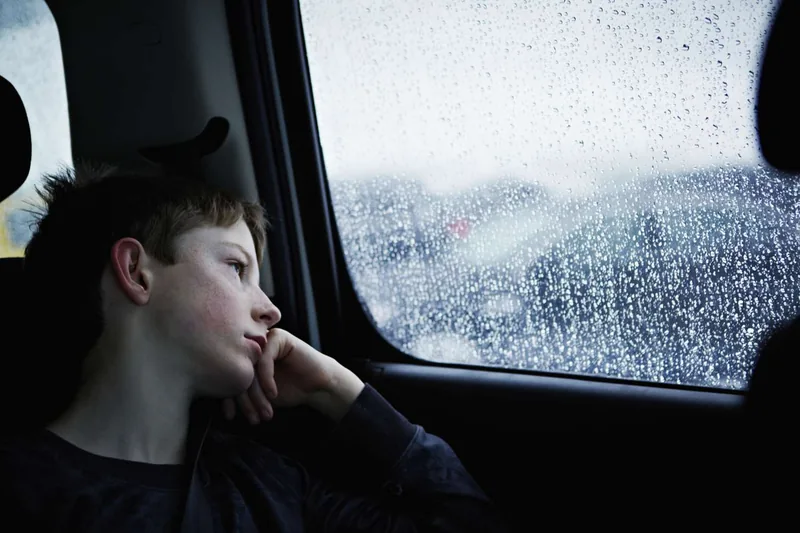
Picture this: a profound loss has just shaken your world. Maybe it’s a person, a dream, or a way of life. While grief is a universal human experience, the way it unfolds is anything but uniform. Many assume grief follows a predictable path, but experts reveal a much richer, more nuanced landscape. Understanding the diverse types of grief people experience can offer immense validation and guide you toward appropriate support.
Grief is a universal human experience that unfolds in diverse ways following a profound loss, whether it's a person, a dream, or a way of life. While deeply painful, understanding its varied forms can offer immense validation and guide individuals toward appropriate support.
From the immediate shock of a sudden departure to the quiet sorrow that precedes an anticipated loss, grief wears many faces. Psychiatrists and mental health professionals have identified several distinct categories, each with its own unique characteristics and challenges (National Cancer Institute, 2023). Recognizing these various forms can help individuals and their communities better navigate the complex emotional terrain of loss.
The Spectrum of Common Grief
When we think of grief, a few common scenarios often come to mind. These foundational types of grief people encounter represent the most frequently observed patterns of emotional response to loss. While deeply painful, these forms are generally considered part of a typical healing process.
Normal or Acute Grief
This is arguably the most recognized form of grief, often characterized by an intense initial period of shock, disbelief, and denial immediately following a death. These feelings gradually give way to profound sadness, longing, and a desire for the loved one's return. While the emotional intensity can be overwhelming, individuals typically manage to maintain most daily functions, albeit with significant effort (National Cancer Institute, 2023).
Over time, the sharp edges of acute grief begin to soften. While the pain of loss may never entirely disappear, it usually becomes more manageable within six months, with many individuals finding a new sense of equilibrium within one to two years. This journey is rarely linear, but the overall trajectory points towards adaptation and integration of the loss into one's life. Roughly 50-85% of people experience grief in this common manner (National Cancer Institute, 2023).
Anticipatory Grief
Unlike acute grief, anticipatory grief unfolds before a loss actually occurs. It's the profound sadness and emotional processing that begins when you foresee an impending death or significant change. This can arise when a loved one receives a terminal diagnosis, when an elderly family member's health is in rapid decline, or when a family prepares for a loved one to enter hospice care. It's a "pre-emptive heartache," as some describe it (Hannah Mayderry, LMHC, 2024).
This type of grief is particularly challenging because it often coincides with the demanding role of a caregiver. You might experience a "whirlwind of sadness, worry, and exhaustion" while simultaneously performing duties that require immense strength and presence (Mayderry, 2024). Acknowledging anticipatory grief as a valid and real experience is crucial for those enduring it, allowing space for complex emotions even before the final goodbye.
When Grief Becomes Complex
Sometimes, the grieving process deviates from typical patterns, leading to more intense or prolonged struggles. These complex types of grief people might encounter often require specialized understanding and support. They are not signs of weakness, but rather indicate a need for deeper intervention.
Prolonged or Complicated Grief
This umbrella term describes forms of grief that are exceptionally intense and persist for a longer duration than what is typically expected. Often triggered by sudden, traumatic, or violent losses, complicated grief can significantly impair a person's ability to function in daily life. Historically, it was sometimes labeled as "abnormal" or "pathological," but modern understanding recognizes it as a distinct and diagnosable condition, often referred to as Persistent Complex Bereavement Disorder or Prolonged Grief Disorder in clinical contexts (APA, 2023).
Within prolonged grief, several subtypes offer more specific descriptions of how this complex experience can manifest. These variations highlight the non-linear and highly individual nature of processing profound loss.
Chronic Grief
While most individuals find their grief becoming more manageable within a year, chronic grief is characterized by persistent, intense grieving that extends far beyond this timeframe. People experiencing chronic grief often report feeling as if the loss just happened, even years later. This enduring sorrow can significantly impact mental well-being, frequently co-occurring with conditions such as clinical depression, generalized anxiety disorder, or post-traumatic stress disorder (PTSD) (Harvard Health, 2023).
Absent Grief
Absent grief occurs when an individual exhibits very few outward signs of mourning after a significant loss. This doesn't mean they aren't grieving; rather, they may be in a state of deep denial or unconsciously suppressing their emotional response to avoid the overwhelming pain. "People who have this type of grief can be completely unaware that they are grieving due to the lack of emotional response or symptoms such as deep sadness, guilt, or regret," explains Kalley Hartman, LMFT (Hartman, 2024).
This seemingly emotionless response can be perplexing for both the grieving individual and those around them. It's often a protective mechanism, an attempt to bypass the emotional upheaval that accompanies loss, but it can hinder the essential processing needed for healing (APA, 2023).
Delayed Grief
Grief doesn't always adhere to a strict timetable. Delayed grief is when the intense emotional impact of a loss doesn't manifest immediately but emerges much later—sometimes months or even years after the event. This can be particularly confusing and isolating, as the initial period might have seen the individual functioning relatively normally (Mayderry, 2024).
"When feelings of sadness hit months, or potentially even years down the line, we can find ourselves shocked, confused, and uncertain of how to cope with these emotions," notes Mayderry (2024). It is vital to validate these later-onset emotions and seek support, understanding that grief's timeline is unique to each person.
Grief Beyond the Individual
Grief is typically viewed as a personal journey, yet some profound losses ripple through entire communities or present themselves in unexpected forms. These less conventional types of grief people experience highlight the broader societal and psychological dimensions of loss.
Distorted Grief
Distorted grief is characterized by atypical and often intense emotional expressions that can appear unusual or disproportionate to observers. Instead of overt sadness, individuals might exhibit pronounced anger, irritability, or even a deep sense of guilt, sometimes in the absence of more common feelings of loss (Hartman, 2024). A person experiencing distorted grief might also cling to unrealistic hopes, denying the finality of the loss.
Symptoms can include unpredictable outbursts, withdrawal from social connections, or engaging in behaviors that strain relationships. "They may also deny the fact that their loved one has died and wish for them to come back even though it's impossible,” Hartman describes (Hartman, 2024). This complex presentation underscores the need for compassionate understanding rather than judgment.
Collective Grief
While often personal, grief can also be a shared experience. Collective grief occurs when a large group of people mourn a widely known, significant loss. This shared sorrow transcends individual relationships and unites communities in a common emotional response. Examples include the collective mourning following major national tragedies like the 9/11 attacks, the COVID-19 pandemic, or a community grappling with the aftermath of a devastating natural disaster, such as a hurricane or widespread wildfires (Kumar, 2023; Wilson & O'Connor, 2022).
Symptoms of collective grief can vary widely but often include shock, widespread confusion, disbelief, and difficulty concentrating. It can also manifest as prolonged sadness, physical exhaustion, and behavioral changes like social withdrawal or heightened anxiety within the affected population (Hartman, 2024). This communal experience highlights how deeply interconnected human lives are.
Disenfranchised Grief
Sometimes referred to as "hidden grief," disenfranchised grief describes a loss that isn't openly acknowledged, socially sanctioned, or publicly mourned. Society may implicitly or explicitly communicate that certain losses are "less valid" or "better left unspoken," leaving the grieving individual feeling isolated and misunderstood (APA, 2023).
Common examples include the grief following a miscarriage or pregnancy loss, the death of a beloved pet, the end of a long-term friendship, or mourning a public figure whom one admired deeply without a personal connection. When individuals feel their grief is invalidated, it can lead to unhealthy coping mechanisms and deprive them of crucial social support, complicating their healing journey (Albuquerque et al., 2021).
Navigating Your Grief Journey
Regardless of the specific types of grief people encounter, one truth remains constant: your experience is unique and valid. There is no "right" or "wrong" way to grieve, and feeling your emotions, however unexpected, is a crucial part of the healing process. "Every person's journey through grief is unique, and there's no right or wrong way to grieve," emphasizes Hannah Mayderry, LMHC. "We need to normalize grief in all its forms and be curious about the experiences of others before making judgments" (Mayderry, 2024).
If you find yourself struggling with any form of grief, especially if it feels overwhelming, prolonged, or impacts your daily functioning, reaching out for support is a sign of strength, not weakness. Mental health professionals, support groups, and specialized organizations can provide invaluable guidance and a safe space to process your emotions.
Consider these resources for further support:
- Bereavement support organizations focusing on general loss.
- Organizations dedicated to specific types of loss, such as child loss or traumatic grief.
- Support networks for those experiencing anticipatory grief related to illness.
- Mental health professionals specializing in grief counseling and trauma.
Sources:
- Albuquerque, S., Teixeira, A. M., & Rocha, J. C. (2021). COVID-19 and Disenfranchised Grief. Frontiers in Psychiatry, 12. (Albuquerque et al., 2021)
- American Psychological Association. (2023). APA Dictionary of Psychology. (APA, 2023)
- Harvard Health Publishing. (2023). Understanding Grief: The Different Types of Grief and How to Cope. (Harvard Health, 2023)
- Hartman, K. (2024). Clinical Director at Ocean Recovery. Personal communication. (Hartman, 2024)
- Kumar, R. M. (2023). The Many Faces of Grief: A Systematic Literature Review of Grief During the COVID-19 Pandemic. Illness, Crisis & Loss, 31(1), 100–119. (Kumar, 2023)
- Mayderry, H. (2024). Licensed Mental Health Counselor. Personal communication. (Mayderry, 2024)
- National Cancer Institute. (2023). Grief, Bereavement, and Coping With Loss. (National Cancer Institute, 2023)
- Wilson, D. T., & O'Connor, M. F. (2022). From Grief to Grievance: Combined Axes of Personal and Collective Grief Among Black Americans. Frontiers in Psychiatry, 13, 850994. (Wilson & O'Connor, 2022)