It's a perplexing human experience: moments of profound grief, joy, or terror arrive, yet the expected emotional response is absent. For many, the question of why some trauma survivors cannot cry or feel deeply isn't a sign of indifference, but a profound act of self-preservation. Within the first 100 words, it's crucial to understand that this emotional muting is not a malfunction, but a sophisticated survival mechanism employed by the nervous system when faced with overwhelming events. Instead of breaking, the mind strategically reduces the volume on overwhelming sensations, emotions, and memories to help the individual endure the unsurvivable.
The Silent Response: Why Trauma Mutes Emotions
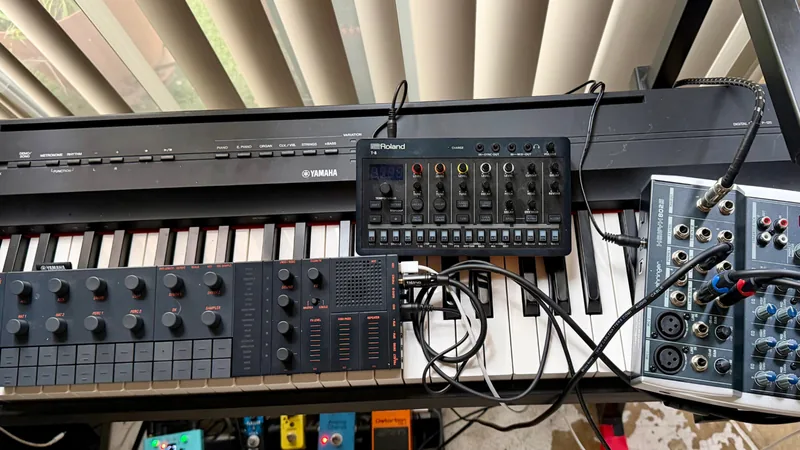
Imagine finding yourself in a situation of extreme danger - a sudden, violent car crash, or witnessing a deeply disturbing event. Your body's primal response isn't to process the emotion, but to survive. The nervous system, acting like a highly skilled sound engineer in a crisis, makes rapid, unconscious calculations. It pulls down the faders on certain emotional channels, effectively muting fear, grief, or even the memory itself, fragmenting it into disconnected pieces. This isn't a flaw in your design; it's a sophisticated feature.
For instance, a survivor of a serious car accident might recount the event with clinical detachment, describing twisted metal and broken glass without a flicker of fear or sadness. This isn't a lack of feeling, but the brain's strategic decision to "mute" the overwhelming emotions to facilitate immediate action or endure the immediate aftermath (Harvard Health, 2024). This protective numbness allowed them to function when feeling the full weight of the experience would have been paralyzing. The challenge arises when this protective mechanism, designed for short-term survival, overstays its welcome, continuing to silence emotions long after the immediate threat has passed.
Nature's Blueprint: Survival Mechanisms and the Numbness Paradox
In the 1970s, biophysicist Peter Levine observed something fascinating in the animal kingdom. Prey animals, like gazelles or zebras, frequently escape life-threatening encounters but rarely exhibit signs of chronic trauma. After a narrow escape, they often tremble or shake violently for a few minutes, then seemingly 'reset' and return to normal activities (Levine, 1997). This physiological discharge allows them to release the intense energy mobilized during the fight-or-flight response.
Humans, however, often don't complete this natural release. When danger subsides - after an accident, an assault, or a natural disaster - our societal conditioning often compels us to "hold it together," to appear strong, to say "I'm fine." This suppression of the body's natural release mechanism can leave the nervous system stuck in a high-alert state, even if the conscious mind knows the danger is over. This is precisely why some trauma survivors develop this protective numbness, as the system continues to mute what it perceives as overwhelming internal experiences, believing the emergency is still ongoing.
The system that saved you doesn't always receive the memo that the crisis has ended. It remains vigilant, muting channels and waiting for the definitive signal of safety. A child who endured prolonged emotional neglect, for example, might grow into an adult incapable of expressing anger, even when justified. Their system learned that anger was unsafe or ineffective, effectively silencing that emotional channel as a protective measure (Mayo Clinic, 2023).
Unlocking the Inner Keyboard: A Path to Healing
Consider your inner experience as a piano, with each key representing a channel of being: sensation, imagery, emotion, behavior, and meaning. In ordinary life, these keys play in harmony. Trauma, however, can mute certain keys or jam them in the 'on' or 'off' position. Sometimes it's grief that's silenced, sometimes joy, or even the ability to feel bodily sensations, leading to a profound sense of detachment.
I recall working with a man in his fifties, a contractor known for his warmth and humor, who hadn't cried in decades--not at significant life events like funerals or the birth of his children. His "grief key" had been stuck in the off position since childhood, a protective measure that had simply forgotten how to release. Similarly, someone experiencing chronic anxiety might feel disconnected from their own body, a sensation often described as "watching life from behind glass." This disembodiment is a muted "sensation" key, preventing the full impact of overwhelming physical arousal.
It's vital to understand that healing isn't about forcing these stuck keys to play. The nervous system muted them for a reason. As Bessel van der Kolk highlights in The Body Keeps the Score, trauma isn't stored as a narrative; it's deeply embedded in the body's sensations and implicit memories (van der Kolk, 2014). You cannot simply talk your way out of something that was never stored in words. The effective approach involves earning the system's trust, gently teaching it that it's now safe to feel again. This is why some trauma survivors find themselves unable to access certain emotions, and a titrated, compassionate approach is key.
Reclaiming the Full Spectrum of Feeling
Clinicians refer to this gentle re-engagement as titration: introducing small, manageable doses of previously overwhelming experience. It's like thawing frozen fingers slowly, allowing circulation to return at its own pace. A brief moment of grief, then a return to a sense of safety. A flicker of anger, then grounding. It's not about breaking through defenses, but carefully unstuck them, much like delicately repairing a piano.
For the contractor who hadn't cried in 30 years, it took several months of patient, titrated work. One afternoon, during a seemingly mundane conversation, his eyes welled up with tears. He was startled, almost confused, asking, "I don't know where that came from." But we knew. A key had unstuck, releasing a lifetime of held-back emotion. This experience is a powerful reminder that you were never broken; you were surviving.
When this gentle process unfolds, something truly remarkable emerges. Individuals don't just feel better; they feel more. The grief they had avoided can finally be processed, but so too can the forgotten pleasures and the joy that had gone missing. The full, rich range of human experience becomes accessible once again. For some trauma survivors, the journey back to emotional wholeness is a testament to the body's inherent capacity for healing, allowing every silenced note on their inner keyboard to find its voice.
If emotional numbness is significantly affecting your life, consider reaching out to a trauma-informed therapist. Modalities such as Somatic Experiencing, EMDR, and sensorimotor psychotherapy are specifically designed to address the body-based roots of traumatic stress and can offer a pathway to restoring emotional balance.