The world often feels a bit fuzzy around the edges, doesn't it? Sometimes, that feeling isn't just metaphorical. Think about that cherished photograph from years ago, where the faces are soft, almost dreamlike, or the way a distant landscape can appear indistinct through a rain-streaked window. These aren't just imperfections; they're often part of the charm, a gentle reminder of time passing or a specific aesthetic. If you're diving into today's NYT Strands puzzle and finding the theme a little elusive, you've come to the right place. We're here to offer a helping hand with today's NYT Strands hints and, if you need it, the full solution.
Today's NYT Strands Hints and Clues
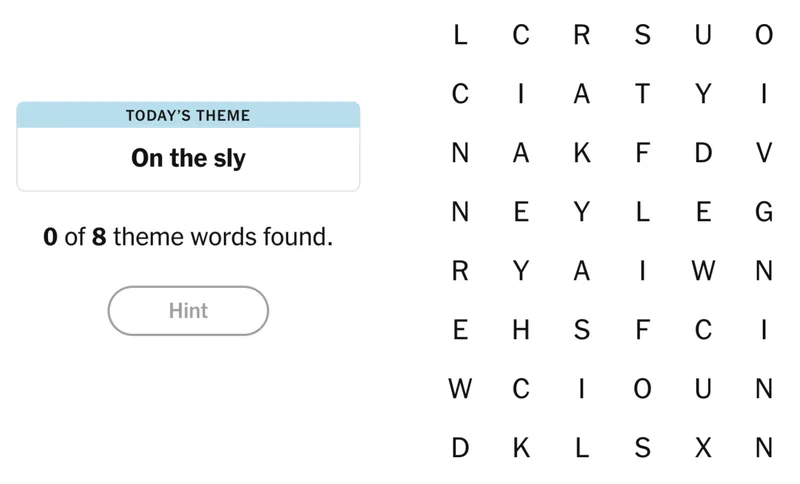
The New York Times Strands puzzle for Tuesday, April 14, 2026, centers around the theme, “It’s a little unclear.” This theme immediately brings to mind images that lack sharp definition, a concept familiar in both photography and everyday observation. You might be looking for words associated with things that aren't crisp or distinct.
Consider the visual quality of an old, sepia-toned photograph where the edges blur into a gentle haze, or the way your vision might soften when you're tired. These are the kinds of sensations and descriptions the puzzle aims to evoke. Getting today's NYT Strands hints can help you connect these ideas to the words hidden within the letter grid.
To help you along, think about words that describe a lack of clarity, a softness in appearance, or a diminished vibrancy. These are the building blocks for today's puzzle. Sometimes, the most beautiful images are those that aren't perfectly sharp; they invite interpretation and evoke a mood.
Unraveling the Spangram and Theme Words
For those of you who prefer to work your way through the puzzle, here are some clues designed to guide you without giving everything away. Remember, the spangram is the word that spells out the puzzle's theme itself, stretching across the entire board.
Hint for the spangram: It's a three-word phrase that describes a visual state where a subject isn't as crisp or sharp as it ought to be.
Hint for the theme words: Think about the qualities of old photographs or windows that could use a good cleaning.
If you've tried these hints and are still feeling stuck, don't worry. The full solution is just a scroll away. We’ve all encountered those moments where we need a little nudge to see what’s right in front of us.
The Complete Strands Solution for April 14, 2026
BEWARE: Spoilers ahead! If you've scrolled this far, you're ready for the answers to today’s NYT Strands puzzle.
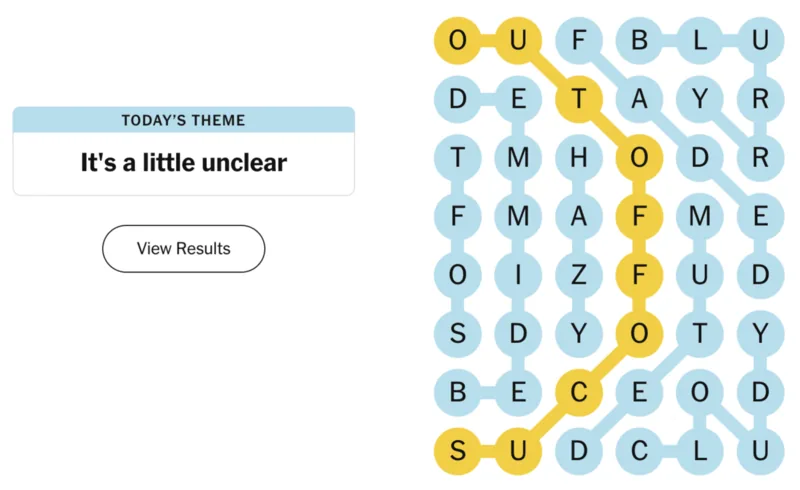
The spangram, which encapsulates the theme “It’s a little unclear,” is:
OUTOFFOCUS
And here are the theme words that fit within this concept:
HAZY, BEDIMMED, SOFT, BLURRY, FADED, MUTED, CLOUDY
When solved, the board beautifully illustrates how these words connect to the central idea of obscured vision or appearance. It’s a clever arrangement that highlights the nuances of clarity and indistinctness.
For example, the word HAZY might describe the morning mist over a lake, obscuring the distant shoreline. Similarly, FADED could refer to the once-vibrant colors of an old poster, now softened by time and sunlight. Each word contributes to the overall feeling of something being less than perfectly sharp.
This puzzle, like many of the best word games, encourages you to think metaphorically and visually. It reminds us that not everything needs to be crystal clear to be appreciated. Sometimes, the ambiguity is where the magic lies, much like the gentle blur in a portrait that draws your eye to the subject's expression.
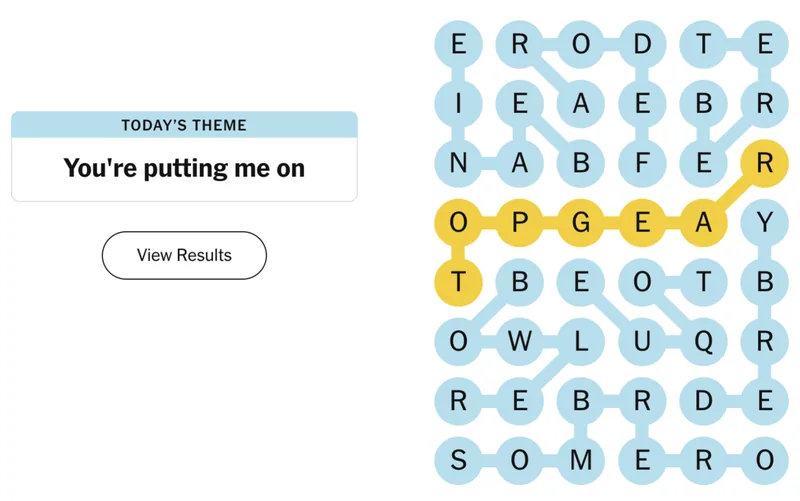
Here’s a look at how the solved board appears:
Credit: Strands/NYT
How to Play and Win NYT Strands
The New York Times Strands game is accessible via their website and the NYT Games app. The core gameplay involves finding hidden words on a letter grid that correspond to a given theme, which is revealed by a clue phrase. Your primary objective is to locate the spangram—a word that fully defines the theme and spans the entire board either horizontally or vertically.
Once you identify the spangram, it's highlighted in yellow, often making the remaining theme words easier to spot. These theme words, when correctly identified, are highlighted in blue. Words can be formed in any direction—up, down, left, right, or diagonally—and each letter can only be used once per word. There's only one correct solution for each puzzle.
If you find yourself stuck, you can submit any valid word of four letters or more that isn't part of the theme. Accumulating three such words unlocks a hint. This hint will highlight the letters of one of the theme words, though you'll still need to connect them correctly. Using another hint before solving the revealed word will show its exact letter order.
Unlike some other word games, Strands doesn't have a failure state. You can't run out of guesses or time. You win by correctly identifying all the theme words and the spangram, filling the board completely. A shareable card summarizes your success, showing blue dots for found theme words, a yellow dot for the spangram, and a lightbulb icon for any words found via hints.
For those looking to improve their performance, practicing regularly is key. Understanding how the theme words relate to the spangram is crucial. For instance, in a puzzle themed "Better with age," the spangram might be FERMENTED, directly linking to words like KOMBUCHA or KIMCHI.
If today’s puzzle proved challenging, perhaps a look at yesterday's solution might offer some insight into the NYT Strands puzzle-making style (Source: New York Times Games, 2026).