Ever stare at a grid of letters, feeling a mix of frustration and intrigue? That's the familiar pull of The New York Times' Strands puzzle. If you've landed here, chances are you're seeking a little guidance for Friday, March 20, 2026's challenge, themed 'Spring fever.' You're in the right place. We'll break down the puzzle, offer some gentle nudges, and, if needed, reveal the full solution. Let's untangle this word web together.
Navigating Today's NYT Strands Puzzle
The beauty of Strands lies in its deceptive simplicity. A board full of letters, a thematic clue, and the promise of a satisfying solve. But sometimes, the path to that satisfaction feels a bit… tangled. Whether you're looking for today's NYT Strands hints to get you started or just want to confirm your suspicions, we've got you covered. This particular puzzle, with its 'Spring fever' theme, plays on words that evoke a sense of winding, turning, and circular motion.
Think about how a spring expands or how a dancer might twirl. This theme is key to unlocking the puzzle's core. Many players find that focusing on the spangram - the word that stretches across the entire board and defines the theme - is the most effective strategy. It's like finding the central thread in a complex knot. For this puzzle, the spangram is your ultimate guide.
Hints to Get You Unstuck
Before we dive into the full solution, let's offer a few pointers. If you're finding yourself circling the answers without quite landing on them, consider these clues. The spangram, which encapsulates the puzzle's theme, describes something that happens in a good story with unexpected plot turns - it's that feeling of suspense and engagement. What word captures that sense of dynamic narrative movement?
The theme words themselves are all about shapes and motion. Imagine things that are wound up, coiled, or have a distinct rotational quality. For example, think of the shape of a snail's shell or the way a screw progresses into wood. These visual cues can help you spot the individual words hidden within the letter grid. Finding today's NYT Strands hints often comes down to shifting your perspective.
Here are some specific thematic elements to consider:
- Words describing something that is wound tightly.
- Terms for a circular or helical path.
- Concepts related to rotation or turning.
If you've tried a few words that don't fit, remember that submitting valid, longer words can earn you a hint. This is a great way to get a little nudge without giving away the whole game. Don't be afraid to experiment with different combinations based on the theme.
The Full Solution for March 20, 2026
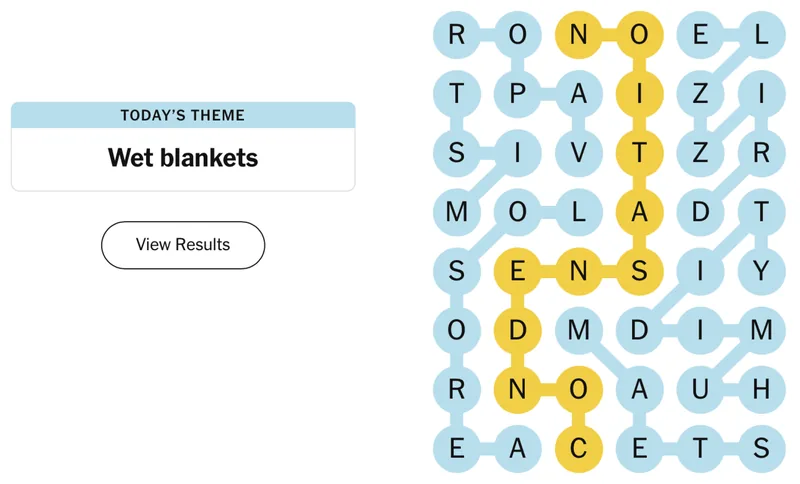
Ready to see how it all comes together? Here are the answers for today's NYT Strands puzzle. If you've been following along with today's NYT Strands hints, you might have already found some of these. Remember, the blue dots represent the theme words, and the yellow dot signifies the spangram.
The spangram, which spans the entire board and reveals the core theme, is TWISTANDTURN.
The theme words you'll find are:
- COIL
- CURLICUE
- CORKSCREW
- GYRE
- SPIRAL
- HELIX
When solved, the board visually represents these concepts of winding and turning, confirming the 'Spring fever' theme in a wonderfully abstract way. It's a satisfying completion when all the elements click into place.
How Strands Works and How to Win
The New York Times Strands is a delightful blend of a crossword and a word search. You're presented with a board of letters and a thematic clue. Your goal is to find all the hidden words related to that theme. The game is available on the NYT Games website and within the NYT Games app.
The key to Strands is understanding the role of the spangram. This word, always highlighted in yellow when found, stretches from one side of the board to the other, either horizontally or vertically. It explicitly defines the puzzle's theme. For instance, if the theme was 'Things that fly,' the spangram might be 'AVIATION' or 'AIRCRAFT.' Once you find the spangram, the remaining theme words often become much clearer.
Words can be formed in any direction - up, down, left, right, or diagonally. Each letter can only be used once per word. Correctly identified theme words are highlighted in blue. If you get stuck, you can submit any valid word of four letters or more that isn't part of the theme. Three such submissions will unlock a hint, which highlights the letters of one of the theme words. Unlike some other word games, Strands doesn't have a failure state; you can't run out of guesses or time. You win by finding all the theme words and the spangram, completing the entire board.
The satisfaction comes from the 'aha!' moments as you connect the dots, much like solving a riddle or deciphering a code. It's a fantastic way to engage your mind and sharpen your vocabulary. Getting today's NYT Strands hints from us is just one step in that rewarding process.
If you're looking for yesterday's solution or want to prepare for tomorrow, keep checking back. We're here to help you master today's NYT Strands hints and every puzzle that follows.