If your shoulders are permanently glued to your ears, your jaw aches from clenching, and your mind races through endless to-do lists long after dark, you're not alone. In a world designed to keep us constantly 'on,' it's easy to feel adrift in a sea of digital noise and relentless pressure. But what if the antidote isn't a radical detox, but a gentle return to the simple, tactile pleasures of the past? Enter comforting 'grandma hobbies' that are quietly revolutionizing how we find peace. These low-tech, hands-on activities, like knitting, baking, or gardening, offer a powerful balm for modern anxieties, helping to ground us emotionally, sharpen our focus, and cultivate a profound sense of calm.
The Quiet Rebellion: Why Analog Hobbies Are Back
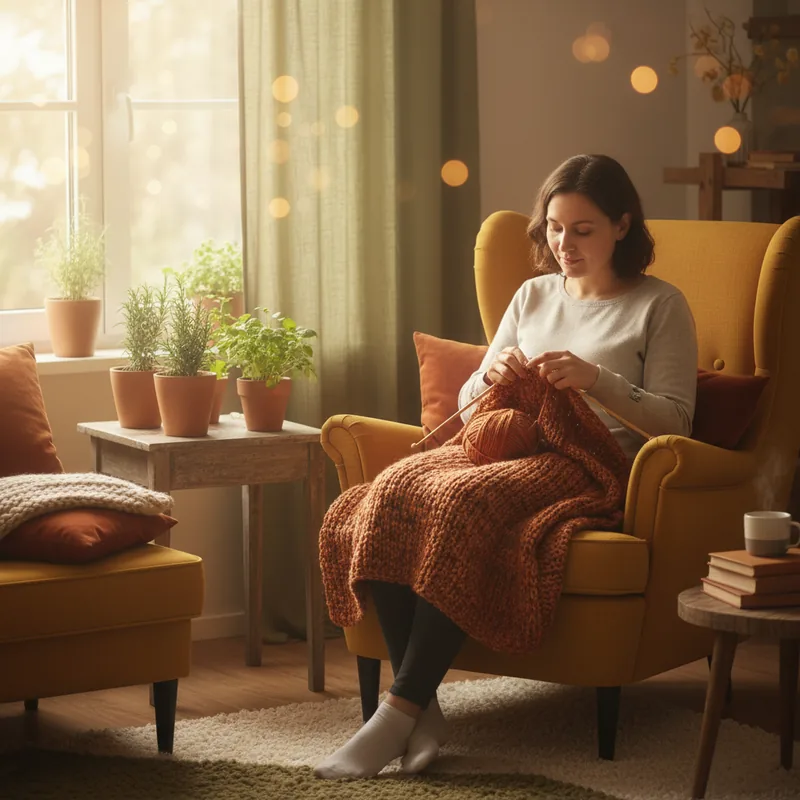
In an era dominated by screen fatigue, endless doomscrolling, and the pervasive pressure to constantly 'optimize' every moment, a subtle yet powerful movement has been gaining traction. Analog hobbies - think the satisfying click of knitting needles, the fragrant warmth of fresh-baked bread, or the meticulous focus of hand embroidery - are experiencing a full-blown renaissance. We're talking about more than just passing the time; these activities are helping people feel emotionally grounded, mentally present, and creatively fulfilled.
You might be wondering: why now? Here's the thing: our nervous systems are craving a break. We're wired for connection and creation, not constant stimulation and comparison. These slower, tactile pursuits offer a much-needed counterbalance to the always-on digital world, providing a sanctuary where productivity takes a backseat to process and presence.
What Makes a Hobby 'Grandma-Approved'?
Let's clear something up: 'grandma hobby' is a term of endearment, not a dismissal. These are activities that have historically been cherished across generations, often associated with a slower pace of life, hands-on skill, and a quiet sense of accomplishment. They're typically low-tech, peaceful, and deeply engaging for the senses.
Some classic and emerging examples of these comforting 'grandma hobbies' that are making a comeback include:
- Knitting and crocheting
- Cross-stitch and embroidery
- Ceramics or pottery
- Painting, drawing, and pastels
- Gardening or growing herbs
- Baking from scratch
- Letter-writing or journaling
- Puzzles and board games
- Bird-watching
- Quilting or patchwork
- Pressing flowers and botanical art
- Simple woodworking, like carving
- Calligraphy or hand lettering
These activities aren't just about the end product. They're about the journey, the sensory engagement, and the freedom to create without external pressure. As art therapist Emily Sharp notes, these hobbies offer 'slowness, sensory engagement, and the freedom to create without pressure--things we're starved for in modern life.' She often integrates them into her work, observing their power to 'support emotional regulation, reduce anxiety, and create micro-moments of joy.'
Beyond Nostalgia: The Deep Mental Health Benefits
Sure, they feel cozy and nostalgic. But the real magic of these hobbies lies in their profound capacity to support your mental well-being. Modern psychology is catching up to what our grandparents instinctively knew: keeping your hands busy can do wonders for your mind.
Recent research supports this. A systematic review of studies found evidence that crafting can significantly improve mental health (Bukhave et al., 2025). Another study published in Frontiers in Public Health highlighted how creative hobbies could provide a major boost to public mental health (Keyes et al., 2024). So, what exactly is happening?
Mindfulness and Flow States
Crafting, stitching, baking - these aren't activities you can effectively do while simultaneously doomscrolling or spiraling into catastrophic thoughts. They demand your attention, forcing you to slow down and be utterly present. Counselor Kim Rippy, an avid crocheter, explains that 'crafting slows down the brain to shift into a more mindful state.' It's a tactile experience, she says, that 'increases our brain's ability to focus on the present-felt experiences of working with the materials, again, pulling our mind away from worrying.'
This kind of present-moment awareness is what psychologists call a 'flow state' - that sweet spot of focused calm where time seems to disappear. By engaging your senses, these slow hobbies anchor you firmly in the here and now, keeping your brain focused on sensory input rather than allowing thoughts to pull you into external worries.
Stress Reduction and Nervous System Regulation
Perhaps one of the most compelling benefits is how these activities soothe a frazzled nervous system. Emily Sharp points out that even repetitive, simple movements can have a profoundly calming effect. 'I love recommending these activities, as they can help clients slow racing thoughts, regulate breathing, and calm emotional overwhelm,' she shares.
When you engage in creative hobbies, you're actively activating your parasympathetic nervous system - your body's natural 'rest and digest' state. This is a powerful shift away from the 'fight or flight' mode that chronic stress keeps us in. Interestingly, a 2019 study even found that just 10 minutes of drawing per day can boost mood and reduce stress, with benefits increasing over a month of daily practice (Drake, 2019).
Embracing Imperfection
Think about it: if you wanted a flawless scarf or a perfectly symmetrical cake, you could just buy one. We choose to make things not for an immaculate end result, but for the sheer joy of the process. This subtle shift in focus is incredibly therapeutic, especially for those of us caught in the trap of perfectionism.
Rippy often encourages her clients to engage in these hobbies precisely to challenge their need for perfection. She's witnessed clients 'give themselves permission for their hobby to not be 'perfect,' thus decreasing the daily pressure they put on themselves outside of their hobbies.' It's a safe space to make mistakes, learn, and grow without judgment.
A Digital Detox in Disguise
It's genuinely hard to doomscroll while you're trying to embroider a delicate pattern. (Trust me, I've tried.) These crafts offer an immersive experience that pulls us away from the often-addictive digital world - a space that frequently overwhelms our nervous system, breeds comparison, and fragments our attention span.
'Picking up a crochet hook, a paint brush, or a recipe for bread reconnects you with simple, sensory pleasures,' Sharp emphasizes. 'While you're using your hands and letting your mind wander, you're getting in touch with a part of yourself beyond the phone screen. That's something we should all actively nurture.'
Community and Connection
While often solitary, these comforting 'grandma hobbies' that we cherish don't have to be. Crafting circles, letter-writing clubs, and baking swaps create low-pressure social spaces that foster belonging and friendship. Andie Reeves, founder of Cape Town Craft Club, notes that her meetups are 'only half about the making, and the other half is the enjoyment that comes from being with other people.'
There's a unique comfort in working on individual projects side-by-side, where the hum of activity removes any awkwardness. The ice-breaker is built-in: you simply ask about someone's project or admire their work. It's a powerful way to connect without the pressure of intense conversation, nurturing friendships in a gentle, authentic way.
Ready to Unplug? Your Gentle Guide to Getting Started
If the thought of picking up a paintbrush for the first time since elementary school feels daunting, take a breath. There's no single 'right' way to dive into a comforting 'grandma hobby' that brings you joy. The key is curiosity, not expertise.
Here are a few gentle tips to help you begin without feeling overwhelmed:
- Start with a 'gateway hobby.' Many people jump into complex projects like punch needling or intricate crochet and get discouraged quickly. Reeves recommends more accessible entry points like cross-stitch kits, adult coloring books, simple beading, or even pressing flowers. These require less initial skill and offer quicker gratification.
- Give yourself permission to be a beginner. You won't be a master immediately. And that's perfectly okay - nobody is. Your first attempt at anything new is unlikely to look like the polished versions you see online. 'We tend to see the best of the best online,' Reeves reminds us. 'I mean, I'm not uploading a photo of my first, very average attempt at knitting.' Embrace the learning curve; it's part of the process.
- Make it social, if you like. If you thrive on connection, seek out opportunities to share your hobby. Join a local craft club, swap recipes with a friend, or find an online community. Look for 'paint-and-sip' events, gardening workshops, or even book clubs that incorporate creative activities in your area.
Remember, the goal isn't perfection or productivity. Your creations don't have to be 'good' to be good for you. As Emily Sharp beautifully puts it, 'It's not about producing perfect results or making something to sell--it's about creating just for the joy of it. It's about stretching ourselves and taking creative risks in a safe way.'