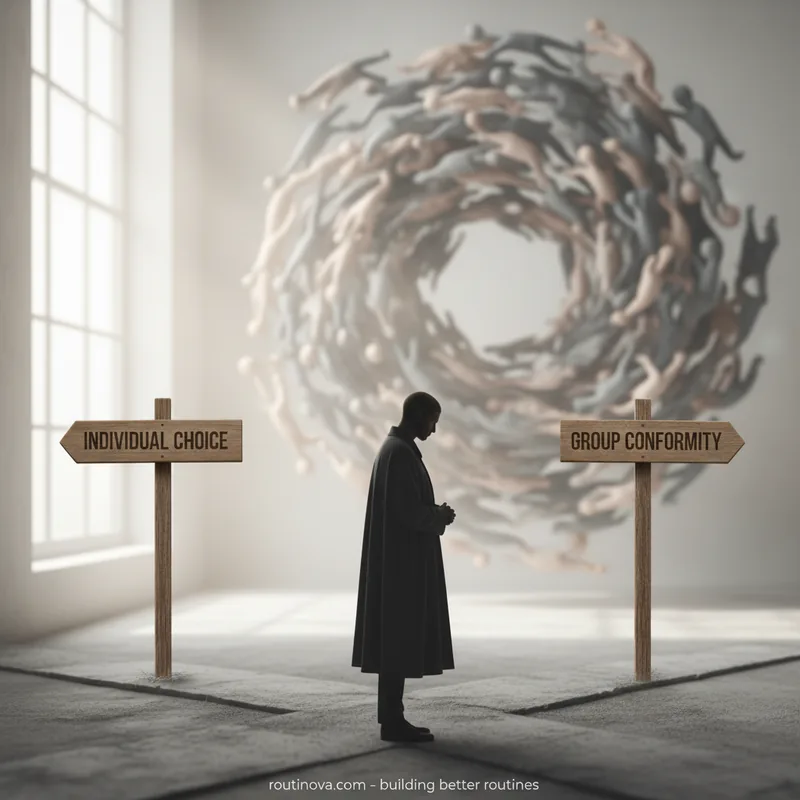
We all do it. That quick smile when you're crumbling inside. The confident nod when you're utterly lost. The automatic 'I'm fine' when you're anything but. This subtle act of presenting a different version of yourself to the world, often unconsciously, is known as masking. It's a survival mechanism, a way to fit in, to protect ourselves from judgment or perceived failure. But what happens when this protective shield becomes a cage? The truth is, when hiding emotions becomes a consistent, ingrained behavior, it can exact a profound and often invisible toll on your mental well-being.
This isn't just about putting on a brave face for a tough meeting. Masking, or 'camouflaging,' involves deliberately concealing your true feelings, behaviors, or even mental health symptoms to conform to social expectations. While often associated with neurodivergent individuals, particularly those with autism or ADHD, masking is a widespread phenomenon. It's a learned response to a world that often demands conformity, even at the expense of authenticity. The real question is, what does this constant performance cost us?
The Hidden Cost of Being "Fine"
Imagine trying to write with your non-dominant hand, all day, every day. You might eventually get good at it, but the effort, the mental strain, and the sheer exhaustion would be immense. That's a powerful analogy for what masking feels like. For many, it's a behavior learned early on, a way to navigate environments where their natural expressions weren't understood or accepted. They learn to present in a way they believe is 'correct,' much like those who were once forced to switch hands in school (History Extra, n.d.).
This isn't a casual act; it's a demanding performance. It requires constant vigilance, monitoring your every reaction, censoring your natural impulses, and mimicking others' behaviors. This constant self-regulation drains your cognitive and emotional resources, leaving you depleted. What most people don't realize is that this isn't just about 'faking it till you make it'; it's about a deep-seated need to belong and avoid criticism, even when it comes at a significant personal cost. When hiding emotions becomes your default, your authentic self slowly fades into the background.
The Many Faces of Masking
Masking isn't a monolithic behavior; it manifests in various forms, each adding layers of stress as you hide your true self to fit in. Think about it:
- Social Masking: This involves adopting social behaviors that don't come naturally. Perhaps you force eye contact even when it feels intensely uncomfortable, or you mirror body language to avoid standing out. It's like playing a role in a social script you never memorized.
- Behavioral Masking: This means suppressing natural movements or self-soothing behaviors, often called stimming. You might hide fidgeting or avoid certain postures because you worry they'll be perceived as strange or unprofessional.
- Compensation: Many individuals compensate by pouring excessive time and energy into tasks to hide perceived struggles. A person with ADHD, for instance, might meticulously double-check every detail, working twice as hard as their peers, simply to avoid revealing a challenge with focus or organization (Journal of Applied Psychology, 2024).
But why do we do it? The reasons are deeply ingrained. Stigma surrounding mental health and neurodivergence, coupled with fears of ableism and discrimination, are powerful motivators. We mask to protect ourselves, to be accepted, to simply blend in. Consider the person with social anxiety who forces themselves to be the 'life of the party,' cracking jokes and engaging in banter, all while their internal world is screaming for quiet. Or the colleague with chronic pain who insists they're 'fine' despite visible discomfort, fearing pity or being seen as weak. These are powerful examples of when hiding emotions becomes a coping mechanism, even if it's ultimately self-destructive.
What's truly insidious is that masking often happens unconsciously. From childhood, we absorb expectations about 'appropriate' behavior. If meeting those expectations is inherently difficult, we adapt by concealing our true selves. This can continue long after the initial threat of judgment has passed, leaving us trapped in a performance even when no one is actively judging us.
When Hiding Emotions Becomes a Burden
Since masking can operate beneath conscious awareness, recognizing its impact on your mental health can take time. But the signs are often there, if you know where to look. Do you find yourself constantly looking to others for cues on how to act in social situations, mimicking their behavior rather than responding authentically? Do you suppress certain body movements you find calming because you're worried about how others will perceive them?
A common indicator is profound exhaustion after social engagements. If you feel an overwhelming need to retreat and decompress, to 'feel like yourself' again after interacting with others, it's a strong signal that you've been masking. This constant performance is not only draining but has serious long-term consequences. Research shows that masking significantly increases stress and can exacerbate mental health issues (Psychology Today, 2023). For autistic individuals, prolonged masking is linked to a higher risk of suicidal thoughts and behaviors (Miller et al., 2021).
In the long run, masking often leads to burnout, especially for neurodivergent individuals. The unsustainable effort of behaving unnaturally wears a person down, leaving them depleted and overwhelmed (Raymaker et al., 2020). Beyond the personal toll, masking also creates a critical barrier to receiving appropriate support. When symptoms are hidden, professionals may struggle to provide an accurate diagnosis. This is particularly prevalent in autistic women, who are frequently misdiagnosed or undiagnosed because their masked behaviors mimic neurotypical social norms (Belcher et al., 2022). Consider the high-achieving student with imposter syndrome who meticulously over-prepares for every presentation, terrified of being exposed as 'not smart enough.' Their success becomes another layer of their mask, preventing them from seeking help for their anxiety. Even if the hidden behavior isn't inherently harmful, when hiding emotions becomes a constant act, it can cause more damage than good.
Reclaiming Your Authentic Self
Recognizing your masking behaviors is the first courageous step. But unmasking isn't about suddenly revealing everything to everyone. The fear of stigma and discrimination is real and valid. We all, at times, operate with a 'work face' or a 'public persona.' The goal isn't to eliminate all self-regulation, but to understand when and why you're doing it, and to create space for your authentic self.
The journey to unmasking begins by finding safe spaces. These might be trusted friends, family members, a therapist, or online communities where you feel genuinely accepted. Experiment with different social interaction styles or allow yourself to engage in self-soothing behaviors without judgment. As you gradually explore and get to know your authentic self, you'll likely find that the intense burnout and weariness associated with masking begin to lessen. It's a slow, deliberate process, but one that promises greater peace, genuine connection, and a life lived with less internal friction. Understanding when hiding emotions becomes a detriment is the first step toward true liberation.
Sources:
- Belcher, H.L., Morein-Zamir, S., Stagg, S.D., & Ford, R.M. (2022). Shining a light on a hidden population: social functioning and mental health in women reporting autistic traits but lacking diagnosis. J Autism Dev Disord.
- History Extra. (n.d.). A history of left-handed writing.
- Journal of Applied Psychology. (2024). Research on compensatory behaviors in the workplace.
- Masking and mental health. (n.d.). Nebraska Autism Spectrum Disorders Network.
- Miller, D., Rees, J., & Pearson, A. (2021). “Masking is life”: experiences of masking in autistic and nonautistic adults. Autism in Adulthood, 3(4), 330-338.
- Psychology Today. (2023). The hidden costs of emotional suppression.
- Raymaker, D.M., Teo, A.R., Steckler, N.A., et al. (2020). “Having all of your internal resources exhausted beyond measure and being left with no clean-up crew”: defining autistic burnout. Autism in Adulthood, 2(2), 132-143.