Navigating the New York Times Connections puzzle can feel like deciphering a secret code. Some days, the connections are obvious; other days, they’re cleverly hidden, requiring a fresh perspective. If you’re finding today’s puzzle, January 20, 2026, particularly challenging, you’ve come to the right place for a guiding hand.
Decoding Today's Connections Puzzle
The New York Times Connections game presents players with 16 words, challenging them to find four groups of four words that share a common theme. The difficulty ramps up as you progress, with categories often playing on wordplay, double meanings, or less obvious associations. Today’s puzzle, #954, is no exception, offering a mix of straightforward and tricky groupings.
The key to solving Connections lies in looking beyond the most apparent meanings. Words can belong to multiple potential groups, and the trick is identifying the one that fits all four words perfectly. Sometimes, a word might seem out of place until you consider its secondary meaning or how it relates to a common phrase.
For instance, consider the word “bank.” It could relate to a financial institution, but in Connections, it might also be part of a group related to rivers (river bank), or even a type of shot in billiards (bank shot). This ambiguity is what makes the game so engaging and, at times, so frustrating.
Today's NYT Connections Hints and Strategies
Before diving into the answers, let's explore some hints for today's NYT Connections hints puzzle. Remember, the game is designed to make you think laterally. Pay attention to words that might have multiple meanings or that form common idioms.
Here are the spoiler-free category types to guide your thinking:
- Yellow Category: Related verbs.
- Green Category: Related nouns.
- Blue Category: Related nouns.
- Purple Category: Wordplay.
And here are some more specific, yet still spoiler-free, hints:
- Yellow Category: Think about actions you might perform with thread or string.
- Green Category: These are all types of flying insects known for their buzzing.
- Blue Category: These are all well-known structures that people travel across.
- Purple Category: Look for words that, when placed at the beginning of a phrase, form synonyms for desiring something strongly.
One common pitfall in Connections is assuming a word's most common meaning. For example, “tower” might immediately bring to mind the Eiffel Tower or the Leaning Tower of Pisa, but it could also be part of a different kind of grouping entirely, perhaps related to chess pieces or even a verb meaning to rise high.
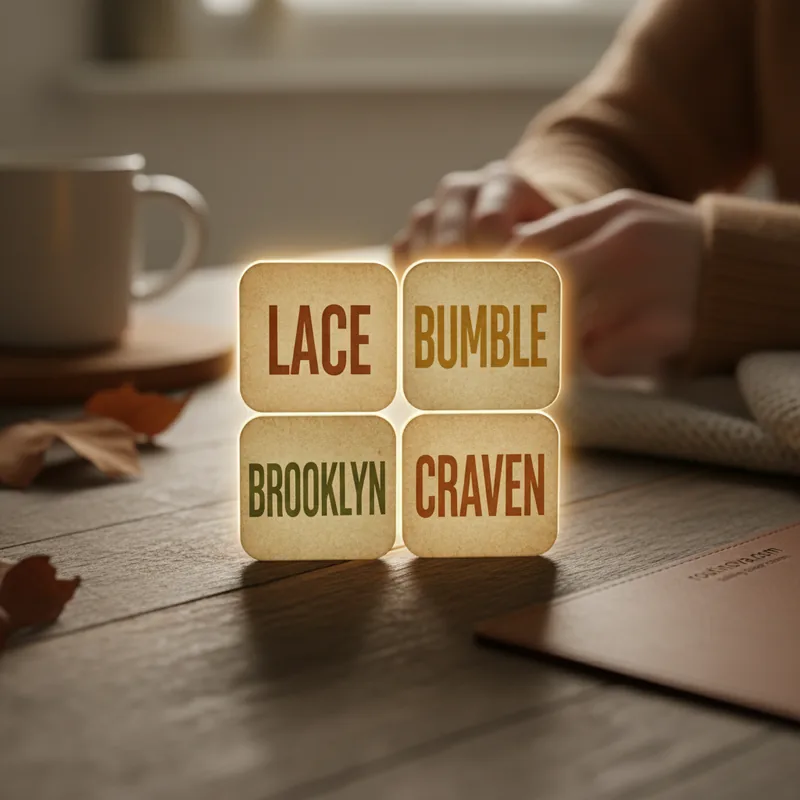
Another strategy for tackling today's NYT Connections hints is to isolate words that seem to have no obvious connection to the others. If a word like “craven” doesn’t fit any of your initial ideas, it might be a key to a more obscure category, possibly involving wordplay or a specific idiom.
The Solutions for January 20, 2026
If you’ve tried your best and are ready for the reveal, here are the categories and their corresponding words for today's NYT Connections hints puzzle #954. Remember, the game often includes words that could fit multiple themes, making the final confirmation crucial.
BEWARE: Full spoilers ahead!
Yellow Category: INTERTWINE
The words in this group are:
- LACE
- TWIST
- WEAVE
- WIND
These verbs all describe ways of combining or crossing threads, strands, or other flexible materials.
Green Category: KINDS OF BEES
The words in this group are:
- BUMBLE
- CARPENTER
- HONEY
- KILLER
These are all types of bees, including the common bumblebee, the carpenter bee, the honeybee, and the killer bee.
Blue Category: FAMOUS BRIDGES
The words in this group are:
- BROOKLYN
- GOLDEN GATE
- RIALTO
- TOWER
These are all names of famous bridges around the world.
Purple Category: STARTING WITH SYNONYMS FOR “HANKER FOR”
The words in this group are:
- CRAVEN
- DESIREE
- NEEDLE
- WANTON
This category plays on words that can start phrases meaning to strongly desire something. For example, “crave” (from craven), “desire” (from desiree), “need” (from needle), and “want” (from wanton) all express a strong longing.
How the Puzzle Was Solved
The trickiest part of this puzzle often involves words with dual meanings or those that can be part of common phrases. For instance, “craven” and “carpenter” might initially suggest horror directors, but they fit into other categories here. “Tower” is a famous bridge, but its inclusion might initially mislead players.
The purple category, “Starting with Synonyms for ‘Hanker For’,” is a prime example of wordplay. Identifying that “craven” relates to “crave,” “desiree” to “desire,” “needle” to “need,” and “wanton” to “want” unlocks this group. This requires thinking about the root or a common variation of the word.
Similarly, the green category, “Kinds of Bees,” uses names that might not immediately scream “bee” to everyone. While “Bumble” and “Honey” are direct, “Carpenter” and “Killer” are also recognized types of bees. This highlights the importance of considering all possible associations for each word.
The blue category, “Famous Bridges,” is relatively straightforward once you recognize the names: Brooklyn Bridge, Golden Gate Bridge, Rialto Bridge, and Tower Bridge. The challenge here might be if “Tower” is considered in isolation rather than as part of “Tower Bridge.”
Finally, the yellow category, “Intertwine,” groups together verbs related to the manipulation of fibers: lace, twist, weave, and wind. These actions are all about creating connections or structures by overlapping or twisting materials.
By systematically analyzing the words and considering potential double meanings or idiomatic uses, today's NYT Connections hints can be successfully deciphered. The game rewards careful observation and a willingness to explore less obvious connections.
If you’re looking for a daily dose of brain-teasing fun, the NYT Connections puzzle is an excellent choice. Check back tomorrow for new hints and solutions!