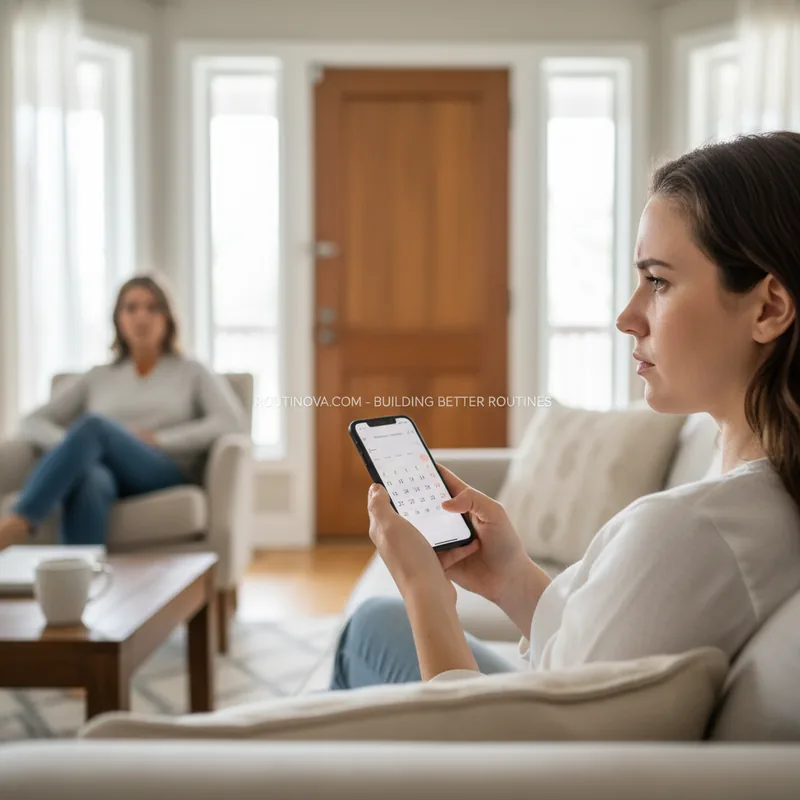
That unsettling knot in your stomach? That persistent whisper in your mind? When you suspect infidelity, it's a deeply painful and confusing experience. The person you trust most suddenly feels like a stranger, and you're left sifting through their actions, searching for signs that could mean something is amiss. Infidelity isn't just a betrayal; it's a seismic shift that can shatter your sense of reality, leaving you questioning everything you thought you knew about your relationship.
While no single sign is definitive proof, a pattern of unusual behaviors, secretive habits, or emotional distance can paint a clearer picture. Here, we'll explore 11 common indicators that might suggest your partner is cheating, helping you understand what to look for and how to navigate these challenging waters.
1. Communication Shifts and Silence
Silence can be deafening, especially when it replaces the easy flow of conversation you once shared. A breakdown in communication is rarely a positive sign in any relationship, but when it becomes a consistent pattern, it often signals a deeper underlying issue. If your partner suddenly stops sharing details of their day, avoids discussing your relationship, or the words "I love you" become a distant memory, pay attention.
These shifts are often among the first signs that could mean your relationship is facing a deeper challenge. Look for:
- Ignoring what you say or changing the subject to avoid uncomfortable topics.
- Storming off mid-conversation or coming up with excuses to avoid talking.
- Stonewalling, where they refuse to answer questions or engage.
- Making accusations rather than addressing the current problem.
- Using dismissive body language, like rolling their eyes or turning away.
- Acting passive-aggressively, such as stalling or procrastinating to avoid discussions.
Interestingly, research suggests that even subtle vocal changes might be telling. One study found that subjects could more accurately detect cheating based on a lower voice pitch, suggesting "the human voice can be of value as a cheater detection tool" (Hughes & Harrison, 2017).
2. A Sudden Interest in Appearance
We all want to look our best, but a sudden, dramatic shift in your partner's attention to their appearance can be a red flag. If they're suddenly hitting the gym with newfound fervor, buying an entirely new wardrobe, or meticulously grooming themselves in ways you haven't seen before, it might be more than just a self-improvement kick.
Consider these appearance-related shifts:
- Dressing nicer than normal, especially for routine outings or work.
- Wearing a different style of clothing that seems out of character.
- Purchasing new clothes you've never seen before.
- Suddenly using cologne or perfume they never did, or meticulously grooming themselves before leaving the house.
The real question is, who are they trying to impress? If this sudden transformation isn't for you, or for a long-planned event, it could be for someone else.
3. More Time Spent Away From Home
Life gets busy, and sometimes work or personal commitments genuinely demand more time away from home. But when that time away becomes excessive, unexplained, or consistently elevated for long periods, it's natural to wonder what's really going on. This is often one of the earliest and most noticeable indicators that something has changed.
Here are a few things to watch for:
- Your partner picks up a new hobby that requires significant time commitment, often at odd hours.
- When you ask about their time away, their answers are vague, evasive, or inconsistent.
- They brush you off or get defensive when you show interest in their new activities.
- Your partner starts working longer and longer hours, but their work output or financial situation doesn't seem to reflect it.
- They frequently "work late" but can't provide specifics about what they were doing, or take unexpected business trips with little notice.
4. Unsettling Attitude Shifts
The person you know starts to feel like a stranger. While stress or personal struggles can certainly lead to changes in attitude, a pattern of specific shifts, especially when combined with other suspicious behaviors, can be unsettling. These shifts in attitude are often among the more unsettling signs that could mean your partner is grappling with guilt or disengagement.
Watch for these attitude changes:
- Exhibiting signs of low self-esteem, despite external successes.
- A sense of confusion about who they are or what they want.
- Seeming to crave danger or thrills, taking unusual risks.
- Becoming more negative or critical of you, your relationship, or life in general.
- Picking fights more often, creating distance or an excuse to leave.
- Getting extremely defensive if you mention infidelity or affairs.
- When you ask for reassurance about cheating, their response feels unsatisfying or insincere.
5. The Web of Lies
Once trust erodes, everything feels like a potential deception. Dishonesty is a major red flag in any relationship, and it can manifest in many forms beyond just lying about cheating itself. If you find your partner is consistently untruthful about various aspects of their life, it creates a foundation of mistrust that's hard to ignore.
Potential signs of cheating related to lying include:
- Discovering your partner has been lying to you about a variety of things, big and small.
- Their nervousness increases significantly when you ask questions about who they were with or what they were doing.
- Your partner's friends seem anxious, uncomfortable, or avoid eye contact when you're around.
- They become noticeably more secretive about their plans, whereabouts, or personal life.
Here's what's interesting: studies have found that people who have cheated on their partners tend to be better at detecting lies and deception themselves (Ein-Dor et al., 2017). It's a cruel irony, isn't it?
6. Emotional Distance and Avoidance
It feels like they're actively avoiding you, not just physically, but emotionally. When a partner is engaging in infidelity, they might create distance to avoid uncomfortable questions, the guilt of their actions, or simply because their emotional energy is directed elsewhere. This avoidance can manifest in subtle but profound ways.
These avoidance strategies may indicate infidelity:
- You feel as if you are being actively avoided, both physically and emotionally.
- They no longer want to go places or do things with you that you once enjoyed together.
- Your partner avoids eye contact or becomes uncomfortable with physical affection like holding hands or cuddling.
- Their "wandering eye" seems out of control, constantly scanning others even when with you.
7. Accusations Turned Back on You
The classic projection playbook. When someone feels guilty about their own actions, they might transfer those feelings onto you, accusing you of the very thing they are doing. This psychological defense mechanism can be incredibly disorienting, as you're suddenly on the defensive for something you haven't done.
If your partner is cheating, you may notice these signs:
- You face constant, unwarranted cheating accusations from your partner.
- Every time you question their behavior, they immediately turn the tables and question you instead.
- When they engage in questionable behavior, they insist that you are the one who is "being shady" or untrustworthy.
It's important to recognize that if your spouse constantly accuses you of cheating, even without reason, this can also be a sign of emotional abuse (University of Rochester Medical Center).
8. A Growing Indifference
When the spark dies, and apathy takes its place, it's a profound shift. Indifference, or a lack of interest in things they once loved, can signal a deep disengagement. While it could be a sign of depression or other personal struggles, when combined with other indicators, it can point to an affair. It's as if their emotional energy is simply not available for your shared life anymore.
Watch for these signs of indifference:
- Your partner seems bored with you, their job, your children, hobbies, or even life in general.
- They become lazy or unmotivated, especially around the house or with shared responsibilities.
- They show no jealousy or concern about you, no matter what you say or do.
- Your partner is indifferent to important family events like birthdays, holidays, or anniversaries.
9. Shifts in Intimacy
The bedroom often tells a story before words do. Fluctuations in sexual frequency are normal in any long-term relationship, but dramatic changes can be significant. This isn't just about the quantity of sex, but the quality of intimacy and connection. These dramatic shifts in intimacy are significant signs that could mean an affair is underway (Kaur, 2018).
These signs may indicate the possibility of an affair:
- There is considerably less intimacy or emotional connection in your relationship.
- Your sex life is practically non-existent, or they consistently make excuses to avoid it.
- Conversely, there are lots of new things introduced in sex that were never present before, suggesting new experiences or influences.
- You learn that you have a sexually transmitted infection (STI) and you know you have not strayed.
10. Unexplained Financial Strain
Money matters can reveal hidden secrets. Most marriages experience some financial stress, but certain money issues, especially those that appear suddenly or without clear explanation, can be a sign of infidelity. Affairs often come with a hidden cost, from secret gifts to hotel rooms or dinners out.
Signs of cheating to watch for include:
- Noticing charges on credit card statements that don't make sense or can't be explained.
- Money suddenly becomes a more frequent or intense point of contention between you.
- Your partner stops planning for large, shared purchases (like a trip, buying a house, or a home renovation) that were previously discussed.
- Unexplained withdrawals from joint accounts or new, secret bank accounts.
A 2021 study found that financial problems are one of the main predictors of marital infidelity (Atapour et al., 2021).
11. Mysterious Tech Habits
Our digital lives often leave a trail, and infidelity is frequently revealed online. A sudden, secretive change in technology use is a common red flag. From hidden apps to deleted messages, a partner's phone or computer can become a fortress of secrets.
These tech changes may warrant concern:
- Your partner is suddenly unreachable at certain times of the day, with no reasonable explanation.
- They've changed their phone or computer password and won't share it with you, or they keep their device locked at all times.
- They are always texting or sneaking off to take phone calls, often in another room.
- You notice cloud sharing has suddenly been switched off on your shared devices.
- They stop using shared devices altogether, opting for their personal phone or laptop exclusively.
- They reduce their use of social media, or become unusually private about their online activity.
- They frequently clear the browser history on the home computer or their personal devices.
- Your partner's fitness tracker shows exercise at odd times and hours that don't align with their stated activities.
- They start spending most of their time interacting on social media with new, unfamiliar contacts.
Internet infidelity is a recognized phenomenon (Sahni & Jain, 2018), and social media can play a significant role (McDaniel et al., 2017).
Navigating Suspicions and Seeking Support
Dealing with the suspicion of infidelity is an incredibly painful journey. It's common for a partner to deny cheating, even when confronted with strong evidence. Unless you have irrefutable proof, many will continue to deny. This makes the process even more agonizing.
If you find yourself in this situation, here are steps you can take:
Consider Couples Counseling: If you're met with denial and pushback, professional help can be invaluable. A neutral couples counselor can provide a safe space to discuss concerns and gain insight into what's truly happening in your relationship (American Association for Marriage and Family Therapy).
Seek Individual Therapy: If your partner refuses to attend counseling, or you need support for yourself, individual therapy can help you process the intense emotions you're likely experiencing--hurt, shock, fear, depression, shame, and mistrust.
Prioritize Self-Care: This stressful time can take a toll on your mental and physical health. You might experience sleep disturbances, changes in appetite, gastrointestinal problems, or difficulty concentrating. To maintain your strength and resolve, focus on hydration, regular exercise, a consistent sleep schedule, and a balanced diet.
Remember, these are merely signs that could mean infidelity, not definitive proof. What might be a warning sign in one relationship could be nothing to worry about in another. Most signs of infidelity are subtle, and it's often when the inconsistencies and stories stop adding up that the truth begins to surface.
You don't have to cope with unfaithfulness alone. Before making any major decisions about your marriage or relationship, seeking professional relationship therapy--either together or individually--is a wise step. Your emotional well-being is paramount during this challenging time.