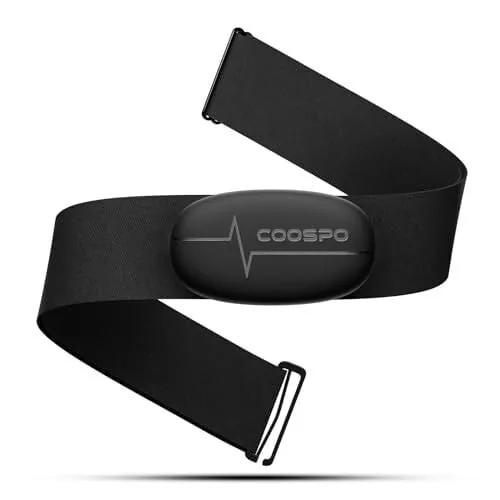
Sarah laced up her running shoes, the familiar rhythm of her breath a steady companion. Her smartwatch glowed, displaying a heart rate that felt… off. She was aiming for that elusive 'Zone 2' everyone raved about for sustainable fitness, but the numbers on her wrist seemed to tell a different story than the effort she felt. Was she pushing too hard? Not hard enough? The confusion was palpable, a common thread among those trying to decode the fitness world's latest buzzword. It turns out, the very definition of Zone 2 cardio is a moving target, and the reason nobody can agree on its precise heart rate boundaries is more complex than you might think.
Decoding the Elusive Zone 2
The concept of heart rate zones isn't new. It's a framework designed to help us understand and control exercise intensity. Typically, five zones are used: Zone 1 for recovery, Zone 2 for low-intensity aerobic work, Zone 3 for moderate effort, and Zones 4 and 5 for high-intensity bursts. Zone 2 is particularly trendy because it’s the sweet spot for building aerobic base, improving endurance, and aiding fat metabolism without excessive fatigue. The idea is to work hard enough that you're breathing noticeably heavier, but still able to carry on a conversation. You finish a Zone 2 session because your planned time is up, not because you've hit a wall.
But here's where it gets tricky: while the feeling of Zone 2 is relatively consistent—sustainable effort, noticeable breathing, conversational pace—the numbers that define it are anything but. This ambiguity is precisely why nobody can agree on what heart rate percentage truly represents Zone 2.
The Heart of the Disagreement: Heart Rate Metrics
The core of the Zone 2 debate lies in how heart rate is measured and calculated. Most systems use percentages of your maximum heart rate (MHR) or heart rate reserve (HRR). However, calculating these benchmarks accurately for individuals is where the algorithms diverge.
Your maximum heart rate is highly individual and can't be precisely predicted by simple formulas like the common '220 minus age.' Real-world testing, like hill sprints or noting your highest heart rate during intense exercise, offers a more accurate picture. Similarly, heart rate reserve (the difference between your maximum and resting heart rate) adds another layer of personalization. Some advanced systems even use lactate threshold, a marker of intense fatigue, as a baseline.
This is why your Apple Watch might define Zone 2 differently than your Garmin, or even how Peloton categorizes it. For instance, Apple Watch often uses 60-70% of HRR (with a potentially inaccurate MHR calculation), while Peloton might set Zone 2 at 65-75% of MHR (using the 220-age formula).
Consider this: A runner aiming for a conversational pace might find their watch showing 145 bpm. On one device, this could be Zone 2; on another, it might be Zone 3. This discrepancy means that nobody can agree on a universal number, forcing users to navigate a sea of varying definitions.
A Tour of Popular Zone Definitions
Let's break down how some popular platforms define Zone 2:
- Apple Watch: Typically 60-70% of heart rate reserve, often using a default MHR calculated by the 220-age formula. Manual zone setting is available.
- Fitbit & Pixel: Uses a "moderate" zone (formerly "fat burn") from 40-59% of HRR, with MHR based on the 220-age formula. Manual adjustments are possible.
- Garmin: Offers flexibility. Zone 2 can be 73-81% of MHR, 65-75% of HRR, or 79-88% of lactate threshold heart rate, depending on setup.
- Orangetheory: Their "blue" zone, analogous to Zone 2, is 61-70% of MHR, calculated using an age-adjusted formula that refines over time.
- Peloton: Defines Zone 2 as 65-75% of MHR, typically using the 220-age formula unless manually adjusted.
- ACSM: The American College of Sports Medicine defines "light" intensity (similar to Zone 2) as 57-63% of MHR, and "moderate" as 64-76%.
As you can see, the numbers don't align neatly. What constitutes Zone 2 on one platform could easily fall into a different zone on another. This is the crux of why nobody can agree on a single, definitive range.
Finding Your Personal Zone 2 Effort
So, how do you find your true Zone 2 if the numbers are so inconsistent? The answer lies in listening to your body and using perceived exertion as your guide.
Instead of fixating on the exact BPM, focus on the training effect you want to achieve. If your goal is to build a solid aerobic base or increase endurance, the precise number on your watch is less critical than consistently hitting a sustainable effort level.
This is where the Rating of Perceived Exertion (RPE) scale comes in handy. Aim for an RPE of 3-4 on a scale of 1-10. This means you’re working, breathing noticeably, but can still hold a conversation without gasping for air. Think of it as a challenging walk or a very easy jog. Over time, you'll start to notice what heart rate your device shows when you're consistently in this RPE range.
For example, you might find that for you, an RPE of 3-4 consistently registers between 135-150 bpm on your watch. If your heart rate creeps into the 160s during an easy run, you know you're likely pushing too hard for Zone 2. Conversely, if it's consistently below 130 bpm, you might be slacking off.
Remember that factors like heat, hydration, and fatigue can influence your heart rate, a phenomenon known as cardiac drift. Don't be alarmed if your heart rate slowly climbs during a longer Zone 2 session. The key is consistency in effort, not a rigid adherence to a number that varies wildly between devices.
“Ultimately, the most accurate way to use heart rate is to define the intensity you want first, and then use heart rate as a guide to achieve that intensity consistently.”
If the numbers on your devices are confusing you, trust your gut. Your body provides the most reliable feedback. The fact that nobody can agree on a universal Zone 2 definition is a testament to its subjective nature and the importance of personalized training. So, find that sustainable, conversational effort, let your heart rate monitor be a helpful guide rather than a dictator, and enjoy the steady progress.
What's your experience with Zone 2? Share your thoughts in the comments below!