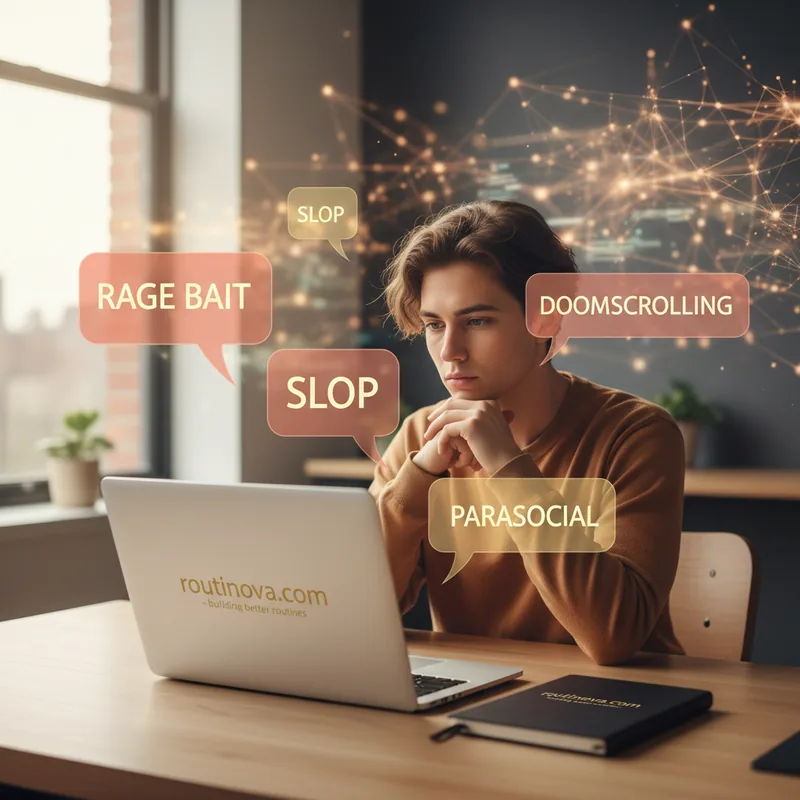
Our evolving vocabulary offers a unique lens into the collective psyche, reflecting the anxieties and transformations of our modern world. When we examine what our new words are, we uncover a profound commentary on our relationship with technology, authenticity, and human connection. Terms like “rage bait,” “parasocial,” and “slop” have surged in popularity, not just as trendy jargon, but as indicators of deeper societal concerns. These linguistic shifts reveal a growing unease about emotional exploitation, the blurring lines of digital intimacy, and the pervasive influence of artificial intelligence in our daily lives.
The Digital Lexicon of Modern Unease
Each year, leading dictionaries and linguistic organizations meticulously review the words that have exploded into public consciousness, driving search queries and dominating conversations across tech, business, and media. What they consistently find are terms that paint a vivid picture of a world increasingly shaped by AI and digitally mediated interactions.
Oxford University Press, for instance, highlighted “rage bait” as a word of the year, describing online content deliberately crafted to provoke anger purely for the sake of boosting engagement and traffic. Its widespread adoption underscores a collective frustration with manipulative digital tactics (Linguistics Institute, 2024).
Similarly, Cambridge Dictionary selected “parasocial,” a term that, while originating in academic circles decades ago, has found mainstream relevance due to the faux intimacy fostered by social media. It captures the one-sided, fantasized relationships users often develop with celebrities or influencers who are unaware of their existence, reflecting a yearning for connection in a fragmented world.
Beyond these, the phenomenon of “doomscrolling” has become a common experience, describing the compulsive act of continuously consuming negative news or content, often to the detriment of mental well-being (Digital Wellness Institute, 2023). This new term perfectly encapsulates a specific form of digital anxiety.
The proliferation of generative AI has also given rise to new vocabulary. Organizations like the American Dialect Society and Merriam-Webster have recognized “slop” or “AI slop” as significant additions, referring to the ever-increasing volume of low-quality, misleading, or unoriginal content churned out by artificial intelligence, flooding our digital feeds and challenging our ability to discern truth.
AI's Double-Edged Dictionary: Innovation and Autonomy
While many new words reflect anxieties, others highlight the transformative, and sometimes positive, aspects of technological advancement. Not all linguistic shifts point to negativity; some celebrate innovation and new possibilities.
Collins English Dictionary, for example, chose “vibe-coding” as its word of the year. This term describes the ability to create code or digital content without traditional coding skills, simply by instructing generative AI what you desire. It signifies how AI is democratizing content creation, empowering non-specialists to bring their ideas to life.
Another buzzword, “agentic,” points towards the next frontier of AI: general intelligence capable of acting with increasing autonomy and making informed decisions without constant human oversight. This term embodies both the exciting potential and the profound ethical questions surrounding AI's evolving capabilities.
In essence, the ongoing linguistic evolution vividly illustrates a societal tug-of-war. The words we adopt reveal both the incredible advances technology might afford and the potential costs it demands in return, shaping what our new words collectively articulate about our future.
Authenticity Under Scrutiny: Life in the Public Eye
Beyond technology's direct impact, discussions around what our new words mean often center on how constant digital self-presentation has complicated notions of authenticity. The pressure to curate an idealized online persona has birthed a new lexicon reflecting our anxieties about being seen and judged.
The rising popularity of terms like “aura-farming” speaks to the subtle, often exhausting, effort to exude charisma or confidence without appearing to try too hard. It's the art of crafting an effortlessly cool image for public consumption.
Similarly, “performative” highlights actions or displays primarily undertaken for the benefit of an audience, rather than out of genuine conviction. This term critiques the superficiality that can arise when every aspect of life becomes content for an online stage.
In a counter-movement to curated perfection, “goblin mode” emerged as a popular term, describing a state of unapologetic slovenliness, self-indulgence, and a rejection of societal expectations for self-presentation (Sociology Review, 2024). It's a linguistic rebellion against the pressure to constantly perform for an audience.
Another telling addition is “de-influencing,” where individuals actively discourage followers from buying certain products or participating in trends. This movement reflects a growing desire for genuine recommendations and a pushback against the relentless consumerism often fueled by social media (Consumer Behavior Journal, 2023).
Ultimately, what our new words tell us is a complex story of adaptation, anxiety, and aspiration. They serve as a dynamic barometer of our collective consciousness, capturing the profound shifts in how we interact with technology, navigate our identities, and strive for meaning in an increasingly digital and interconnected world. These linguistic innovations are not just fleeting trends; they are vital clues to understanding the evolving human experience.