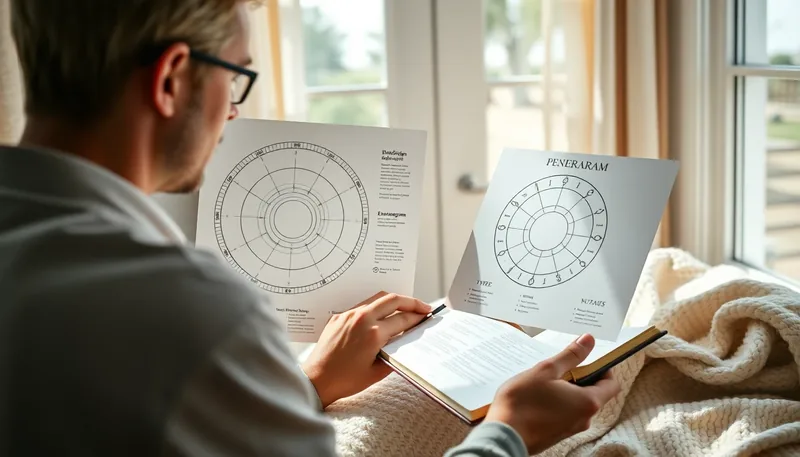
Picture this: You're scrolling through social media and notice three friends have posted their Human Design charts alongside their Enneagram numbers. One describes herself as a "Manifesting Generator Type 7," another shares how understanding her "open heart center" helped her navigate a difficult conversation, and a third is hosting a workshop combining both systems. Suddenly, you wonder: is human design next in the evolution of personality frameworks, or is this just another passing trend?
The question of whether Human Design represents the next evolution in personality understanding--following in the footsteps of systems like the Enneagram, Myers-Briggs, and astrology--deserves thoughtful examination. While lacking scientific validation, Human Design offers a unique synthesis of mystical traditions that some find surprisingly practical for self-understanding. Its growing popularity suggests it's capturing something many seek: a personalized roadmap for living authentically in an increasingly complex world.
What Is Human Design?
Human Design presents itself as a comprehensive system for understanding your innate nature, combining elements from astrology, the I Ching, Kabbalah, and the chakra system. Unlike traditional personality tests that categorize based on psychological traits, Human Design claims to reveal your genetic blueprint--how you're energetically wired to interact with the world.
The system emerged in 1987 when its founder experienced what he described as a mystical revelation. This origin story contributes to both its appeal and skepticism. Proponents describe it as a "user manual for your life," while critics note its lack of scientific foundation. Yet its practical applications--from career guidance to relationship dynamics--explain why many are asking whether is human design next in mainstream self-discovery tools.
The Five Energy Types
At the core of Human Design are five energy types, each with specific strategies for optimal living:
- Manifestors (8% of population): Natural initiators who thrive when informing others before acting
- Generators (70%): The builders who find satisfaction through responding to life's opportunities
- Projectors (20%): Guides who excel at recognizing and directing others' energy
- Reflectors (1%): Rare types who mirror their environment and need lunar cycles to make decisions
- Manifesting Generators (hybrid): Multi-talented individuals who combine initiation with sustained energy
Understanding your type provides practical guidance. For instance, a Generator working against their design might push projects prematurely rather than waiting for opportunities that genuinely excite their sacral response. Research on personality frameworks suggests their value often lies in the reflective process they inspire rather than categorical accuracy (Journal of Personality Assessment, 2023).
Human Design vs Other Systems
To understand whether is human design next in popularity, we must compare it to established frameworks. The Enneagram focuses on core motivations and fears, Myers-Briggs on cognitive preferences, astrology on celestial influences, while Human Design emphasizes energetic mechanics and decision-making strategies.
Consider Sarah, a marketing director who identifies as an Enneagram Type 3 (The Achiever) with ENTJ Myers-Briggs type. Her Human Design reveals she's a Manifestor with emotional authority. While her Enneagram helps her recognize her drive for validation, and Myers-Briggs explains her strategic thinking, Human Design provides specific guidance: wait for emotional clarity before initiating projects, and inform her team before making changes. This layered understanding exemplifies why some integrate multiple systems.
Unlike purely psychological frameworks, Human Design incorporates physical elements through its nine energy centers mapped on the bodygraph. This somatic component--similar to how some therapeutic approaches connect emotional patterns to physical sensations--adds dimension that purely cognitive systems lack. Studies on embodied cognition support the value of connecting psychological understanding with physical awareness (Frontiers in Psychology, 2022).
Practical Applications
Beyond theoretical understanding, Human Design offers concrete applications that explain its growing appeal. Many find it particularly useful in three areas where traditional personality frameworks sometimes fall short.
Workplace Dynamics
Alex, a software engineer, struggled with frequent burnout despite loving his work. His Human Design revealed he was a Projector, not meant for the sustained energy output of a typical developer role. By shifting to a consulting position where he could guide projects strategically rather than execute constantly, his satisfaction increased while his energy stabilized. This practical application shows how asking is human design next in professional development isn't just theoretical--it's changing how some approach their careers.
Relationship Understanding
Human Design provides specific compatibility insights based on energy type interactions. A Generator-Manifestor partnership, for example, works best when the Manifestor initiates ideas and the Generator builds upon them with sustained energy. This differs from personality-based compatibility that focuses on trait alignment, instead emphasizing energetic complementarity. Couples report this helps them appreciate their differences as functional rather than problematic.
Decision-Making Framework
Each type has a specific "authority"--an inner guidance system for decisions. Emotional authorities should wait for emotional clarity, sacral authorities should listen to gut responses, and mental authorities should talk through options. This structured approach to intuition helps those who struggle with analysis paralysis or impulsive choices.
Scientific Perspective
Any discussion of whether is human design next must address its scientific validity--or lack thereof. Unlike the Enneagram, which has inspired some academic research despite controversy, Human Design lacks peer-reviewed studies supporting its claims about genetic blueprints or energy mechanics.
Experts in personality psychology note that while such systems can be useful tools for self-reflection, they risk becoming self-fulfilling prophecies when taken too literally. The human tendency to confirm our beliefs means we might unconsciously behave according to our "type" rather than discovering our full potential. This doesn't invalidate the subjective benefits many experience, but suggests caution in treating it as objective truth.
Research on the psychology of belief systems indicates their value often lies in the meaning-making process rather than factual accuracy (Psychological Review, 2021). From this perspective, asking whether Human Design is "true" might be less important than asking whether it's helpful for a particular person at a particular time.
Integration With Established Practices
What makes the question of whether is human design next particularly interesting is how practitioners are integrating it with evidence-based approaches. Some therapists use it as a conversation starter about self-perception, while career coaches employ it to help clients recognize their natural rhythms and strengths.
Consider Maya, a writer experiencing creative blocks. Traditional therapy helped her address anxiety, but Human Design provided additional insight: as a Reflector, she needed to honor her sensitivity to environmental influences. She began tracking her creative energy against lunar cycles and noticed predictable patterns. This integration of mystical framework with practical observation created a personalized system that worked for her.
The most thoughtful practitioners emphasize using Human Design as one lens among many, not a definitive answer. They might combine it with mindfulness practices, cognitive behavioral techniques, or strengths-based approaches, creating hybrid models that honor both intuitive wisdom and empirical knowledge.
Cultural Context
The rising interest in Human Design reflects broader cultural shifts. In an age of information overload and constant self-optimization pressure, many seek frameworks that promise not just understanding but direction. Human Design's specificity--telling you not just who you are but how to live--addresses this desire for guidance.
Simultaneously, the digital age has democratized access to once-esoteric knowledge. Where someone might have needed to visit a specialist for a Human Design reading a decade ago, today dozens of apps and websites generate detailed reports instantly. This accessibility fuels the question of whether is human design next in mainstream adoption.
Yet this accessibility comes with risks. Without the nuance a trained practitioner might provide, individuals can misinterpret their charts or apply them too rigidly. The most valuable approach combines digital tools with thoughtful reflection and, when possible, guidance from those experienced in both Human Design and complementary disciplines.
Future Trajectory
Predicting whether Human Design will achieve the cultural staying power of the Enneagram involves considering several factors. Its comprehensive nature--combining multiple systems into one--appeals to those seeking holistic understanding. However, this complexity also creates a steeper learning curve than simpler frameworks.
The system's adaptability to digital formats suggests potential for growth. Already, integration with productivity apps, relationship platforms, and wellness trackers is beginning. Imagine a calendar that suggests optimal meeting times based on your energy type, or a fitness app that tailors workouts to your defined centers. Such practical applications could drive adoption beyond the spiritually curious to the pragmatically minded.
Ultimately, the question of whether is human design next may be less important than how we engage with it. Like any framework, its value depends on application. Used flexibly as a tool for self-reflection rather than rigidly as a prescription for living, it offers unique perspectives. Combined with critical thinking and other sources of wisdom, it can contribute to the rich, ongoing project of self-understanding that defines our human journey.