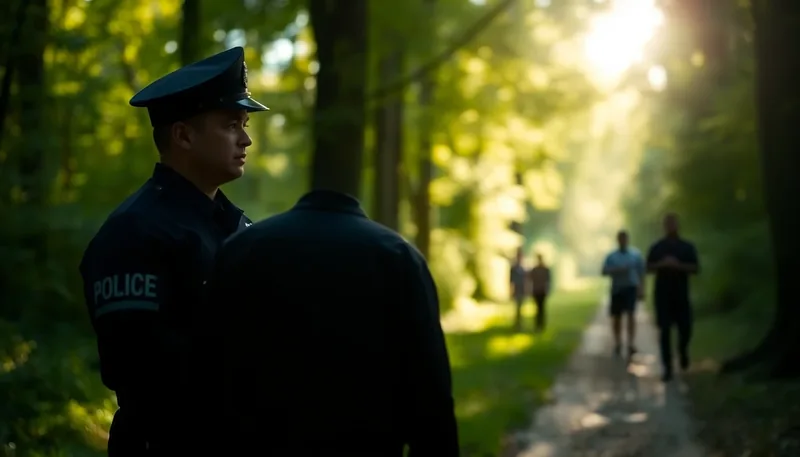
Imagine walking home from work, your mind occupied with dinner plans and weekend errands, when flashing lights appear behind you. Your heart rate accelerates as you pull over, hands visibly trembling on the steering wheel. For millions of Americans, particularly those from marginalized communities, this ordinary scenario carries extraordinary psychological weight--the knowledge that routine encounters can escalate into life-altering events. The psychology behind police brutality reveals a complex interplay of individual, organizational, and societal factors that transform law enforcement interactions into traumatic experiences.
Defining the Problem
Police brutality represents the excessive use of force beyond what's necessary to control a situation or protect life. While most police encounters conclude without violence, the psychological impact of those that escalate reverberates through communities, creating what researchers call collective trauma. Understanding the psychology behind police brutality requires examining not just individual incidents but the systemic patterns that make them possible.
A comprehensive analysis reveals that police violence stems from multiple psychological mechanisms operating simultaneously. These include cognitive biases developed through training and experience, organizational cultures that normalize certain behaviors, and societal structures that disproportionately expose certain groups to police contact. The psychology behind police brutality isn't about labeling individual officers as "bad apples" but understanding how psychological processes interact with institutional systems.
Psychological Mechanisms at Play
Cognitive Biases and Perception
Human perception isn't objective--it's filtered through cognitive shortcuts that help us process information quickly. In high-stress situations, these shortcuts can become dangerous. Confirmation bias leads officers to interpret ambiguous behaviors as threatening when they align with pre-existing stereotypes. Weapon focus causes tunnel vision on potential threats while ignoring contextual information that might de-escalate situations.
Research demonstrates that officers frequently misperceive harmless objects as weapons when held by Black individuals compared to white individuals (Correll et al., 2007). This perceptual distortion occurs within milliseconds--too fast for conscious correction. The psychology behind police brutality must account for these automatic processes that operate beneath conscious awareness.
Stress and Decision-Making
Policing operates in what psychologists call chronic hypervigilance--a state of constant threat assessment that alters neurological functioning. Prolonged exposure to this stress state can shrink the prefrontal cortex (responsible for rational decision-making) while enlarging the amygdala (the brain's fear center). This neurological shift makes officers more likely to perceive threats where none exist and react with aggression rather than measured response.
Studies of police decision-making under stress reveal that officers in simulated scenarios shoot unarmed individuals more frequently when experiencing elevated heart rates and cortisol levels (Nieuwenhuys et al., 2012). This isn't about character flaws but about how human biology responds to perceived threats. The psychology behind police brutality must address these physiological realities while developing interventions that improve decision-making under pressure.
Organizational and Systemic Factors
Departmental Culture and Norms
Police departments develop distinct psychological cultures that shape officer behavior through social learning and normative pressure. When excessive force goes unpunished--or worse, becomes valorized as "real police work"--it creates powerful incentives for replication. The psychology behind police brutality includes understanding how organizational cultures transmit values and behaviors through storytelling, mentorship, and informal reward systems.
Qualified immunity doctrines create psychological distance between actions and consequences, reducing what psychologists call moral disengagement. When officers believe they won't face personal accountability, they're more likely to engage in behaviors they would otherwise avoid. This creates a feedback loop where rare prosecutions reinforce the perception that certain actions carry minimal risk.
Training and Conditioning
Modern police training often emphasizes warrior mentality over guardian mindset, psychologically preparing officers for combat rather than community service. This orientation creates what psychologists term schema-driven processing--interpreting all situations through a threat-based framework. When your only tool is a hammer, every problem looks like a nail, and when your primary training emphasizes threat neutralization, every citizen interaction becomes potentially dangerous.
Simulation training frequently reinforces racial biases by disproportionately featuring minority suspects in threat scenarios (James et al., 2016). This creates what cognitive scientists call associative learning--unconscious connections between racial characteristics and danger. The psychology behind police brutality must address how training methodologies inadvertently reinforce the very biases they aim to eliminate.
Case Studies and Patterns
Beyond the well-documented cases of George Floyd, Breonna Taylor, and Tyre Nichols, other incidents reveal psychological patterns worth examining. The 2019 death of Elijah McClain in Aurora, Colorado, illustrates how police misinterpreted a non-threatening individual's behavior. McClain, a 23-year-old massage therapist walking home from a convenience store, was described as "acting suspicious" for dancing to music. Officers placed him in a carotid hold after he said, "I'm an introvert, please respect my boundaries."
The 2014 killing of Tamir Rice, a 12-year-old playing with a toy gun in a Cleveland park, demonstrates how perception distortions operate. Officers received a dispatch describing "a guy with a gun" who was "probably a juvenile" and "probably fake," yet within seconds of arriving, one officer shot Tamir. The psychology behind police brutality includes understanding how even qualified information fails to override automatic threat responses.
Philando Castile's 2016 death during a traffic stop in Minnesota reveals how implicit bias interacts with procedural compliance. Castile informed officer Jeronimo Yanez he was legally carrying a firearm, then reached for his identification as instructed. Yanez fired seven shots, later testifying he saw Castile's "wide-set nose" and thought of a robbery suspect. This case illustrates how racial stereotypes can override conscious intentions and procedural training.
Mental Health Considerations
Officer Mental Health
Police work exposes officers to trauma at rates comparable to combat soldiers, with approximately 15-20% developing PTSD symptoms (Violanti et al., 2017). Untreated trauma manifests as hypervigilance, emotional numbing, and increased aggression--all factors contributing to excessive force. The psychology behind police brutality must address the mental health needs of officers while ensuring these needs don't excuse harmful behavior.
Departments that prioritize mental health support see reductions in use-of-force incidents and citizen complaints. Programs like the Police Organization Providing Peer Assistance demonstrate that when officers receive timely psychological care, they're better equipped to manage stress without resorting to aggression. This represents a crucial intersection between officer wellness and community safety.
Community Mental Health Impact
Police violence creates psychological trauma that extends far beyond individual victims. Communities experiencing frequent police violence develop what psychologists call anticipatory trauma--constant psychological preparation for potential harm. This sustained stress contributes to hypertension, anxiety disorders, and shortened lifespans in affected neighborhoods (Sewell et al., 2016).
Children exposed to police violence, whether directly or through media coverage, show increased rates of PTSD symptoms, academic difficulties, and behavioral problems. The psychology behind police brutality includes understanding these intergenerational impacts and developing community-based healing approaches that address collective trauma.
Evidence-Based Solutions
Psychological Interventions
Effective reform requires interventions grounded in psychological science. Scenario-based training that emphasizes de-escalation and perspective-taking shows promise in reducing use-of-force incidents. These programs work by creating new neural pathways that officers can access under stress, essentially rewiring automatic responses through repetition of alternative behaviors.
Mindfulness training for officers improves emotional regulation and reduces implicit bias by increasing awareness of automatic thoughts and reactions. Studies show that just eight weeks of mindfulness practice can reduce amygdala reactivity to threatening stimuli (Taren et al., 2015). When integrated into regular training, these practices help officers respond rather than react.
Organizational Reforms
Changing departmental psychology requires structural interventions. Early intervention systems that identify officers showing behavioral patterns associated with excessive force allow for targeted retraining before incidents occur. These systems work on the psychological principle that behavior follows predictable patterns that can be detected and modified.
Community policing models that increase positive non-enforcement interactions build what social psychologists call intergroup contact theory--reducing prejudice through meaningful relationships. When officers and community members know each other as individuals rather than categories, both parties are less likely to default to stereotypes during stressful encounters.
Policy Changes
Psychological research supports specific policy reforms. Use-of-force continuums that emphasize proportional response help officers make better decisions under stress by providing clear decision frameworks. Duty-to-intervene policies leverage social psychology principles by making bystander intervention an organizational expectation rather than individual choice.
Transparent disciplinary processes create psychological accountability by making consequences visible and predictable. When officers see colleagues facing appropriate consequences for misconduct, it reinforces normative standards and reduces moral disengagement. The psychology behind police brutality suggests that meaningful accountability requires both individual consequences and systemic transparency.
Moving Forward
Understanding the psychology behind police brutality provides a roadmap for meaningful reform that addresses root causes rather than symptoms. This requires moving beyond blame toward evidence-based solutions that recognize the complexity of human behavior in high-stress environments. The psychology behind police brutality isn't an excuse but an explanation--one that points toward specific, measurable interventions.
Real change requires sustained commitment to psychological principles at individual, organizational, and societal levels. It means investing in mental health support for officers while ensuring accountability for harm. It requires redesigning training to build skills rather than reinforce biases. Most importantly, it demands recognizing that police reform isn't just about changing policies but about transforming psychological patterns that have developed over generations.
The path forward begins with acknowledging the psychological realities of policing while insisting on higher standards. By applying psychological science to police reform, we can create systems that protect both officers and communities, transforming the psychology behind police brutality from a source of harm to a catalyst for healing.