Everything we thought we knew about our inherent connection to the natural world might be incomplete. For decades, the concept of biophilia—our innate attraction to other living systems—has shaped everything from urban planning to personal wellness. But is this profound love of nature a universal human instinct, hardwired into our DNA, or a more nuanced trait that varies significantly from person to person? The answer, it turns out, is far more complex than a simple yes or no, challenging conventional wisdom and opening new avenues for understanding our place in the ecosystem.
The Enduring Mystery of Our Connection to Nature
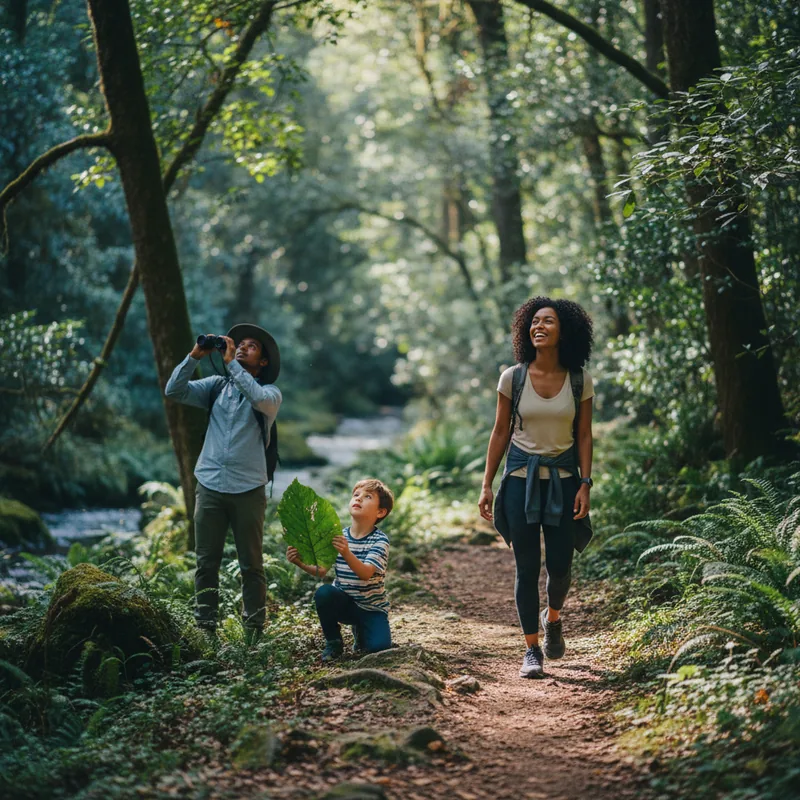
Why do millions flock to national parks each year, or spend countless hours tending to a backyard garden? Why does a simple walk among trees often feel like a balm for the soul? The pioneering Harvard evolutionary biologist Edward O. Wilson famously proposed an answer: biophilia, an inborn human instinct driving our positive emotional responses to the natural world (Wilson, 1984). This powerful idea, introduced in his 1984 book, has profoundly influenced fields from architecture to psychology, with the term 'biophilia' appearing in tens of thousands of scholarly works since its inception.
Wilson’s initial theory resonated deeply with many, including myself. As a child, the allure of the wild was undeniable, drawing me to explore vacant lots for reptiles and amphibians. Later, my fascination blossomed into academic pursuits, investigating the intricate behaviors of various species. This personal resonance, coupled with widespread cultural phenomena like the global popularity of nature documentaries or the booming ecotourism industry (World Tourism Organization, 2023), seems to affirm that is love of nature is indeed a fundamental aspect of human experience.
Biophilia Reimagined: A Spectrum of Connection
Despite its initial appeal, Wilson’s original concept of biophilia as a universal, hard-wired instinct has faced scrutiny. Critics, such as Vanessa Woods and Melina Knuth from Duke University, argue that if attraction to nature were truly innate, it should manifest as a human universal, akin to language or dancing (Woods & Knuth, 2023). Yet, it clearly does not. Indeed, Wilson himself later nuanced his view, suggesting biophilia is not a single instinct but a “complex set of learning rules” that can be individually analyzed.
This evolving understanding led Woods and Knuth to propose the Biophilia Reactivity Hypothesis. They suggest that biophilia is better understood as a temperament trait—specifically, a domain-specific attraction to biodiversity. Crucially, as a trait, it implies significant individual differences, meaning our predisposition for nature connection exists along a spectrum. Like other psychological traits, they predict it follows a normal distribution, with most people falling in the middle, and fewer at the extremes of intense attraction or indifference.
This perspective offers a compelling framework for understanding why some individuals thrive in natural settings while others feel more at ease in urban environments. For instance, a Japanese study involving 650 young men revealed that while most experienced reduced cardiovascular stress in forests, a notable 20 percent actually showed increased stress compared to urban settings. These individual responses, as Woods and Knuth would predict, aligned perfectly with a bell-shaped curve, underscoring the diverse ways humans react to nature. This research highlights that is love of nature is not a monolithic experience, but a deeply personal one.
Nurturing Nature: Early Experiences and Genetic Blueprints
If biophilia is indeed a trait, we might expect its manifestations to appear early in life. While extensive research on individual differences in childhood biophilia is sparse, anecdotal evidence abounds. Consider two siblings: one, from an early age, is captivated by every insect and plant, spending hours exploring the backyard, while the other prefers indoor pursuits like building elaborate models or coding. These contrasting inclinations hint at inherent predispositions that shape how children engage with the natural world.
Sociologist Arnold Arluke’s work with children attending animal care summer camps further supports this idea. He identified “super-nurturers”—kids who described themselves as “animal crazy” or “animal lovers,” often recalling a lifelong, intense draw to animals. Their parents confirmed these early tendencies, noting how they actively encouraged and fostered their children's innate concern for other species. This suggests that while a predisposition might exist, environmental factors and parental encouragement play a vital role in shaping and strengthening this connection.
The question of is love of nature influenced by our genes is a fascinating one. Temperament traits are known to be stable and often have a genetic component. Twin studies, comparing identical and fraternal twins, consistently demonstrate that genes contribute significantly to a wide array of human individual differences. For example, basic personality traits are estimated to be about 50 percent genetic, while even dog ownership shows a genetic influence of 51-58 percent (University College London, 2022). This evidence suggests that our varying levels of attraction to nature could also have a genetic basis, interacting with our environment and experiences to form our unique connection to the wild.
Ultimately, the evolving understanding of biophilia moves us beyond a simple, universal instinct to a more nuanced view of a complex trait. Our connection to the natural world is likely a rich tapestry woven from genetic predispositions, early childhood experiences, and ongoing environmental interactions. Recognizing this spectrum of biophilia can help us better appreciate the diverse ways people relate to nature and inform more effective strategies for fostering environmental stewardship in a world that desperately needs it.